
Korea's Hidden Rules: Superstitions That Shape Daily Life
In This Article
- Korean superstitions span numbers, colors, dream interpretation, exam rituals, and household taboos — woven into the fabric of everyday life.
- These beliefs have concrete influence on architecture, education culture, and gift-giving behavior across Korean society.
- For anyone exploring Korean culture or content, understanding these unwritten rules offers a window into how Korean society thinks and operates.
Why Do Koreans Avoid the Number 4?
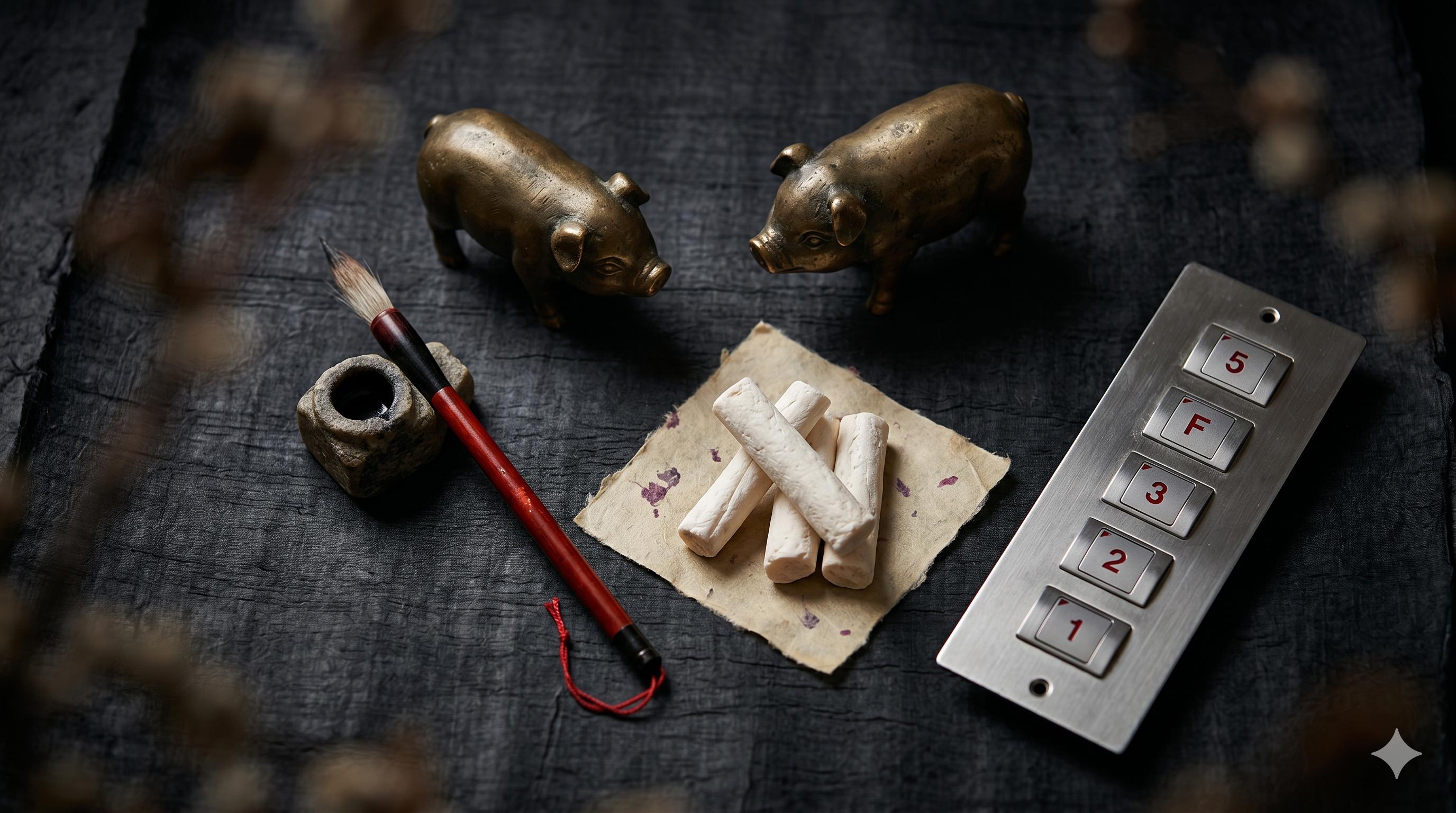
In Korea, the number 4 (사, 四) sounds identical to the word for death (사, 死), making it one of the most avoided numbers in daily life. Many apartment buildings, hospitals, and hotels skip the fourth floor entirely — the elevator button reads "F" instead of "4." This practice remains visible in Korean architecture and public spaces today.
Writing someone's name in red ink follows the same logic. Red has historically been associated with death records and funeral rites in Korea, making it a color to avoid when writing names — a rule older generations regard as a serious breach of etiquette.
What Do Dreams Mean in Korean Culture?
In Korean folk belief, certain dreams are direct omens of fortune. Dreaming of pigs (돼지) signals incoming wealth — pig-themed lottery tickets are sold commercially in Korea based on this association. Dreaming of feces (똥) is equally positive: despite the imagery, it is considered a strong sign of good luck and money. Fire dreams (불꿈) are associated with energy and upcoming success. Waking from any of these dreams, many Koreans head straight to buy a lottery ticket.
What Should You Eat — and Avoid — Before Any Major Exam in Korea?
In Korea, food choices before a major exam carry real cultural meaning. Seaweed soup (miyeokguk, 미역) is avoided entirely — its slippery texture symbolizes "slipping" in the exam, a direct reference to failing. On the other hand, sticky foods are actively sought out: yeot (엿), a traditional taffy, and chapssal-tteok (찹쌀떡), glutinous rice cake, are eaten because their stickiness literally means "to stick" — in Korean, the same word used for sticky food (붙다, butda) also means "to pass" an exam. Eating yeot or chapssal-tteok is a direct linguistic play on passing and sticking to success.This ritual applies not only to the Suneung (수능), Korea's national college entrance exam, but to any high-stakes test — civil service exams, professional certifications, and university admissions alike. These foods are commonly given as gifts to anyone facing an important exam.
What Are the Everyday Taboos in Korean Households?
Korean daily life includes a set of informal prohibitions that most Koreans grow up knowing. Shaking one's leg is said to shake away good fortune — the phrase 복 나간다 ("luck is leaving") is still used as a common reminder.
Clipping fingernails or toenails at night is a well-known taboo rooted in Korean folk horror. The belief holds that a rat might eat the clippings and transform into an exact copy of that person — a doppelganger who then takes over their life. It is one of Korea's most recognized folk tales associated with nighttime nail-clipping, and the warning has been passed down through generations.
Whistling at night is discouraged for several reasons rooted in Korean folk belief. The most common warning is that it attracts snakes. A second belief holds that the sound of whistling in the night's silence summons evil spirits or ghosts into the home. A third, more practical interpretation warns that nighttime whistling signals to thieves that someone is inside — or serves as a criminal signal to those outside. All three explanations have circulated across generations, and the taboo against whistling after dark remains widely recognized today.
Sticking a spoon upright into a bowl of rice is avoided because it directly mirrors the way food is offered at Korean ancestral rites — placing a spoon in rice is the form in which meals are presented to the deceased during memorial ceremonies (jesa). Bringing this gesture to an everyday dining table is seen as invoking death or drawing bad luck to the living. The same taboo is observed across much of East Asia.
Stepping on the threshold (문지방) of a doorway is considered bad luck. The threshold has long been regarded as the boundary between the living world and the afterlife, between inside and outside. Disturbing it is believed to drive away the household's fortune or anger the spirits that guard it.
Positioning a mirror to face the front door is avoided in some households, based on the belief that it reflects incoming good energy back out.
Giving shoes as a gift — particularly to a romantic partner — carries a specific warning: the recipient will use them to walk away from the relationship. The saying goes that shoes are for running, and gifting them means the other person will run from you. It remains one of the most recognized gift-giving taboos in Korean culture today.
Are These Superstitions Still Relevant in Modern Korea?
Most Koreans do not follow these superstitions literally — but they have not disappeared either. Younger generations treat them as cultural habit rather than firm belief, yet the practices remain embedded in language, architecture, commercial products, and seasonal behavior. For visitors and fans of Korean content, recognizing these patterns adds a layer of context that goes well beyond language.