
Korea's School Lunch: The Culture Behind GEUPSIK (급식)
In This Article
GEUPSIK: The Korean Word That Explains a Whole Culture
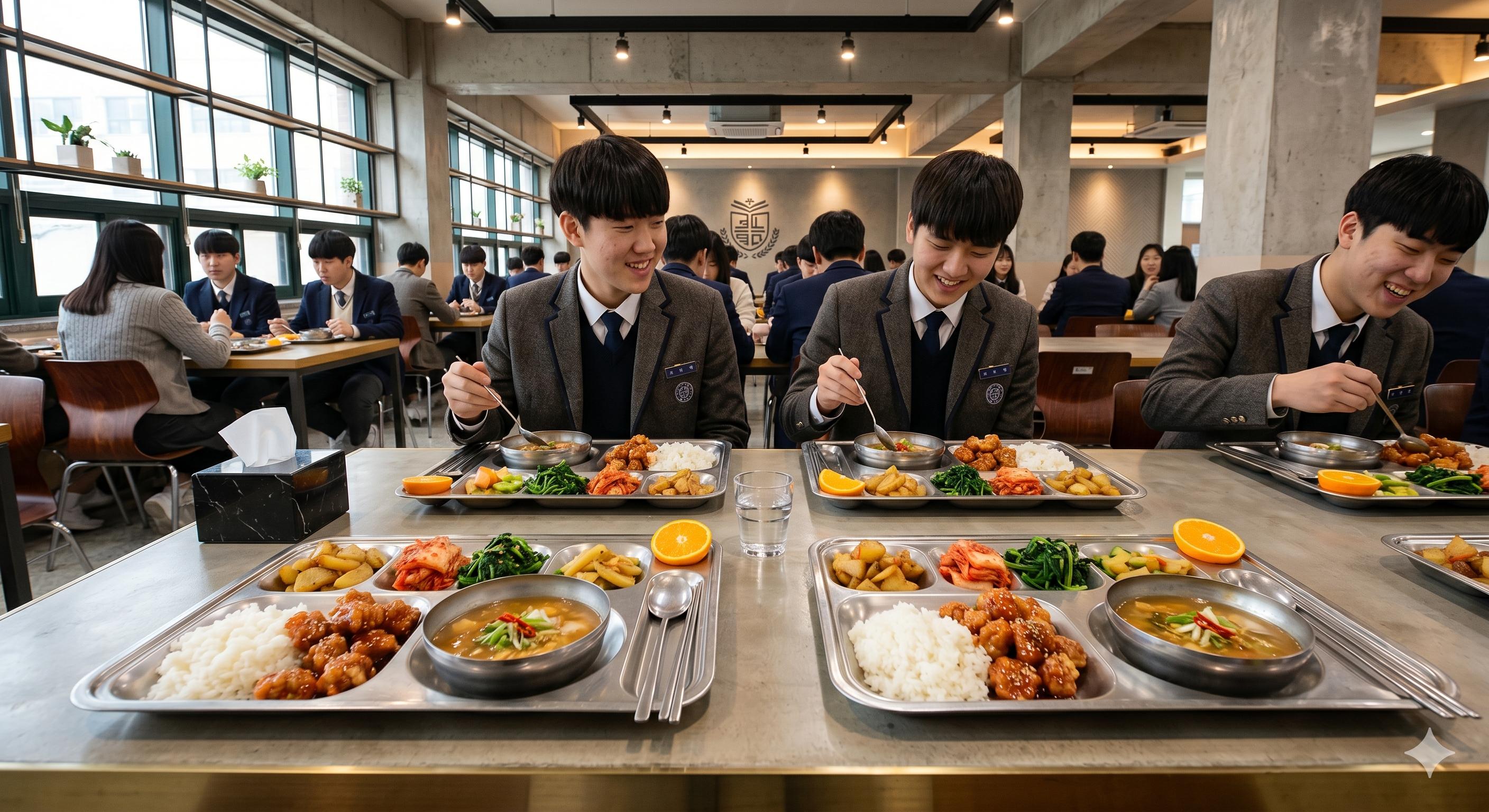
GEUPSIK (급식) is the Korean word for school lunch, but the word alone does not capture what it actually is. A typical Korean school lunch is served on a five or six-compartment tray and includes rice, soup, two to three side dishes called BANCHAN (반찬), and kimchi. Every single day. Not reheated. Not pre-packaged. Cooked fresh that morning by a team of staff who arrive early specifically to prepare the meal. The menu changes daily and is designed by a certified nutritionist employed by the school. In Korea, having a nutritionist on staff is not optional. It is required by law.
What's Actually on the Tray
On any given day, a Korean student might sit down to multigrain rice, doenjang soup with vegetables, braised chicken, stir-fried fish cake, kimchi, and a piece of fruit. On a special day, that same tray might include rose tteokbokki, chocolate breadsticks, and a mango popsicle. One middle school in Anyang made headlines by serving cheesy baked lobster tail, beef spaghetti in tomato sauce, and brownie tarts for a special event. These are not exceptions. They are part of a culture that takes school food seriously at the institutional level.
Free. For Almost Everyone.
As of 2023, Korea serves approximately 5.26 million students every school day across around 12,000 schools nationwide. The cost is covered jointly by the central government and local governments. Free school meals are now available at virtually all elementary schools and most middle and high schools in the country. The annual budget allocated for school meals reached approximately 7.76 trillion won in 2023, up from around 7.08 trillion won the previous year. That investment is not treated as a welfare program. It is treated as part of education itself.
74,000 People. One Job.
Behind every Korean school tray is a system that employs approximately 74,000 people nationwide as of 2023, including nutrition educators, nutritionists, and cooks. These are full-time positions with professional training requirements. The nutritionist at each school is responsible for planning every meal to ensure the right balance of protein, carbohydrates, fat, vitamins, and minerals for students at that specific age group. Calorie counts are calculated. Salt levels are monitored. The people preparing the food are not volunteers or minimum wage cafeteria workers. They are trained professionals who take the job seriously.
The Moment the Internet Fell in Love With Korean School Lunch
Korean school lunches started going viral long before any government reform made news. A British teacher working at a Korean school posted a TikTok showing a tray of chicken mayo rice bowl, seaweed soup, salad, and fruit. The video spread fast. A Japanese influencer visited a boys' high school in Yongin and filmed the entire lunch scene, capturing cafeteria workers carefully tasting the food before serving and arranging the plates. The videos consistently produce the same reaction from international viewers: genuine surprise, followed by curiosity about how it all works.
The Part Nobody Expects
It is not just the food. It is the behavior around it. In Korean schools, students typically bow to the cafeteria staff after finishing their meal. They clean up after themselves. They learn to eat together, to try different foods, and to treat mealtime as part of the school day rather than an interruption to it. Research in Korea has shown that the school meal program has positive effects on student health outcomes, reduces food insecurity, and helps form healthy eating habits that carry into adulthood. The lunch tray is not a convenience. It is a lesson.
A Different Philosophy of School Food
Countries approach school meals in different ways, shaped by their own histories, budgets, and priorities. What stands out about Korea's approach is not that other systems have failed, but that Korea made a specific and sustained choice: to treat the school meal as an educational experience rather than a logistical one. That choice shows up in the law that mandates nutritionists, in the budget that keeps growing, and in the culture that asks students to be present at the table — not just fed by it.
Now the UK Is Taking Notes
In April 2026, the United Kingdom announced plans to reform its school meal system for the first time in over a decade. The UK government will ban all fried foods from school menus starting September 2027, with restrictions on processed foods and sugary desserts also planned. As the reform drew attention, British media highlighted Korean school lunches as a reference point. The Daily Mail described them as "meals structured like a course menu," noting that some Korean schools offer up to six items per meal with fruit and milk served as dessert. Five education and food-related organizations formed a School Meals Project and raised approximately 2.3 million pounds to improve school food quality. Education Secretary Bridget Phillipson called the measure "a once-in-a-generation reform of school meals." When a country looks abroad for inspiration on something as everyday as lunch, it says something about how seriously that everyday thing can be taken.