
Nothing Happens. So Why Can't I Stop Watching I Live Alone(나 혼자 산다)
In This Article
Nothing Happens. People Keep Watching.
MBC's I Live Alone — a program about Korean celebrities spending time alone at home — has been circulating on TikTok and YouTube Shorts among overseas audiences who, in many cases, have no prior connection to Korean entertainment. The response that appears most consistently in comments is some version of "nothing is happening but I cannot stop watching this."
The observation is accurate. The show does not contain dramatic events. There are no competition formats, no elimination structures, no escalating conflict. Episodes follow cast members through ordinary routines: preparing food, cleaning, pursuing hobbies, running errands. The premise offers no hook that would conventionally explain sustained viewer attention.
What Actually Gets Clipped and Shared
The short-form content driving I Live Alone's overseas reach draws from a specific category of moment. Clips that circulate are not highlight moments in a conventional sense. They are small, specific scenes: a cast member eating a meal they clearly put effort into, alone; a cleaning routine that starts reluctantly and then becomes strangely absorbing; a small domestic mistake that the camera stays on longer than expected; an unexpectedly detailed hobby activity.
These clips don't land because they're funny, surprising, or dramatic. They land because they are recognizable. The experience of eating alone, of a routine that takes over, of a small mistake in your own space — these are universal enough to travel across cultural contexts without needing translation. The content of the clip communicates directly, regardless of what language the viewer speaks or what they know about the show.
The Structural Difference From Western Reality
Western reality formats — including those built around observational premises — are almost universally organized around conflict or escalation. Participants are placed in situations that generate friction: competition, social pressure, romantic pursuit, interpersonal tension. The format requires something to happen. Producers design conditions that make events more likely. The editing selects for moments of maximum drama within those conditions.
I Live Alone doesn't use this structure. There is no designed conflict. There are no competing participants. The editing doesn't build toward anything. A cast member who spends an episode cooking, eating, watching television, and going to bed is a complete episode. The show has no structural need for anything to occur.
This inversion is what produces the effect overseas viewers describe. Because there is no escalation to track and no dramatic event to wait for, the viewer's attention settles onto texture rather than plot. The details become visible in a way they wouldn't if the format were organized around something happening.
Why the Low Stakes Are the Point
A significant share of online viewing — particularly on short-form platforms — happens in fragmented, distracted conditions. Viewers are watching between other tasks, before sleep, during commutes. Content that requires sustained attention to follow a narrative or track escalating stakes doesn't fit these conditions well.
I Live Alone is designed, structurally if not intentionally, for exactly this context. It can be entered and exited at any moment without losing anything. There is no consequence to pausing, no penalty for missing a clip. The content remains accessible no matter when the viewer arrives. This quality — the ability to watch without commitment — appears to be a significant factor in its repeat consumption on short-form platforms.
When Variety Becomes Cultural Observation
In overseas communities, a secondary reading of I Live Alone has emerged alongside the entertainment response. The program is being consumed as a source of information about everyday Korean life. This happens without the show being framed that way — it's a variety program, not a documentary — but the observational format makes it function like one.
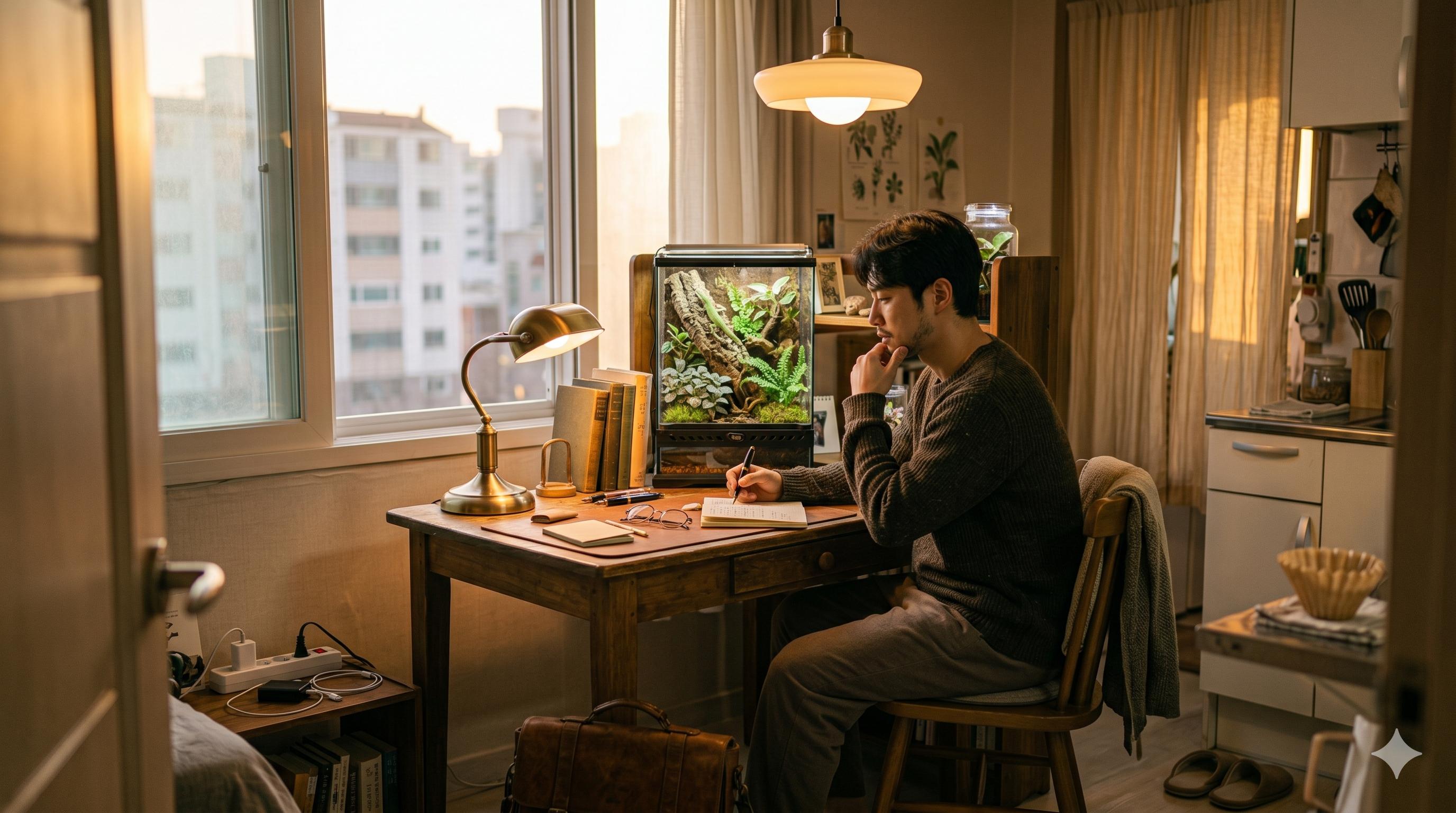
Viewers describe noticing things: the layout and design of apartments, food preparation methods, the specific rhythm of a Korean weekend, the way cast members relate to their own domestic environments. These details are present in the footage because the camera records everything the cast member does, including the things that would be edited out of a drama-focused format. The result is a level of domestic and cultural detail that international viewers find genuinely informative.
Searches for "daily life in Korea" and related terms regularly surface I Live Alone clips alongside more explicitly documentary content. The show has acquired a second function it wasn't designed for — and that second function appears to be sustaining a portion of its overseas viewership independently of its entertainment value.
The Meme Is Not the Joke
The clips from I Live Alone that travel furthest on short-form platforms are not comedy clips. Korean variety produces plenty of genuinely funny moments — well-timed gags, physical comedy, cast chemistry playing out in real time — and those clips circulate too. But the clips from I Live Alone that accumulate the most attention overseas tend to be something different: recognizable situations, not jokes.
A cast member who cooked too much and now has to eat it all alone. Someone who started cleaning at 11pm for no clear reason. A solo trip that goes slightly wrong in a mundane way. These moments spread because viewers see themselves in them, not because the moments are comedic in a traditional sense. The shareable unit is recognition, not laughter.
This distinction matters for how the content spreads. Comedy clips get shared because they're funny. Recognition clips get shared because sharing them is itself a form of communication — "this is me, this is what my evenings look like." The social function of sharing is different, and it reaches people who would not otherwise engage with Korean variety content.
What I Live Alone Suggests About K-Lifestyle Content
I Live Alone demonstrates that Korean variety's global reach is not exclusively a function of spectacle, competition, or genre innovation. A format built entirely around ordinary domestic life, with no designed drama and no conventional entertainment hook, has built a consistent overseas audience through short-form circulation and cultural observation.
This points to an underexplored dimension of K-content's international potential. While K-dramas and K-pop operate through narrative and performance, I Live Alone operates through familiarity and recognition. The content travels because everyday life translates — not perfectly, but enough. The details that make it specifically Korean are, for many overseas viewers, part of what makes it interesting rather than an obstacle to engagement.