
Echoes of Korea: Treasures of the National Museum
In This Article
From Museum to Cultural Hub
Located in Yongsan, Seoul, the National Museum of Korea was once primarily known as a place that preserved and displayed Korean historical artifacts and artworks. Recently, however, it has started to be seen as something more than just a traditional museum — a space where visitors can experience Korean heritage in a more modern and immersive way.
Among international visitors in particular, the museum is often described as “a place where tradition and contemporary aesthetics coexist.” Rather than feeling like a conventional historical museum, the interior emphasizes open architecture, modern lighting, and carefully designed visitor flow.
Through its large glass windows, visitors can see views of Namsan and the Yongsan area, while inside, high ceilings and minimalist exhibition spaces create a calm and modern atmosphere.
Although the museum displays centuries-old artifacts, the space itself feels surprisingly contemporary. The museum’s central open lobby, outdoor gardens, reflective pond, and seasonal scenery also make it feel less like a place people simply “visit,” and more like a place where they spend time slowly and comfortably. Even many locals visit not only for exhibitions, but also for walks and quiet relaxation.
Rising Global Interest
Over the past few years, the National Museum of Korea has seen a significant increase in visitors. The number of international tourists has also steadily grown, largely due to the global popularity of K-pop, Korean dramas, and films that feature traditional Korean aesthetics.
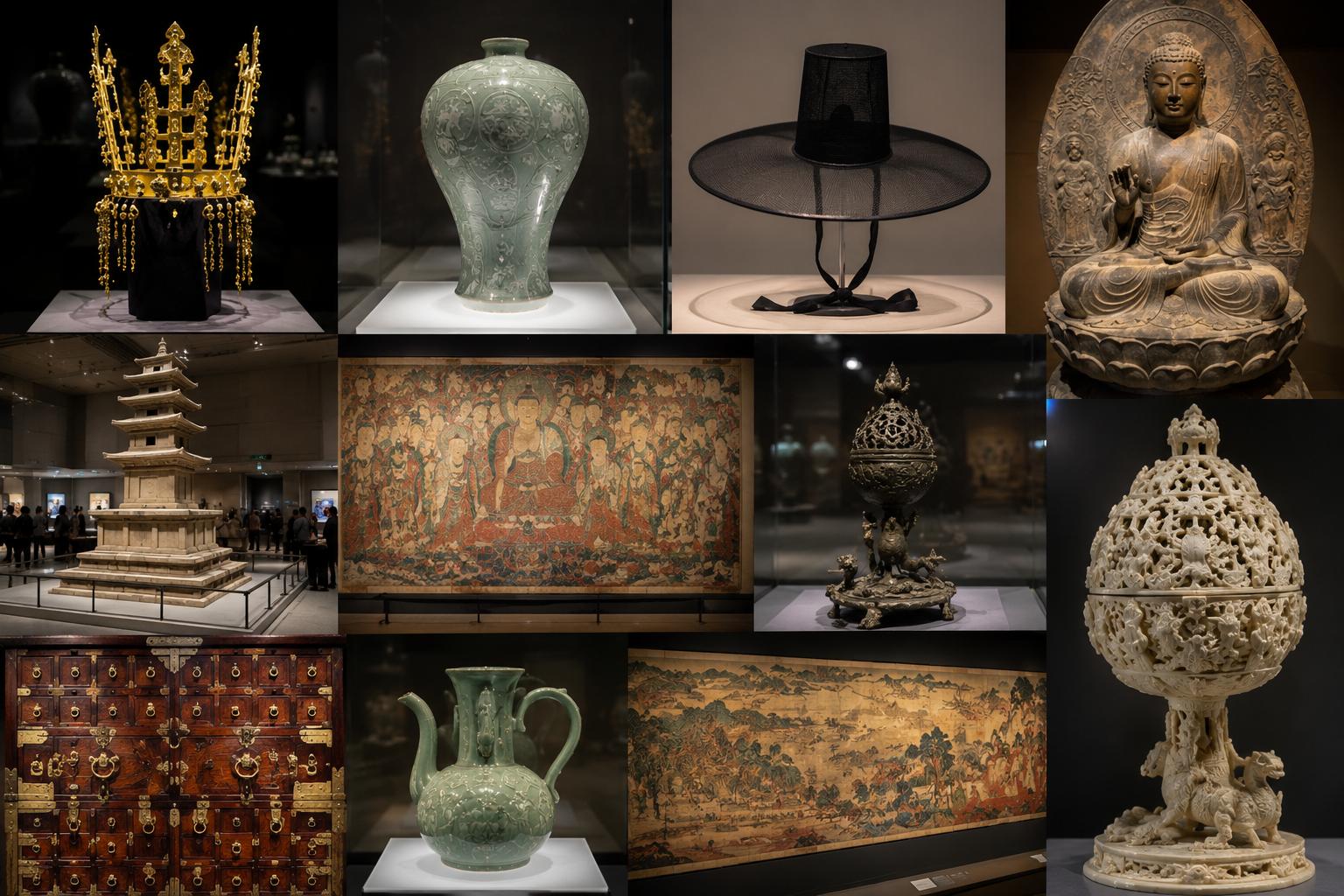
For example, many overseas fans who first encountered gat hats, hanbok, Buddhist art, or Joseon-era paintings through historical dramas later become interested in seeing the real artifacts in person.
The museum’s merchandise brand, MU:DS, has also gained attention recently. Rather than selling ordinary souvenirs, the brand reinterprets traditional artifacts into modern stationery, lifestyle goods, and collectible items, attracting both younger generations and foreign visitors.
Beyond Traditional Exhibitions
Today, the National Museum of Korea is moving beyond the traditional idea of simply displaying historical objects in glass cases.
The exhibition design itself is highly visual and immersive. In many galleries, dramatic lighting is used to emphasize the texture of gold crowns or ceramics, while large-scale presentations bring Joseon-era paintings to life in a more engaging way.
One area frequently mentioned by international visitors is the Korean Buddhist art gallery. Inside the quiet, dimly lit exhibition space, massive Buddhist statues and delicate gilt-bronze artifacts create an atmosphere completely different from typical tourist attractions.
Some special exhibitions and interactive programs also reinterpret traditional patterns, animal symbolism, and royal court culture using modern graphics and digital presentation techniques. Because of this approach, even visitors without deep historical knowledge can enjoy the museum comfortably.
Why Travelers Visit
Many foreign travelers are drawn to the National Museum of Korea because it does not feel like a place that simply “stores old objects.”
In the middle of one of Asia’s most modern cities, visitors can experience a natural connection between centuries-old artifacts and contemporary Korean design sensibilities.
The museum itself is also enormous. The exhibition halls are so extensive that it is difficult to see everything in a single day, and visitors can explore the broad flow of Korean history in one location. As a result, the museum is no longer seen as a destination only for history enthusiasts. Instead, it has become a place where travelers can spend a slow and relaxing day during a trip to Seoul. It is especially recommended during rainy days or during the hot summer and cold winter seasons, offering a calm indoor space where visitors can experience a deeper and quieter side of Korea.