
The Korean Paper Umbrella from K-Dramas That Only One Person Still Makes
In This Article
An Umbrella Made of Paper That Actually Works
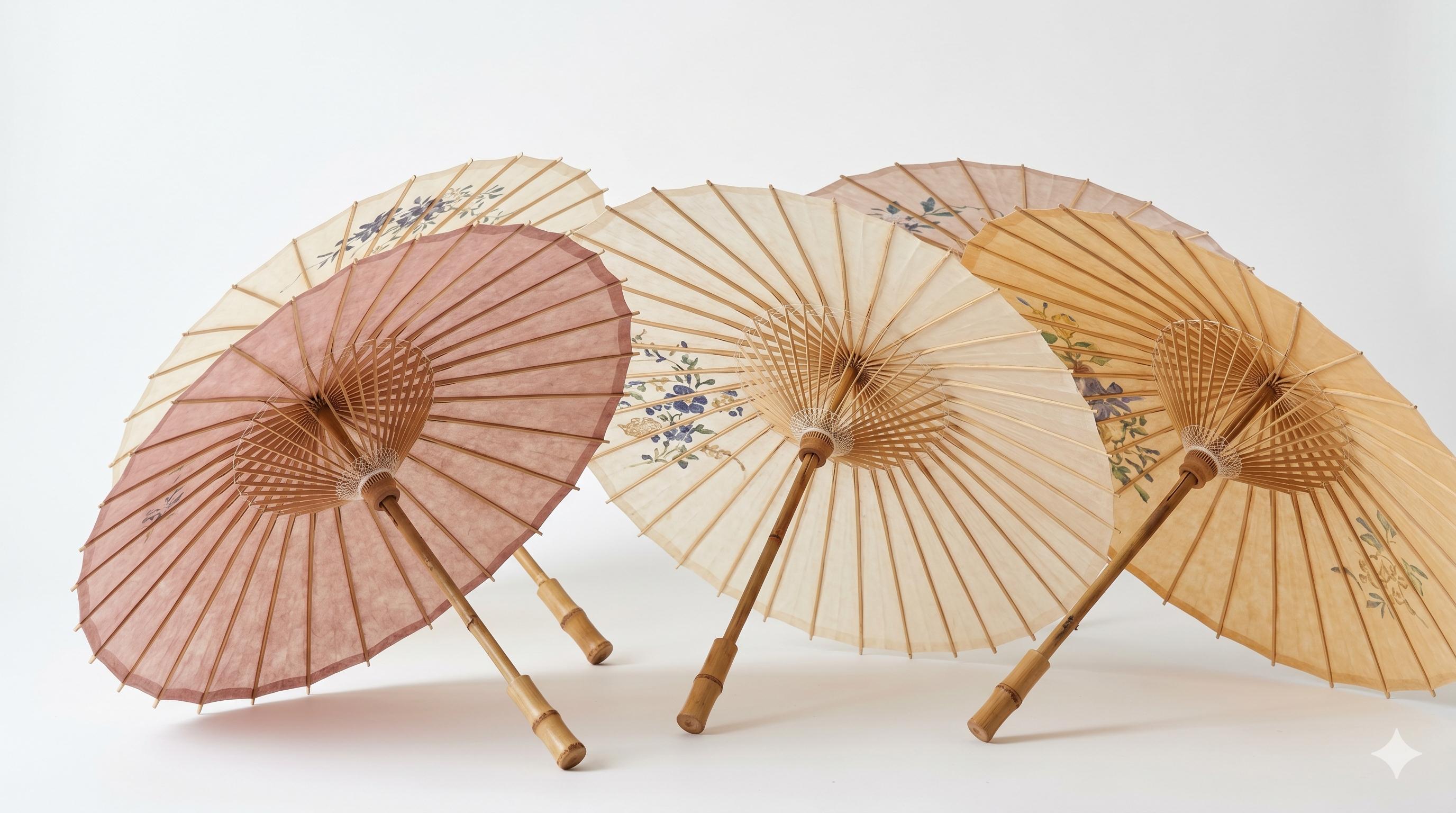
Most people assume a paper umbrella would dissolve in the rain. The JIUSAN (지우산) proves that assumption wrong. This traditional Korean oil-paper umbrella, built from a bamboo frame and sheets of HANJI (한지) soaked in perilla oil, is waterproof, lightweight, and durable enough to outlast most modern umbrellas. It is also one of the rarest handmade objects left in Korea. Today, only one person in the entire country still makes them by hand.
What JIUSAN Actually Is
The name JIUSAN (지우산; 紙雨傘) breaks down simply: "ji" (지) means paper, "u" (우) means rain, and "san" (산) means umbrella. The object itself is exactly what the name describes -- a rain umbrella made from paper. The canopy is constructed from HANJI, Korea's traditional mulberry-bark paper, which is coated with perilla or soybean oil and dried to become water-resistant and surprisingly tough. The ribs, shaft, and handle are all hand-carved from bamboo. No metal, no synthetic fabric, no plastic. Every component comes from natural materials that have been used in Korea for centuries.
A Symbol of Power, Not Just Rain
Long before ordinary Koreans carried umbrellas in the rain, the umbrella was a marker of rank. Goguryeo tomb murals dating back over a thousand years show servants holding large umbrellas over figures of high status. During the Goryeo period, only aristocrats were permitted to use them. In the Joseon dynasty, the king's official processions were always accompanied by umbrella bearers, and royal craftsmen were employed specifically to produce umbrellas from fine paper and perilla oil. When a respected official retired, he was sometimes presented with a silk umbrella called MANINSAN (만인산) bearing the names of those who honored him. The JIUSAN was not just shelter from the weather. It was a statement.
Jeonju Was the Umbrella Capital of Korea
Ordinary Koreans did not begin using paper umbrellas in everyday life until after the Korean War. By the late 1950s and into the 1960s, JIUSAN had become a common sight across the country, and Jeonju in North Jeolla Province became the center of production. The city had everything the craft required: high-quality paper mulberry trees for HANJI, and easy access to bamboo from nearby Damyang. At the industry's peak in the 1960s, Jeonju's Jangjae Village alone had over thirty umbrella factories. Then came vinyl. Mass-produced plastic umbrellas arrived from overseas in the 1970s, cheaper and more convenient, and the JIUSAN industry collapsed almost completely within a decade.
How a JIUSAN Is Made
Making a single JIUSAN involves over eighty separate steps. The bamboo is selected, split, soaked, dried in the sun, drilled, threaded, and assembled into a skeleton by hand. Sheets of HANJI are cut, glued onto the frame, trimmed, and then coated with perilla or soybean oil. The oiled paper must then dry for over twenty days before the umbrella is complete. The largest decorative JIUSAN can reach over one meter in radius and may have up to eighty individual bamboo spokes. Each umbrella is entirely unique. The process cannot be rushed, and it cannot be mechanized without losing what makes it exceptional.
The Only Man Still Making Them
Yoon Gyu-Sang (윤규상) began learning the craft at the age of seventeen in 1957, working as an apprentice at an umbrella workshop in Jeonju's Jangjae Village. He went on to run his own JIUSAN factory, but closed it when vinyl umbrellas made the business unsustainable. For years he set the work aside. Then, in the early 2000s, he happened to see a television program showing people in another Asian country using paper umbrellas. He recognized what he had made decades earlier and decided to bring it back. Starting in 2005, he spent three years restoring the old tools and techniques from memory, eventually succeeding in producing traditional JIUSAN using Jeonju HANJI once again. In 2011, the North Jeolla Provincial Government officially designated him Intangible Cultural Asset No. 45 -- USANJANG (우산장), Master Umbrella Maker. He is the only person in Korea to hold that title.
His Son Left a Semiconductor Job to Help
Yoon's son, Yoon Seong-ho, graduated from an engineering university and was working at a semiconductor company when he watched his father struggle to revive the craft alone. He quit his job and returned to Jeonju to learn the technique. He now runs BIKKOT (비꽃), the family workshop whose name means "flower that blooms in the rain" -- a reference to the JIUSAN opening like a flower when it rains. The workshop focuses less on practical rain umbrellas and more on decorative parasols, interior objects, and collectible pieces that can carry the craft forward in a market where no one needs a paper umbrella anymore.
Where to Find JIUSAN Today
BIKKOT's JIUSAN pieces are available through select design shops in Korea, including CHAPTER ONE (챕터원), which carries handmade parasol versions produced by the Yoon workshop. The Jeonju Craft Exhibition Hall has displayed Yoon Gyu-Sang's work on multiple occasions, and Jeonju itself -- already a destination for HANJI and traditional craft -- is the most direct place to encounter JIUSAN culture. For visitors to Jeonju, the former Jangjae Village site and the Jeonju Craft Exhibition Hall are worth seeking out. These are not souvenirs. Each piece is a handmade object that took weeks to produce and represents a tradition that came within one person's decision of disappearing entirely. JIUSAN has also found its way into popular culture. The 2022 tvN historical drama Under the Queen's Umbrella (슈룹) took its title from an old Korean word for umbrella, and its promotional posters featured a queen holding a traditional paper umbrella in the rain as the drama's central image -- a visual that put the silhouette of the JIUSAN in front of a global audience on Netflix.