


Kongnamul Gukbap(콩나물국밥): Korea’s Hangover Cure in a Bowl
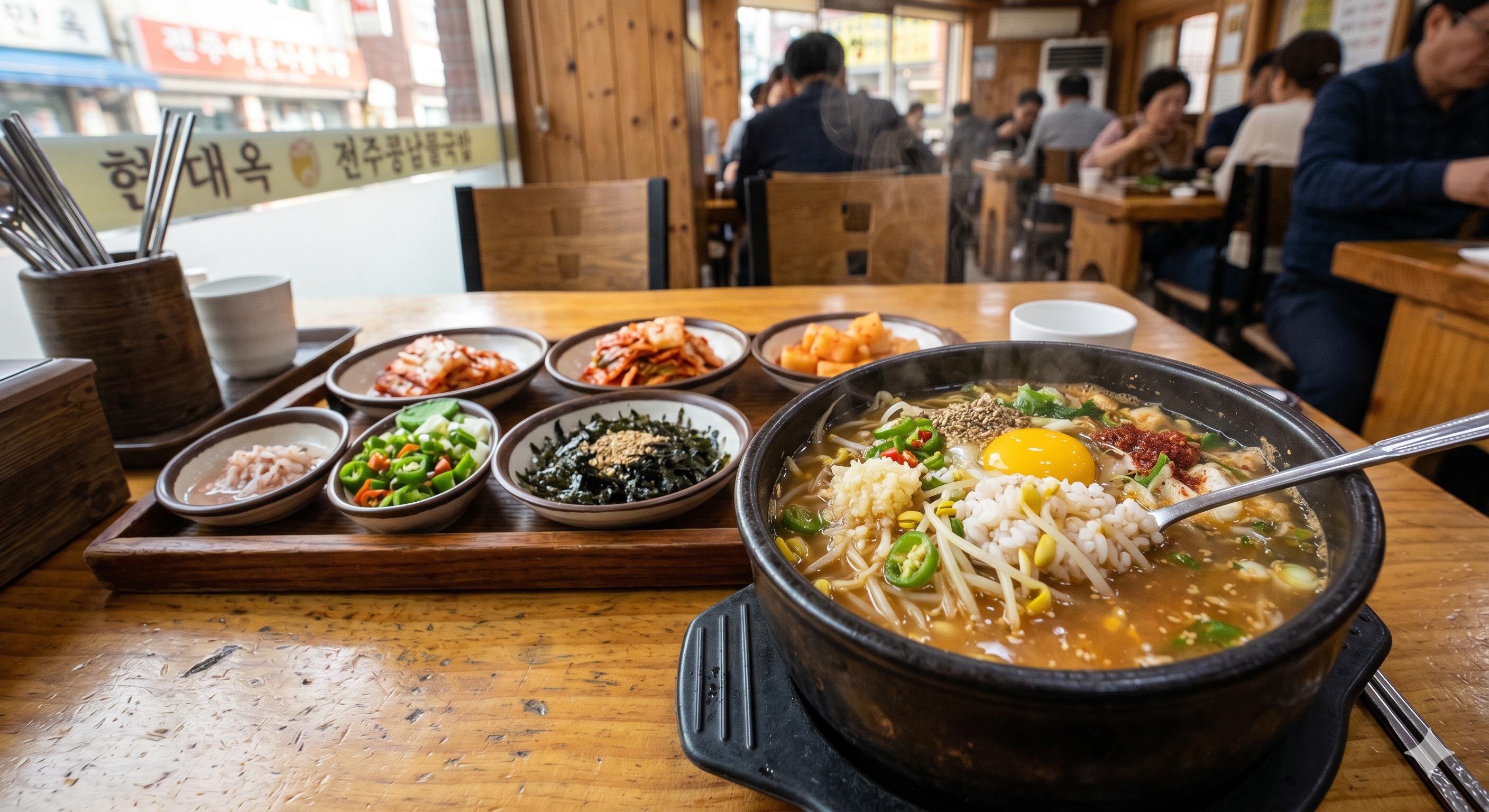
Kongnamul gukbap (콩나물국밥) does not look like much. Bean sprout broth, rice, an egg, a few condiments on the side.
In This Article
Most hangover foods announce themselves. This one just works.
Kongnamul gukbap (콩나물국밥) does not look like much. Bean sprout broth, rice, an egg, a few condiments on the side. No rich collagen broth, no slow-boiled pork spine, no intensity. It is the quietest bowl in Korean hangover food, and in Jeonju, it is also the most beloved.
What it is
The bowl is built from two things: a broth made from anchovy and dried kelp stock combined with the water used to blanch the soybean sprouts, and the soybean sprouts themselves, lightly seasoned before being returned to the soup. Rice goes in, an egg follows, and the result is a clean, mildly savory soup that sits easily on a troubled stomach. The flavor is not dramatic. It is precise and considered, which is what makes it effective.
Why Jeonju
Jeonju’s connection to soybean sprouts goes back generations. Historical records and regional food writings often describe Jeonju soybean sprouts as especially crisp and clean-tasting compared to those from other regions. By the early 20th century, Jeonju’s kongnamul gukbap had already become closely associated with the city’s food culture.
What makes this reputation remarkable is its simplicity. The dish is built from little more than soybean sprouts, rice, broth, and egg, yet it became one of Korea’s most enduring regional comfort foods. Even today, Jeonju continues to cultivate its own soybean sprouts, and many locals insist the flavor is difficult to replicate elsewhere.
Two styles, one city
Jeonju serves kongnamul gukbap in two distinct ways, and the difference matters enough that locals have strong preferences.
The Sambaekcjip style (삼백집식) is the older method: the bowl is placed directly over a flame and brought to a full boil with the egg cracked in, producing a hot, deeply savory result with a slightly softer bean sprout and a richer, more unified broth. It is the version for cold mornings and serious stomachs.
The Nambu Market style (남부시장식), also called toryeom style, uses the same technique found in Busan dwaeji gukbap: hot broth is poured over rice and bean sprouts repeatedly and drained back, heating the bowl gradually without boiling it. The result is a cooler, crisper bowl — the bean sprouts retain their crunch, the broth stays clear, and the egg is served separately as a suran. It is easier to eat immediately and notably lighter on the stomach. Most restaurants in Jeonju now serve this style.
The condiments
Like dwaeji gukbap in Busan, kongnamul gukbap arrives under-seasoned. The table carries the components needed to finish the bowl.
Saeujeot (새우젓) is the baseline seasoning — fermented salted shrimp stirred into the broth to build depth and umami. It is the standard first addition before anything else. A small spoonful is enough; the broth amplifies it.
Yangnyeomjang (양념장) is the spiced paste specific to kongnamul gukbap: chili powder, soy sauce, garlic, green onion, and sesame oil mixed into a concentrated condiment. Adding it to the bowl shifts the flavor from clean and mild to warm and spicy. Jeonju locals typically eat the first half of the bowl without it to taste the broth clearly, then stir it in for the second half. Both halves taste different. Both are worth eating.
Kim (김), dried seaweed, comes as a side at most restaurants. Crumbled into the bowl or eaten alongside, it adds a mild brininess that complements the light broth without competing with it.
The egg situation
First-time visitors to Jeonju kongnamul gukbap restaurants are often confused by the egg that arrives before the main bowl. It is served in a small rice bowl, barely warmed through — the white is just set at the edges, the yolk completely raw. This is suran (수란), and it is the correct egg for this dish. The standard approach is to tip it into the bowl when the gukbap arrives, stir it through the broth, and let the residual heat finish the cooking. Some people eat it separately. Some skip it entirely. The restaurant will not judge either choice.
Moju: The Drink Served Alongside It
Jeonju kongnamul gukbap is often accompanied by moju, a warm, low-alcohol drink made by simmering makgeolli with ginger, jujubes, cinnamon, and licorice root. The result is mildly sweet, lightly spiced, and noticeably comforting.
The pairing became closely associated with hangover culture in Jeonju. A hot bowl of kongnamul gukbap helps settle the stomach, while a small cup of moju warms the body afterward. Even today, many restaurants in Jeonju either serve moju alongside the soup or offer it in small portions as an add-on. It is not mandatory, but many locals consider it part of the full experience.
How to eat it
Order the bowl. If moju is available, order it too. When the suran arrives, set it aside. When the gukbap arrives, taste the broth first without adding anything. Add saeujeot until the seasoning feels right. Tip the suran into the bowl and stir gently. Eat the first half of the bowl as it is. Add yangnyeomjang for the second half. If squid is available as a topping, add it — the slight chewiness and salinity work well with the clean broth. Eat slowly. This is not food that rewards rushing.
Why it travels well
Kongnamul gukbap has spread across Korea more successfully than almost any other regional bowl. Chain restaurants operating under the Jeonju name exist in every major city, and the format translates reasonably well outside its origin. But the version served in Jeonju remains distinct — the bean sprouts grown locally, the broth built from decades of accumulated practice, the suran served in a bowl that still carries the temperature of the kitchen. Eating kongnamul gukbap outside Jeonju is fine. Eating it in Jeonju, early in the morning, with moju on the side, is something else entirely.