


Why Koreans Work So Hard to Look Like They're Doing Nothing
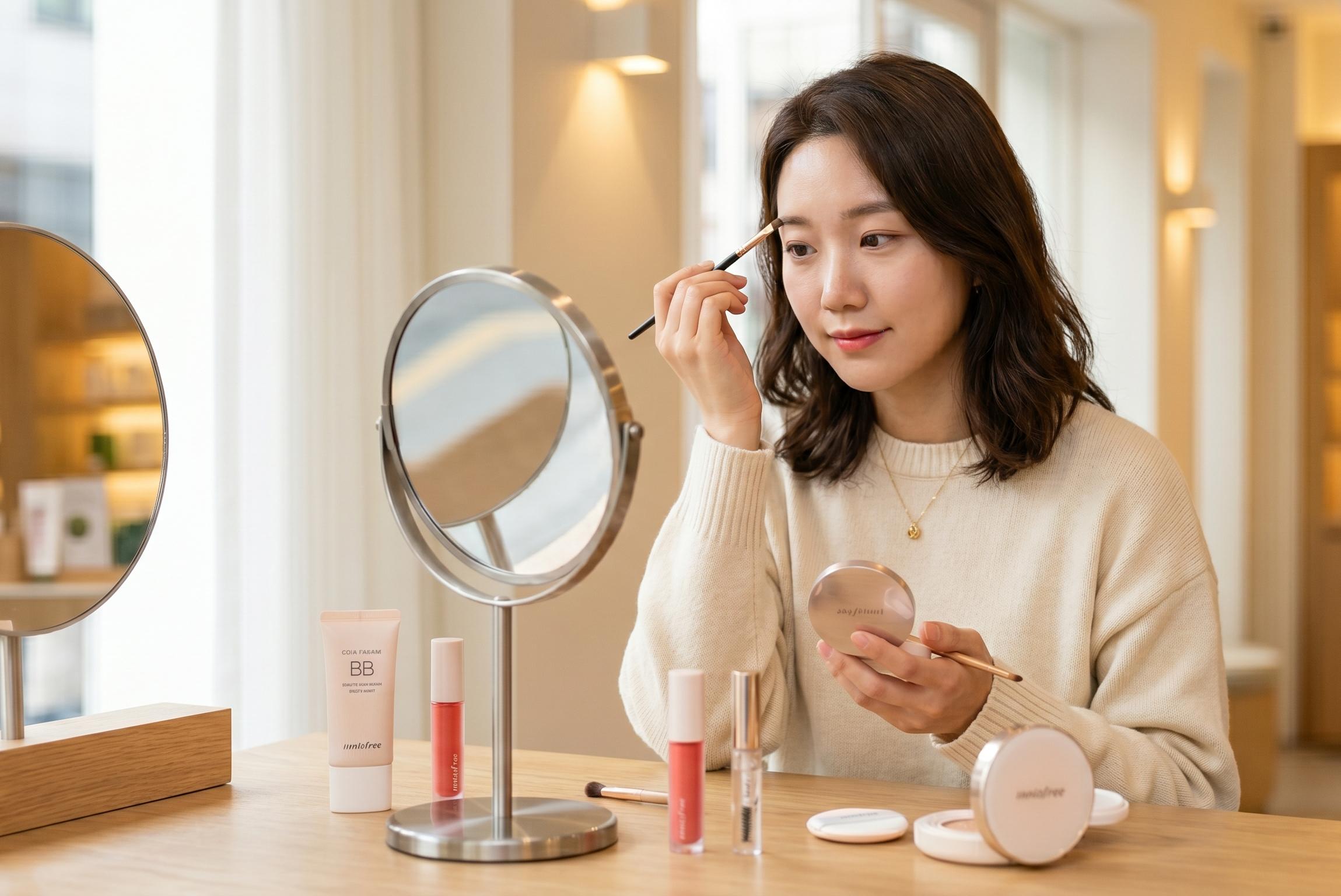
If someone in Korea tells you that you look naturally pretty today, they are almost certainly not complimenting you on skipping your skincare routine.
In This Article
What “Natural” Means in Korea
If someone in Korea tells you that you look naturally pretty today, they are almost certainly not complimenting you on skipping your skincare routine.
The Korean standard for a “natural face” comes with conditions. Skin should appear clear and luminous. Tone needs to look even. Eyes should feel softly defined. Lips usually carry a hint of colour. Everything is polished — but nothing should visibly look “done.”
That is what “natural” often means in Korean beauty culture. Not the absence of effort, but the successful concealment of it.
For many international audiences, this idea can feel confusing at first. In most places, “natural” suggests minimal effort. In Korea, it often refers to effort that has become invisible.
꾸안꾸: Korea’s Most Demanding Aesthetic
Korea even has a specific word for this philosophy: 꾸안꾸 (kkuankku).
The term is short for 꾸민 듯 안 꾸민 듯, which roughly translates as “styled without looking styled.”
The concept extends far beyond makeup. It influences skincare, fashion, hairstyling, and overall personal presentation.
The goal is never “how much effort was used?” Instead, the question becomes: “How effortless does the result appear?”
That balance is surprisingly difficult. Looking obviously overdone fails the standard. Looking completely unprepared also fails it. The ideal sits in a very narrow middle ground where everything appears naturally polished.
Why “No-Makeup Makeup” Became So Popular
One of K-Beauty’s most recognisable aesthetics is 쌩얼 메이크업 (ssaengul makeup), often translated as “bare-face makeup.”
To many outside observers, the phrase sounds contradictory. Why apply makeup in order to look like you are not wearing makeup?
Within Korean beauty culture, however, the logic is straightforward.
The purpose of makeup is not necessarily to make the makeup itself visible. The goal is to improve the overall appearance of the person in a subtle and harmonious way.
Lightweight base products, soft glow, natural contouring, blurred lips, and understated eye definition became core elements of this style.
The success standard shifted away from “Does the makeup stand out?” toward “Does the person simply look good?”
The Beginner Makeup Tutorial That Went Viral
One video that clearly demonstrates this approach is RISABAE’s beginner-friendly 꾸안꾸 makeup tutorial.
Rather than focusing on dramatic techniques, the tutorial emphasises small practical adjustments that create a clean and natural-looking result.
The makeup begins with hydrating primer and lightweight BB cream to even out skin tone while maintaining a soft texture. Concealer is applied mainly to the centre of the face to brighten naturally rather than fully reshape facial structure.
Powder and contour are used lightly to reduce excess shine and create subtle dimension instead of sharp sculpting.
The eye makeup follows the same philosophy. Brows are softly filled rather than sharply outlined, and eye shadow uses neutral brown tones that add depth without appearing heavy.
Even eyeliner is intentionally restrained. Instead of creating dramatic wings, the liner mainly fills the lash line to make the eyes appear clearer and more defined.
The lip makeup also prioritises softness. Blurring tints are used to smooth lip texture and create natural colour and volume without looking overly precise.
What made the video resonate with so many viewers was not technical complexity, but accessibility. The tutorial framed Korean natural makeup as something built from subtle habits and small details rather than advanced artistry.
Why Heavy Makeup Lost Ground
Korean beauty trends have not always favoured subtlety.
Strong contouring, matte foundation, and sharply defined makeup styles all experienced major popularity at different points.
But over the past several years, the dominant direction of K-Beauty has shifted toward skin-first aesthetics.
Transparent base products, soft radiance, even skin tone, and lightweight layering became far more desirable than visibly dramatic makeup.
K-Dramas played a major role in spreading this image globally. Leading actors and actresses consistently appeared with luminous skin that looked polished but untouched.
Repeated across streaming platforms and social media, this visual standard became one of the defining global images of K-Beauty.
Heavy makeup increasingly came to represent visible effort — exactly the thing Korean natural aesthetics try hardest to hide.
What K-Beauty Is Really Selling
At the centre of 꾸안꾸 culture is a surprisingly strict idea: effort should not be visible.
This is not simply modesty. It is a highly refined standard where the final result is expected to appear complete, seamless, and unforced.
That may be one of the most distinctive aspects of K-Beauty internationally.
Beyond skincare routines, innovative textures, or packaging trends, the deeper cultural ideal is invisibility itself — creating beauty that does not openly announce the labour behind it.
Korea’s obsession with looking natural is, in many ways, one of the most carefully maintained beauty standards in the world.