


What Every Hairstyle in Korean Historical Dramas Meant
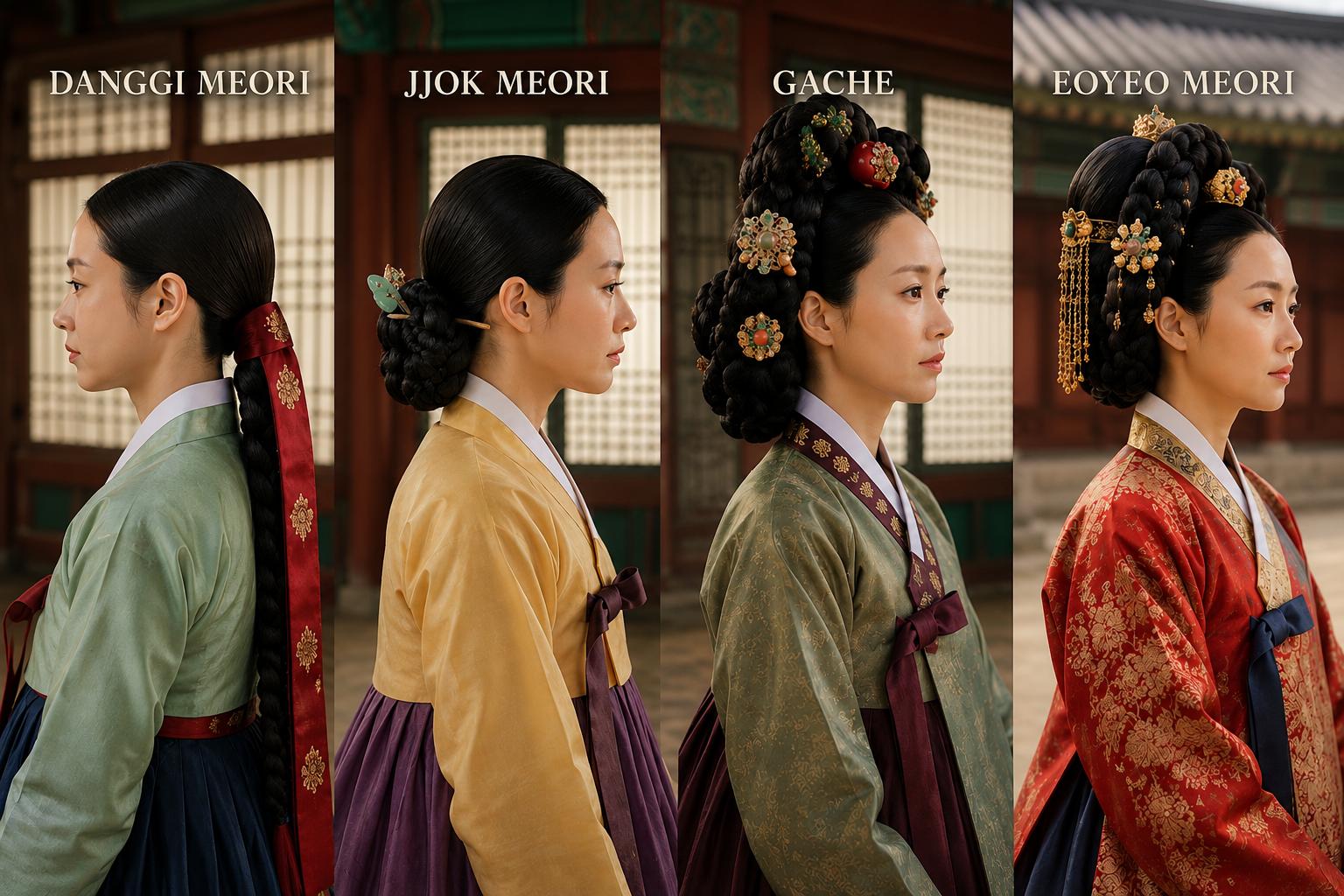
If you have watched a Korean historical drama, you have probably already seen these hairstyles without knowing what they were called.
AI-generated image
In This Article
If you have watched a Korean historical drama, you have probably already seen these hairstyles without knowing what they were called. The young woman with a long braid tied with a red ribbon. The queen wearing an enormous hairpiece rising high above her head. The court lady with her hair pinned into a tight bun.
These were not simply costume choices. In Joseon-era Korea, hairstyles often reflected a person's marital status, social position, and role within society. For viewers familiar with the visual codes of Korean historical dramas, a character's hairstyle could immediately communicate important information.
In Joseon Korea, Hairstyles Reflected Social Status
Traditional Korean hairstyles during the Joseon Dynasty were not purely aesthetic. Hairstyles commonly reflected age, marital status, rank, and social class.
Unmarried women wore their hair differently from married women. Noblewomen had access to styles and accessories that commoners typically did not. Palace women also had ceremonial hairstyles associated with court life and royal rituals.
Similar customs existed for men. Before adulthood, men often wore their hair long and braided. After the coming-of-age ceremony known as GWANRYE (관례), the hair was tied into a topknot called SANGTU (상투), which symbolized adult male status.
Hair carried strong cultural meaning during this period. When the Korean government introduced a mandatory hair-cutting policy in 1895, it was met with significant resistance in many parts of the country.
This is one reason Korean historical dramas can feel visually detailed to viewers familiar with the culture. Hairstyles often function as part of the storytelling itself.
Danggi Meori: The Long Braid Associated With Unmarried Women
DANGGI MEORI (댕기머리) is one of the most recognizable hairstyles seen in Korean historical dramas. The hair is braided into a single long braid that falls down the back, with a silk ribbon called DANGGI (댕기) tied near the end.
Some historical records also describe different ribbon colors being associated with different meanings depending on age or circumstance.
The hairstyle predates the Joseon Dynasty. Historical records and mural paintings from earlier Korean kingdoms depict women wearing long braided hairstyles, and by the Joseon period danggi meori had become strongly associated with unmarried women.
In many Korean historical dramas, female characters wear danggi meori before marriage and later transition to different hairstyles afterward. Costume teams often use this visual change to represent character growth and changing social status.
Jjok Meori: The Hairstyle of Married Women
JJOK MEORI (쪽머리), also known as JJOKJIN MEORI (쪽진머리), was the representative hairstyle of married women during the Joseon period. The hair was gathered and twisted into a bun at the back of the head, then secured with a decorative hairpin called BINYEO (비녀).
The binyeo was not simply decorative. Different materials and designs reflected social rank and status. Queens used highly elaborate gold hairpins, while noblewomen often used silver or jade accessories. Commoners generally wore simpler versions.
After King Jeongjo restricted the use of elaborate gache hairpieces in the late 18th century, jjok meori became even more widely used as an everyday hairstyle among married women.
In Korean historical dramas, jjok meori is commonly used for adult female characters who are married or socially established. For Korean audiences, the hairstyle itself often immediately signals that change in status.
Gache: The Elaborate Hairpiece That Became a Symbol of Status
GACHE (가체) refers to large decorative hairpieces worn by upper-class women and court women during the Joseon Dynasty. It remains one of the most visually dramatic hairstyles seen in Korean historical dramas.
Some gache were made using human hair and decorated with silk, gold, jade, coral, and other expensive materials. The more elaborate the hairstyle, the more it reflected wealth and status.
During the 18th century, gache culture became associated with excessive luxury and social competition among the upper class. Historical records suggest that some families spent large amounts of money preparing these hairstyles for weddings and formal occasions.
In 1788, King Jeongjo introduced restrictions on gache as part of wider efforts to discourage extravagance. However, the preference for large and visually impressive hairstyles continued even afterward.
In Korean dramas, large gache are often used to visually emphasize the authority and status of queens and high-ranking women.
Eoyeo Meori: The Ceremonial Hairstyle of Royal Women
EOYEO MEORI (어여머리) was a ceremonial hairstyle worn by queens, royal consorts, and high-ranking court women in Joseon Korea.
The hairstyle involved building the hair upward into a large structured form using additional hairpieces and decorative ornaments. One of the most recognizable accessories was TTEOLJAM (떨잠), ornaments decorated with hanging metal flowers or butterfly shapes that moved as the wearer walked.
During especially formal ceremonies, an additional headpiece called TTEOGUJI (떠구지) could also be placed above the hairstyle, creating the tall silhouette often associated with queens in Korean historical dramas.
Early versions of these structures could be extremely heavy, and some historical records describe concerns about the physical strain caused by their weight. Over time, lighter wooden structures were also used.
The height, structure, and elaborate decorations of eoyeo meori became symbols of royal authority and court status. Outside the palace, ordinary women would not wear these styles.