


Haechi: The Stone Palace Guardian Hiding in Plain Sight in Seoul
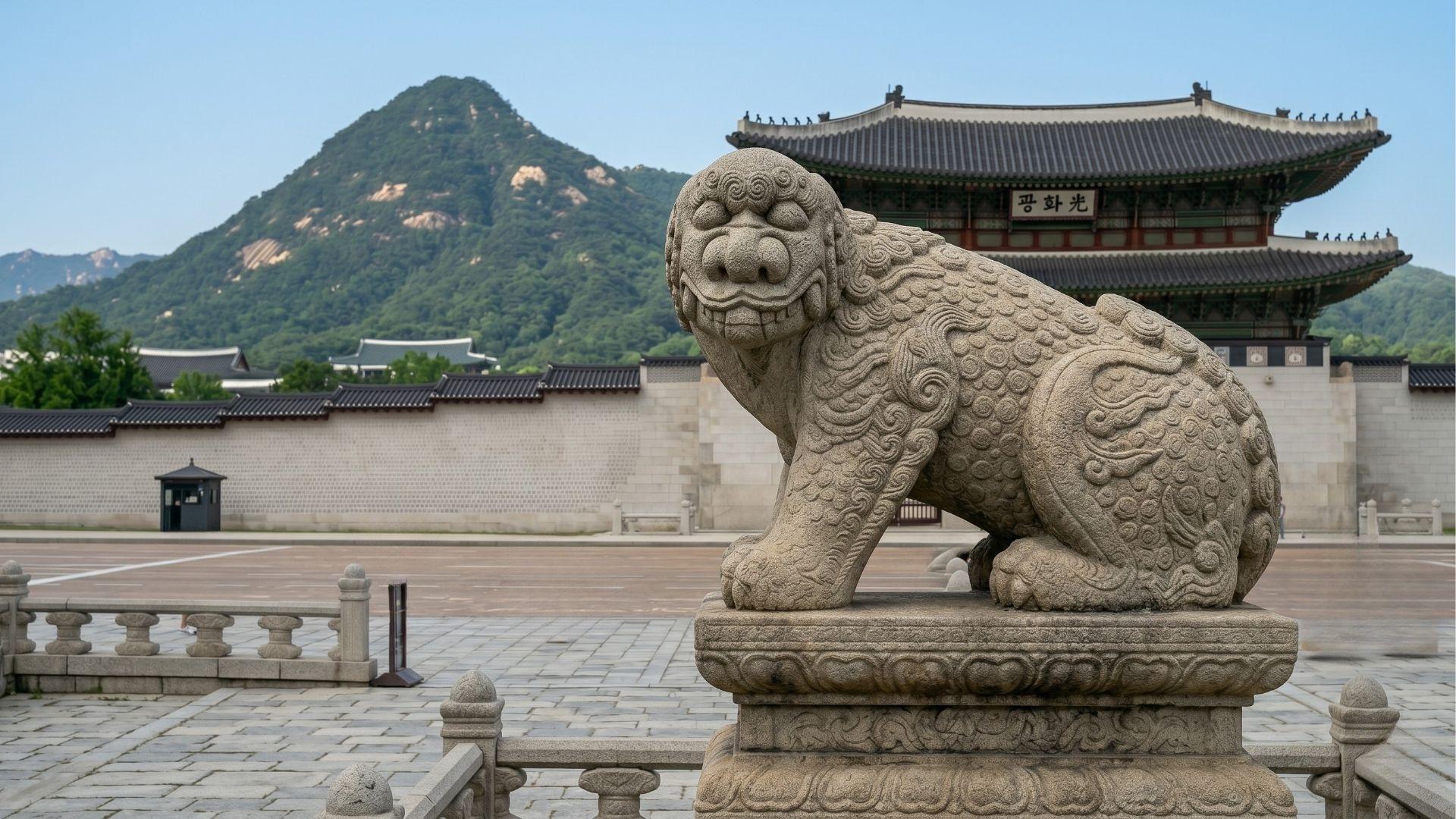
Millions of people visit Gyeongbokgung Palace in Seoul every year. Most walk past two stone creatures at the entrance without a second glance.
In This Article
Millions of people visit Gyeongbokgung Palace in Seoul every year. Most walk past two stone creatures at the entrance without a second glance. They are not lions. They are not dogs. They are HAECHI (해치), also known as HAETAE (해태), and they have stood at this spot for centuries.
The Stone Animals at the Palace Gate
The two stone figures flanking the entrance to Gyeongbokgung are among the most photographed objects in Seoul, often without visitors knowing what they represent. They sit low to the ground, compact and alert, with rounded bodies, a bell around the neck, and expressions that are calm but watchful.
These are widely known as haechi statues. They were not placed as decoration. In Joseon-era Korea, haechi carried a specific protective and symbolic role at important royal and government sites.
Whether the Gwanghwamun statues are truly haechi is a question that scholars have not fully settled. Some researchers argue that the figures lack the defining features of haechi — namely scales and a single horn — and bear a closer resemblance to lion statues common in 18th and 19th century Korean stone craft. The rounded protrusions on their heads, sometimes taken for horns, are considered by some to be a decorative motif from Buddhist tradition rather than literal horns. The debate continues, but the name haechi has stuck, reinforced by official use and public familiarity.
What Haechi Actually Is
Haechi is a mythical creature from Korean and broader East Asian tradition. It is typically described as a hybrid animal with the body of a lion or dog, covered in scales, with a single horn projecting from its forehead and a bell around its neck.
In traditional belief, haechi is associated with justice and the ability to distinguish right from wrong. According to folk tradition, it could identify the guilty and was said to use its horn to punish wrongdoers. Whether taken literally or symbolically, it functioned as a figure of moral authority in Joseon court culture.
Why They Stand in Front of Gyeongbokgung
Gyeongbokgung, built in 1395, was the main royal palace of the Joseon Dynasty. Placing haechi statues at its entrance served both practical and symbolic purposes.
Haechi was traditionally associated with protection against fire and disaster, which carried particular relevance for a palace constructed largely from wood. Symbolically, its presence at the gate reinforced the idea of the palace as a place of order and rightful governance.
In traditional geomantic interpretation, Gwanaksan mountain to the south of the palace was associated with fire energy. Haechi, linked to water and judgment, was understood as a counterbalance within this broader symbolic framework. The placement was considered deliberate rather than decorative.
Haechi in Joseon Culture
Haechi imagery appeared throughout official Joseon-era culture. Officials of the SAHEONGBU (사헌부), the royal censorate responsible for investigating misconduct and impeaching corrupt officials, wore robes embroidered with haechi patches. The association between the creature and institutional oversight was direct and intentional.
Beyond the censorate, haechi appeared in court murals, decorative objects, and architectural elements across the dynasty. It was not a folk motif but an official symbol connected to law, accountability, and governance.
From Palace Guardian to City Symbol
In 2008, Seoul city government adopted haechi as an official city symbol. The decision drew on its historical association with Gyeongbokgung and its long-standing connection to ideas of protection and justice. A stylized version now appears across Seoul's official branding, public signage, and tourism materials.
The original stone statues at Gyeongbokgung and the modern mascot share a name and a general form, but they occupy different cultural roles. The statues carry centuries of ritual and historical meaning. The mascot is designed for broad public recognition in a contemporary context.
Where to See Them Today
The haechi statues at Gyeongbokgung are visible near the main gate and can be seen without entering the palace grounds. They sit at a viewable height, and the carved detail of the body, bell, and facial expression is worth examining up close rather than from a distance.
Similar figures can also be found at other Joseon-era palaces in Seoul, including Changdeokgung and Deoksugung, each within its own historical context.
Most visitors to Seoul encounter haechi without realizing it. It sits in plain sight at one of the most visited sites in the city, largely unnoticed by the people walking past it every day.