


Korean Kites (Yeon): The Ancient Tradition of Sending Away Bad Luck
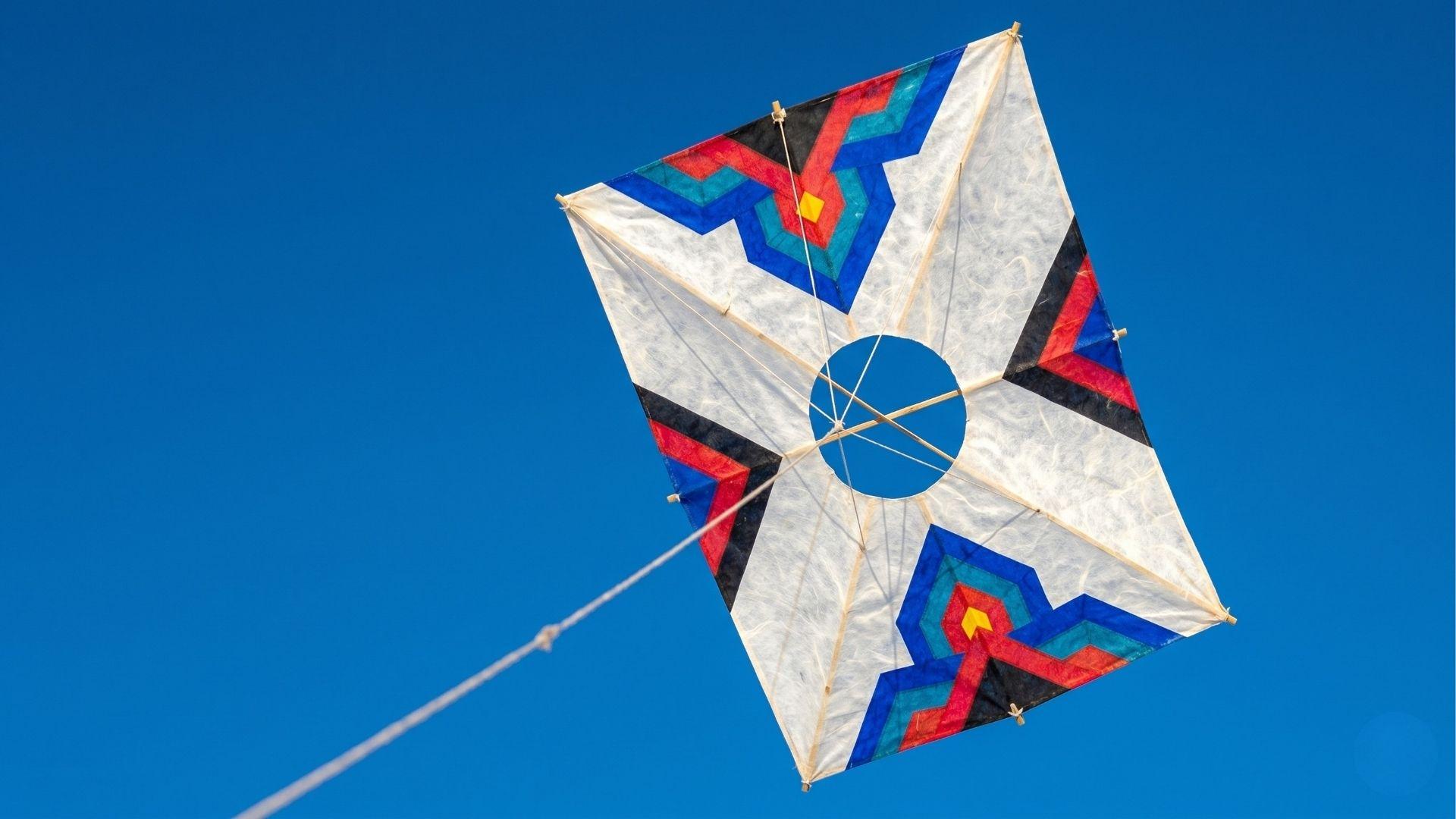
Korean kite flying is a tradition to release misfortune during the first full moon. The "Bangpae-yeon" kite, with its unique design, allows for skilled maneuverability and competitive fighting, preserving its cultural value as a national heritage today.
In This Article
Every year on the first full moon of the lunar calendar, some Koreans still write their worries on a kite and cut the string. The kite drifts away and disappears. The bad luck goes with it. This is not a modern wellness ritual. It is a practice that has been documented in Korea for centuries, and it tells you something important about what a kite means here.
A Kite That Carries Bad Luck Away
In Korea, the first full moon of the lunar new year is called JEONGWOL DAEBOREUM (정월대보름). It is one of the most significant dates in the traditional calendar, associated with rituals for health, good harvest, and the removal of misfortune. One of those rituals involves a kite.
The practice is called AENGMAGI YEONNAL LIGI (액막이 연날리기), or bad-luck-dispelling kite flying. A person writes the Chinese characters for their name and birth year on the kite, sometimes adding the word for misfortune. The kite is flown as high as possible, then the string is cut. Letting it go is the point. The kite carries the bad luck with it, and once it is out of sight, the connection is severed.
Finding and keeping a kite that has drifted down from this ritual is considered bad luck. This is not a folk tale. It is a practical social rule that shaped how people behaved around stray kites on this particular day.
What Makes a Korean Kite Different
The most distinctly Korean kite form is the BANGPAE YEON (방패연), which translates roughly as shield kite. It is rectangular with a circular hole cut in the center. That hole is not decorative. It allows wind to pass through, giving the kite stability and making it highly maneuverable in the hands of an experienced flyer.
The bangpae yeon is constructed from HANJI (한지), traditional Korean paper made from mulberry bark, stretched over a frame of thin bamboo strips. The materials are lightweight and the construction requires considerable skill. A well-made bangpae yeon responds to subtle movements of the string and can be directed with precision, which is why kite fighting became a serious competitive practice in Korea.
The other widely recognized form is the GAORI YEON (가오리연), a diamond-shaped kite with a long tail modeled after the shape of a stingray. It is more commonly associated with casual flying than competition.
The Military Origin
Korean historical records suggest that kites were used for military communication as far back as the Three Kingdoms period. One account from the Silla dynasty describes a general using a large kite to send a signal across a battlefield at night, attached to a lantern, to rally troops after a failed assault had caused panic among soldiers who interpreted a falling star as a bad omen.
Whether this specific account is historically verified or embellished over time is debated, but the association between kites and military signaling appears across multiple periods of Korean history. The bangpae yeon's design — stable, controllable, capable of carrying weight — is consistent with a tool designed for practical use rather than purely recreational flying.
Yeon in Joseon Court Culture
During the Joseon Dynasty, kite flying was practiced widely across social classes. Records from the period describe kite flying as a common activity during the winter months, particularly from the new year through Jeongwol Daeboreum, after which flying kites was traditionally discouraged until the following year.
Kite fighting, known as YEON SSAUM (연싸움), was a competitive activity in which flyers attempted to cut each other's strings using abrasive coatings on the line. It required skill, strategy, and an understanding of wind conditions. The practice was popular among both commoners and members of the yangban class, making it one of the few leisure activities that crossed social boundaries in Joseon society.
How It Is Made
A traditional bangpae yeon begins with hanji, cut and shaped to the correct proportions. Five bamboo strips are attached to the paper frame: one along the top, one along each side, one across the middle, and one running vertically through the center hole. The balance of tension across these strips determines how the kite flies. Too tight and it will not flex. Too loose and it will not hold shape.
Master kite makers in Korea are recognized under the country's intangible cultural heritage system. The knowledge required to select the right bamboo, prepare the hanji, and calibrate the frame by hand is passed down through direct instruction rather than written documentation. Several regional styles exist, each with slightly different proportions and construction methods.
Where the Tradition Stands Today
Kite flying as an everyday winter practice has largely declined in urban Korea. The open fields and frozen riverbanks that once served as flying grounds have been replaced by apartment blocks and infrastructure. The cultural context that gave the practice meaning — the lunar calendar, the seasonal rituals, the shared understanding of what a drifting kite signified — is no longer widely observed.
What remains is the craft itself and the competitive tradition. Annual kite festivals are held in several regions, including events along the Han River in Seoul. Kite fighting competitions continue to draw participants who maintain the technical skills of yeon ssaum. And the intangible cultural heritage designation ensures that traditional kite making is documented and taught, even as the number of practitioners remains small.
The bad-luck ritual still takes place on Jeongwol Daeboreum, though on a smaller scale than in previous generations. Somewhere above Seoul every January or February, a kite with someone's name written on it drifts away and disappears. The string gets cut. That part has not changed.