


Why Korea's Highway Rest Stops Have Become Destinations in Their Own Right
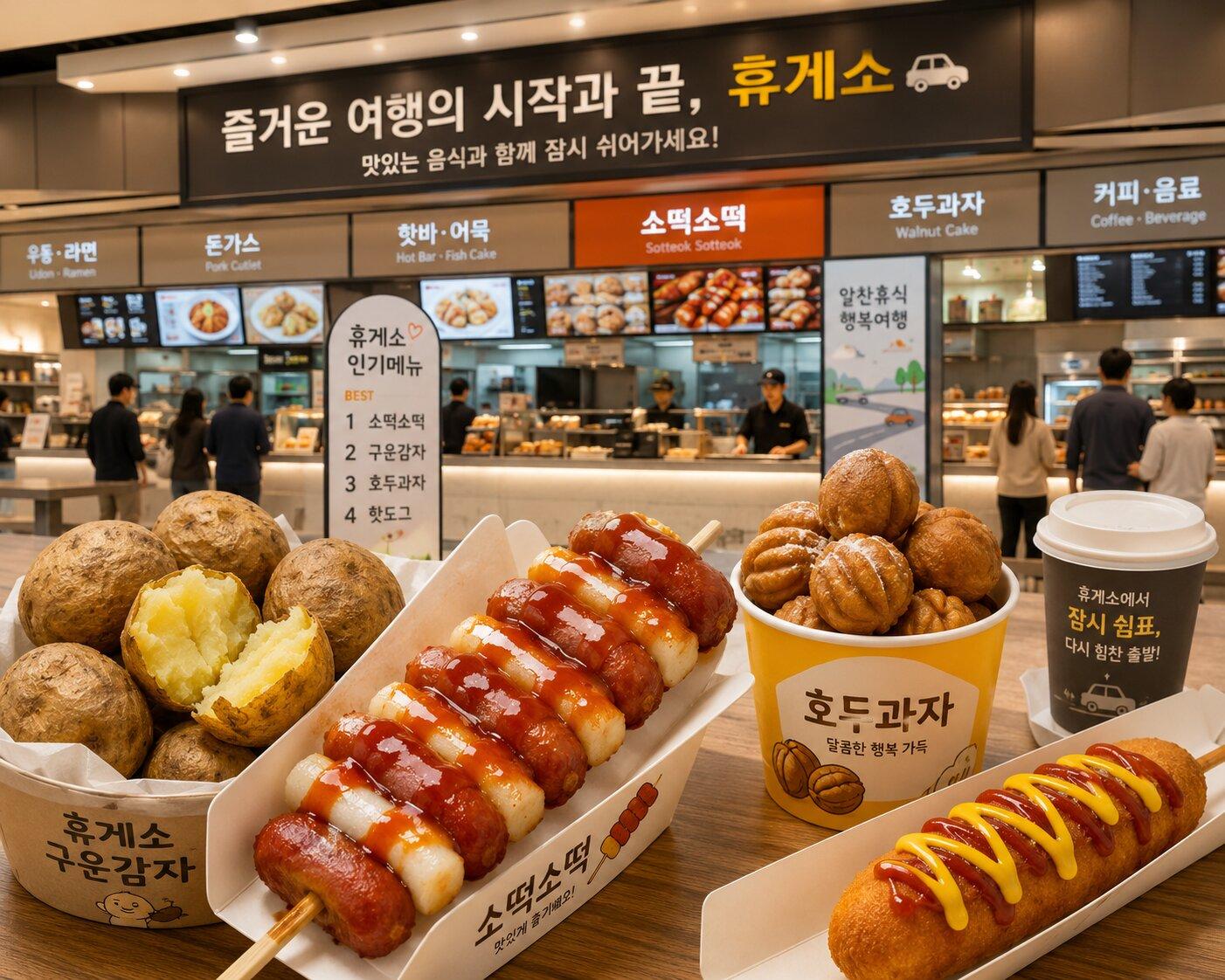
In many countries, highway rest stops are places people briefly visit for gas, coffee, or a bathroom break. In Korea, they became something very different.
In This Article
In many countries, highway rest stops are places people briefly visit for gas, coffee, or a bathroom break.
In Korea, they became something very different.
There are people who intentionally drive onto the highway just to eat at a specific rest stop. On weekends, long lines forming in front of famous locations like Anseong Rest Area are not unusual.
Korean highway rest stops evolved into a uniquely Korean mix of food culture, road-trip tradition, and domestic tourism.
Why Korean Highway Rest Stops Feel Different
Korea’s highway rest stops function less like temporary service areas and more like curated food halls built directly into the road system.
Travelers often discuss specific rest stop menus before a trip begins. Certain foods have become almost mandatory parts of Korean road-trip culture.
Some of the most recognizable examples include:
- Sotteok Sotteok — skewers alternating sausage and rice cake
- Roasted baby potatoes sold as quick snacks
- Hodugwaja — walnut-shaped pastries filled with red bean paste
These foods are no longer viewed as simple convenience snacks. For many Koreans, they are part of the emotional experience of traveling itself.
How Variety Shows Changed Rest Stop Culture
The modern image of Korean highway food expanded dramatically after comedian Lee Young-ja introduced her favorite highway rest stop foods on Korean variety television.
Following the popularity of those broadcasts, rest stop operators and the Korea Expressway Corporation began competing more aggressively to develop signature menus and attract famous food brands.
Rest stops increasingly focused on food quality, presentation, and regional branding rather than simply serving travelers quickly.
Some newer locations also introduced robotic baristas and serving robots as part of Korea’s broader interest in automated service technology.
A Meal That Represents the Entire Region
One of the defining characteristics of Korean rest stops is their emphasis on local specialties.
Rather than offering identical menus nationwide, many rest stops promote dishes strongly connected to the surrounding region.
At Hoengseong Rest Area along the Yeongdong Expressway, travelers can try dishes made with famous Hoengseong Korean beef, including gukbap and grilled deodeok steak dishes.
At Anseong Rest Area on the Gyeongbu Expressway, visitors often search specifically for the original version of Sotteok Sotteok.
In this way, Korean rest stops function almost like gateways to regional food culture before travelers even arrive at their destination.
From Rest Area to Travel Destination
Newer Korean rest stops increasingly focus on becoming places where people intentionally stay longer.
Some locations now include:
- Pet parks and dog-friendly facilities
- Regional history exhibitions
- Observation decks and scenic viewpoints
- Outlet shopping areas
- Camping and glamping spaces
Instead of functioning only as a stop between destinations, certain rest stops are gradually becoming destinations themselves.
Why Foreign Travelers Should Stop By
Foreign travelers planning a Korean road trip are often surprised by how clean, organized, and food-focused Korean highway rest stops feel.
Each region offers different menus, local specialties, and unexpected snacks that can become memorable parts of the journey itself.
In Korea, the trip often starts long before reaching the destination.
That is why Korean highway rest stops are not viewed as simple service areas — but as part of the travel experience itself.