


Sindang-dong — The Alley Where Tteokbokki Was Born
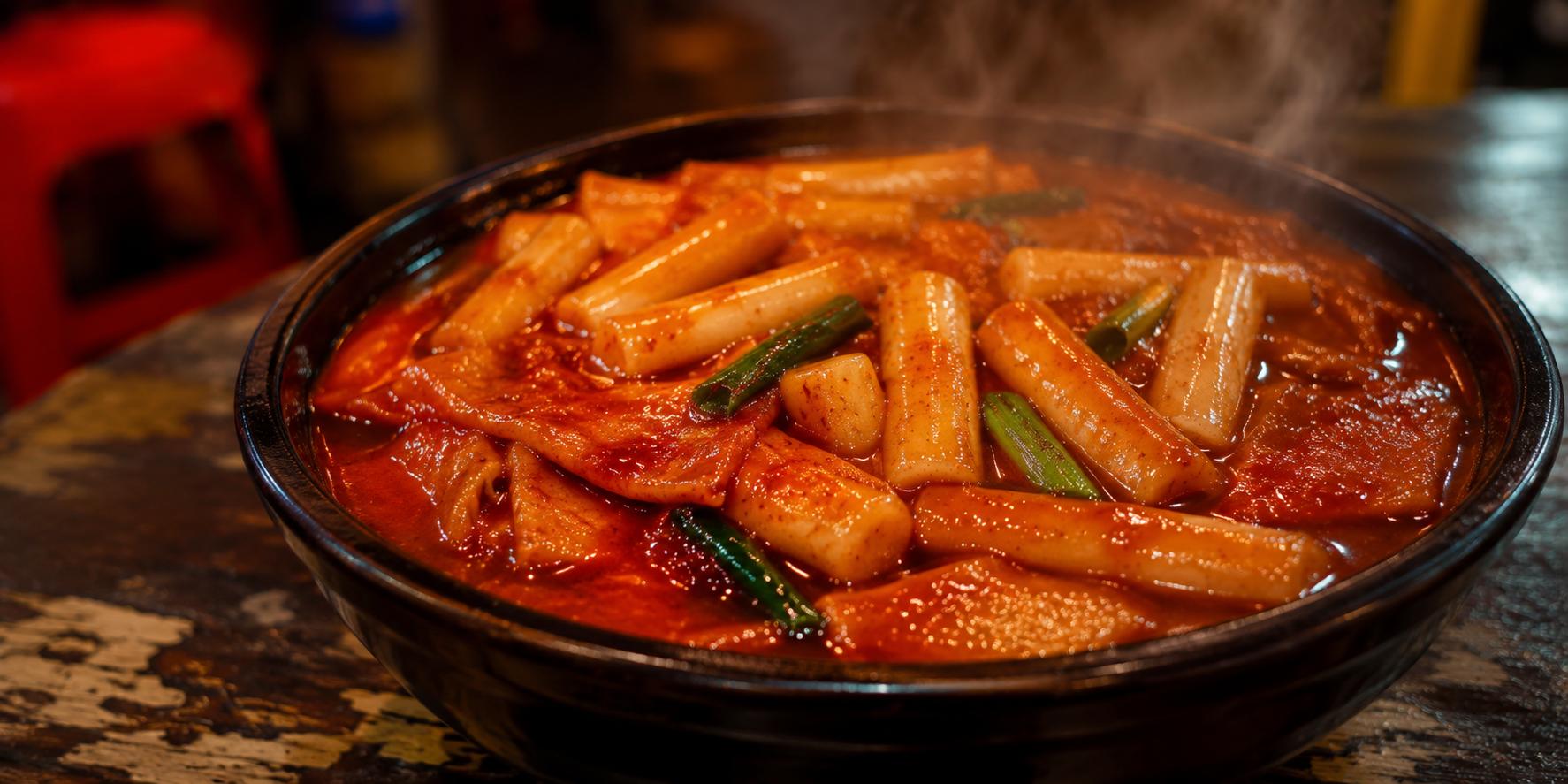
If you had to name one snack that defines Korean street food, most people would say tteokbokki. It appears in bunsikjip snack bars, pojangmacha street stalls, convenience stores…
In This Article
A National Snack Born from a Mistake
If you had to name one snack that defines Korean street food, most people would say tteokbokki. It appears in bunsikjip snack bars, pojangmacha street stalls, convenience stores, and upscale restaurants. It's everywhere. But the dish as it exists today — the red, spicy, chewy version that Korea runs on — only came together about seventy years ago. And it started with an accident.
Tteokbokki Wasn't Always Spicy
Before the red version existed, there was a completely different dish with the same name. Gungjung tteokbokki — royal court tteokbokki — was made by stir-frying white rice cakes with soy sauce, beef, shiitake mushrooms, and vegetables. No gochujang, no heat. It was a refined dish made with expensive ingredients, served at the Joseon royal court, and well out of reach for ordinary people. Some restaurants still serve this version today, usually under the name ganjang tteokbokki — soy sauce rice cakes — as a quieter alternative to the standard.
1953 — The Accident in Sindang-dong
The gochujang version begins with a woman named Ma Bok-rim, in the Seoul neighborhood of Sindang-dong, in 1953 — the year the Korean War ended. The story, repeated consistently across accounts of her life, goes like this: Ma Bok-rim was eating at a Chinese restaurant with her family when she accidentally dropped a rice cake into a bowl of jajangmyeon. The black bean sauce-coated rice cake tasted better than expected. She went home thinking about it, and started experimenting — using gochujang instead of the expensive chunjang, building a sauce that was sweet, spicy, and stuck to the rice cake properly.
She set up a street stall in Sindang-dong with a charcoal briquette stove and a tin pot. Because rice was expensive, she used wheat-based rice cakes to keep the price low. One day, a student showed up with instant noodles and asked her to cook them in the sauce. She did. Rabokki — tteokbokki with ramen — was born the same way the dish itself was: by accident. Ma Bok-rim's stall grew into a restaurant, and other vendors began setting up alongside her. By the 1970s, the area around her original location had become Sindang-dong Tteokbokki Town, a cluster of dedicated restaurants that still operates today. Ma Bok-rim kept her sauce recipe secret until illness forced her to pass it on to her daughters-in-law. She died in 2011 at the age of ninety. The advertising line she became famous for — "even my daughter-in-law doesn't know" — turned out to be literally true for most of her life.
How It Became a School Gate Staple
Through the 1970s and 80s, tteokbokki settled into its role as the defining snack of the Korean school experience. A few hundred won bought a portion. The combination of tteokbokki, twigim fried snacks, and sundae blood sausage became the standard bunsikjip menu — the three things that appeared on every snack bar counter outside every school in Korea. The after-school stop at the tteokbokki cart is a memory that most Koreans of a certain age share in some version, regardless of where they grew up.
Rose, Cream, Malatang — The Evolution Continues
The tteokbokki being sold today is harder to summarize than it used to be. Rose tteokbokki — gochujang cut with cream — became a widespread trend in the early 2020s. Cream tteokbokki dropped the spice almost entirely. Jjapagetti tteokbokki used instant black bean noodle seasoning. Malatang-style versions borrowed the numbing heat of Sichuan peppercorn. The base format — chewy rice cake, sauce, heat — has stayed the same. Everything around it keeps changing. The dish that started on a charcoal stove in 1953 now exists in dozens of variations, sold through delivery apps, franchise chains, and restaurants that charge considerably more than a few hundred won.