


What to Eat on Jeju Island
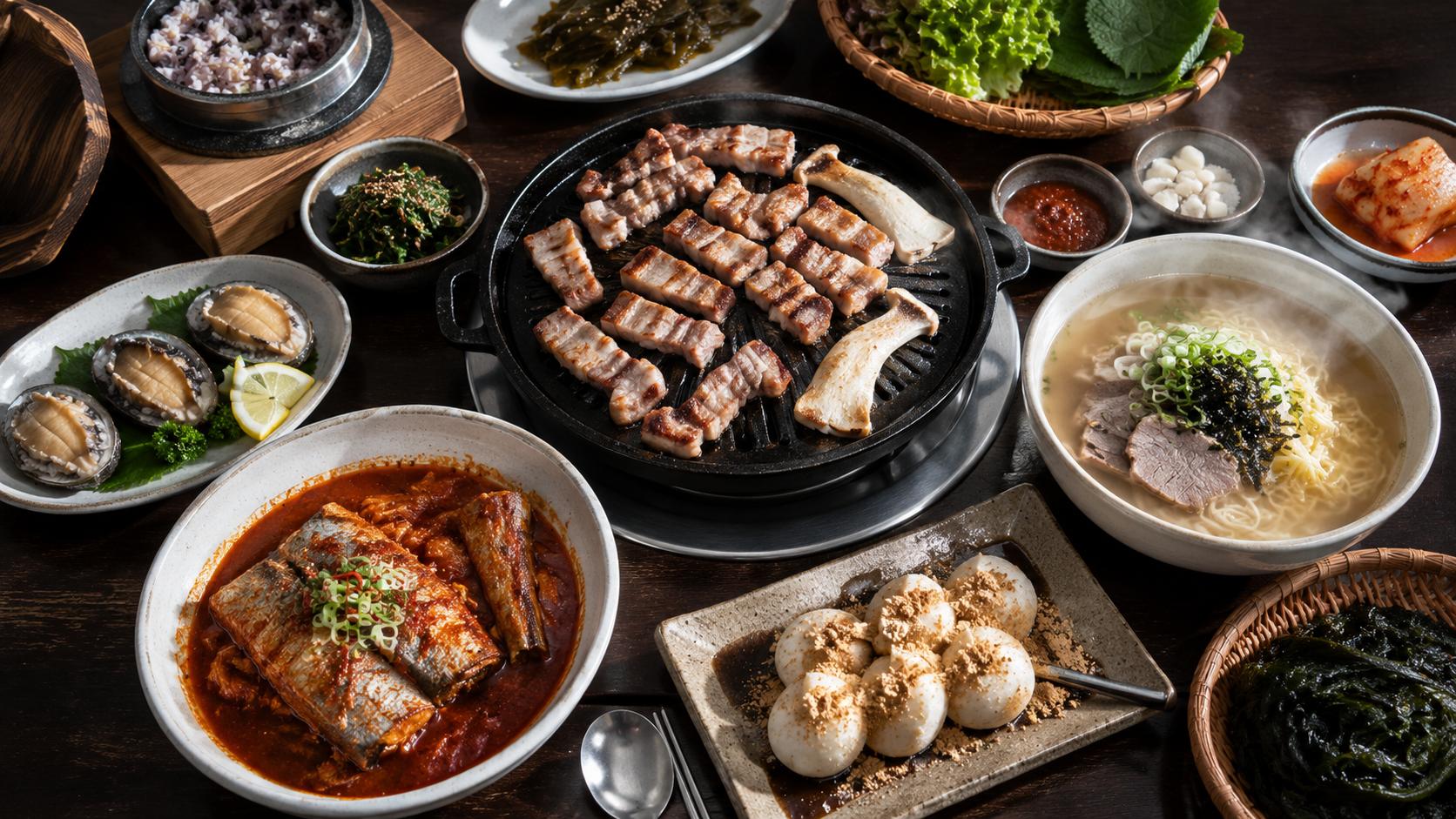
Jeju's geography as a volcanic island has produced a food culture that doesn't quite exist anywhere else in Korea.
In This Article
What to Eat on Jeju Island
Jeju's geography as a volcanic island has produced a food culture that doesn't quite exist anywhere else in Korea. Ingredients shaped by the island's environment, seafood harvested directly from the water by haenyeo divers, and local dishes with centuries of history behind them. Here's what to eat when you're there.
Jeju Black Pork — The One Thing You Can't Skip
There's a saying in Korea that leaving Jeju without eating black pork means you've only experienced half the island. Jeju black pigs are smaller than standard pigs, take longer to raise, and exist in smaller numbers — all of which shows up in the meat. The texture is firmer, the fat chewier, and the flavor more distinct. The local way to eat it is grilled over charcoal and dipped in mel-jeot, a salted anchovy sauce. Black pork restaurants are easy to find anywhere on the island, but the Black Pork Street in Jeju City is the most established spot for it.
Galchi — Silver Fish from Jeju Waters
Jeju cutlassfish — galchi — is well known across Korea, and the version caught off Jeju's coast is considered the best. The fish are larger and meatier than those found elsewhere, and people who eat both consistently say they taste different. Galchi-jorim is the most common preparation: the fish braised in a spicy sauce and served in a clay pot. Galchi-hoe — raw cutlassfish — is a Jeju specialty that's harder to find on the mainland. Eating a long silver fish raw is not something most people expect to do, but it's a distinctly Jeju experience.
Abalone — Caught by Haenyeo, Served Every Way
Jeju abalone is wild-caught by haenyeo — the island's female free divers — which sets it apart from the farmed variety available elsewhere in Korea. The difference in texture and depth of flavor is noticeable. On Jeju, abalone appears in more forms than anywhere else: porridge, grilled, raw, in water-broth bibimbap, shabu-shabu, and stone pot rice. On the mainland, most people only encounter it as porridge or grilled. The price is higher than average, but the wild-caught version from Jeju has a consistent reputation for being worth it.
Gogi Guksu — Jeju's Everyday Noodle Soup
Gogi guksu is Jeju's most representative local dish. Pork bones and meat are simmered for hours to produce a rich, clear broth, which is then served with noodles and slices of pork on top. It looks similar to seolleongtang — the Seoul-style bone broth soup — but uses pork rather than beef, which gives it a different character. The dish has roots in Jeju's tradition of serving noodles at celebrations: gogi guksu was the food made for wedding and festival guests, which is why it's sometimes called janchi guksu — party noodles. It's affordable, filling, and the version that locals eat, which makes it one of the better ways to eat like someone from Jeju.
Omegi Tteok — A Traditional Rice Cake from the Island
Omegi tteok is a Jeju rice cake made from foxtail millet rather than the glutinous rice used in most Korean tteok. The millet dough is shaped into rounds, filled with red bean paste, and rolled in soybean or red bean powder. The result is chewy and lightly nutty — less sweet than many other Korean rice cakes. The reason millet was used instead of rice goes back to Jeju's history: rice was scarce on the island, and millet was the main grain. The cake reflects that. Today omegi tteok is one of the more popular Jeju souvenirs and can be found at Dongmun Market and at the airport, though the fresh versions from small producers are worth seeking out.