


The Final Course: How Fried Rice Became Korea's Unofficial Meal Ritual
"If you don't eat fried rice after eating meat, it feels like the meal wasn't finished." There is an essential scene in the Korean dining landscape.
In This Article
"If you don't eat fried rice after eating meat, it feels like the meal wasn't finished."
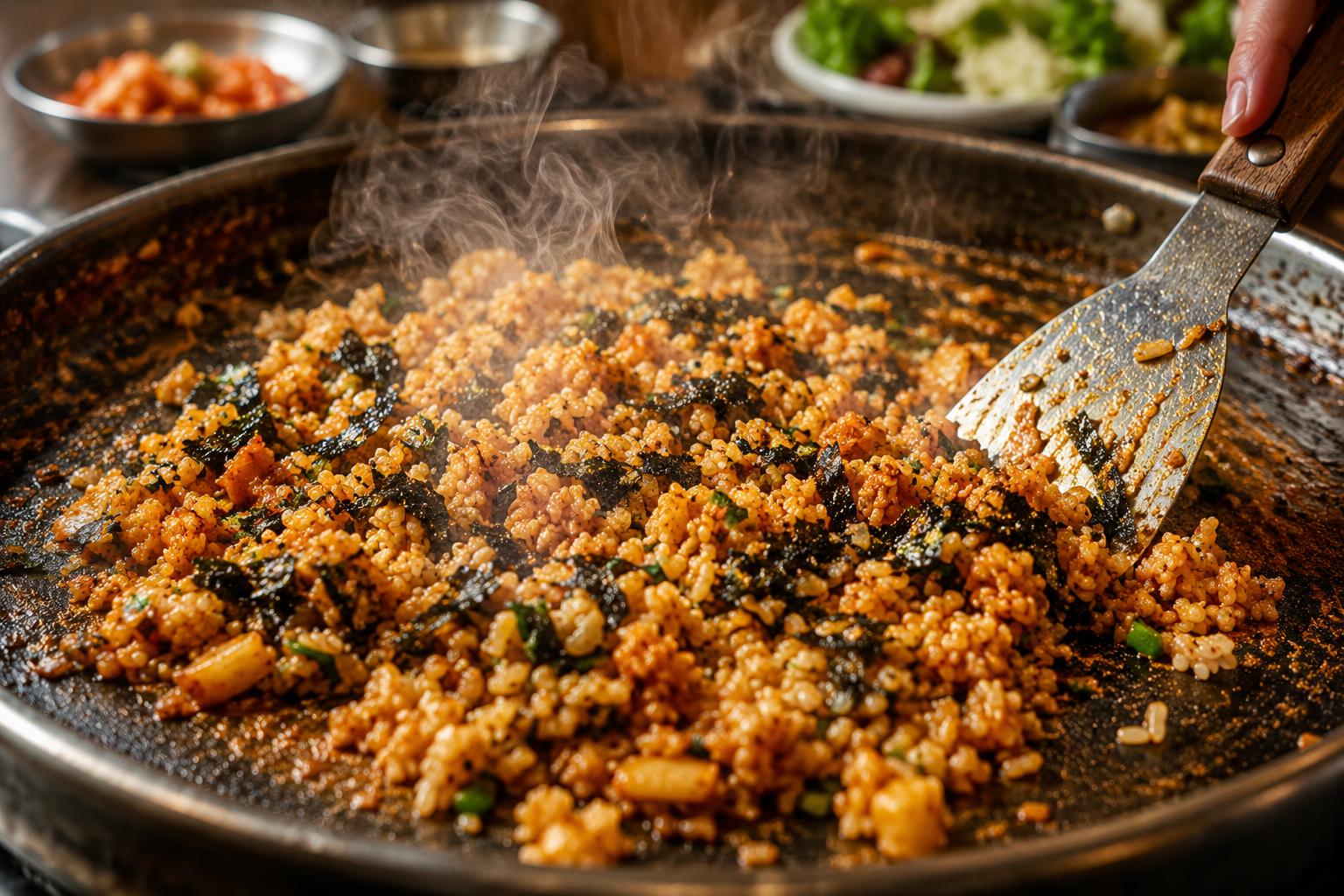
There is an essential scene in the Korean dining landscape. Toward the end of a meal like grilled pork belly (samgyeopsal) or spicy stir-fried chicken (dak-galbi), rice, dried seaweed, and sesame oil are added to the hot iron plate and stir-fried. Koreans jokingly call this 'K-Dessert.'
Instead of sweet cakes or ice cream, finishing a meal with stir-fried rice seasoned with spices has become a unique Korean culinary tradition.
The Rebirth of Leftovers: The Birth of Fried Rice
Fried rice culture stems from Korea’s unique cooking environment. Dishes like spicy stir-fried chicken or stir-fried octopus use gochujang-based sauces and are cooked on iron plates. The sauce, vegetables, and meat scraps left on the plate are a concentrated essence of flavor.
Adding rice to the plate is perceived not merely as a way to finish leftovers, but as a "final cooking stage" that infuses the flavor of the sauce into every grain of rice.
A Mandatory Carbohydrate Finale
Recently, the restaurant industry treats fried rice not just as a side dish, but as an essential strategy menu.
- Diversified Toppings: With the addition of ingredients like cheese, flying fish roe, and eggs to enhance flavor, fried rice has attained the status of an independent dish despite being the final course.
- Consumer Psychology: Consumers often consider whether the fried rice is delicious when choosing a restaurant. The satisfaction of the final fried rice, alongside the main dish, has become a key factor in deciding whether to revisit.
"K-Dessert" as a Cultural Phenomenon
To foreigners, the culture of eating salty and spicy fried rice as a dessert is quite exotic. However, the popularity of the term "K-Dessert" is deeply related to the emotional satisfaction Koreans feel when finishing a meal.
The act of lingering in front of the hot plate, scraping off the remaining rice, and sharing conversation is, for Koreans, a ritual that confirms communication and bonding. Today, the cheerful sound of fried rice being made continues to resonate on iron plates across the country, keeping the tradition of the Korean table alive.