


The Porridge Koreans Bring When Someone Is Sick
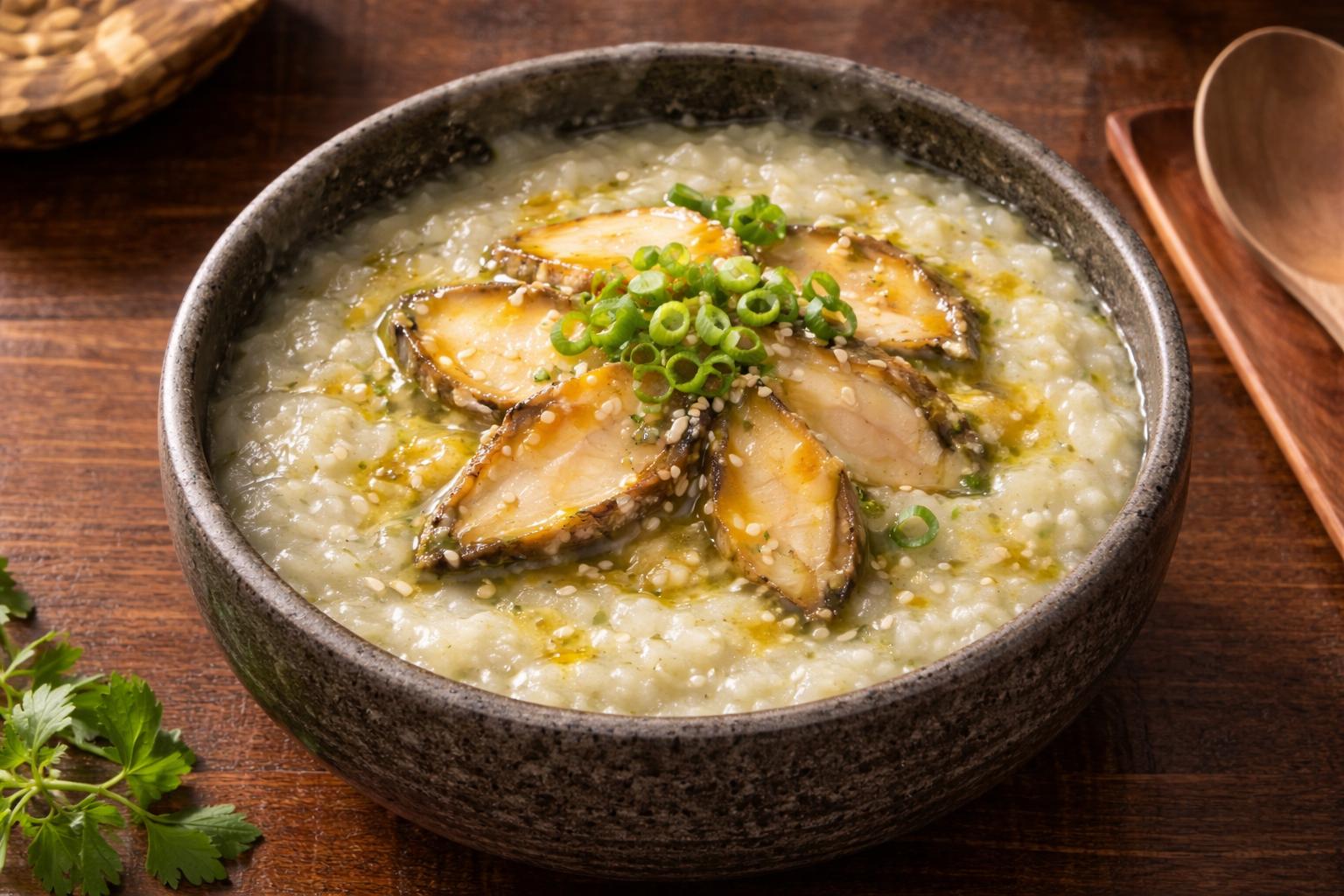
When someone in Korea falls ill, one food comes to mind before any other. Jeonbokjuk — abalone porridge.
In This Article
Jeonbokjuk — How a Precious Ingredient Became a Bowl of Porridge
When someone in Korea falls ill, one food comes to mind before any other. Jeonbokjuk — abalone porridge. It appears in virtually every hospital visit scene in Korean dramas, and in real life, it's the dish people bring when someone is facing major surgery or has become seriously weak. Why abalone porridge specifically, and what is the history behind it?
What Is Jeonbokjuk?
Jeonbokjuk is made by cleaning fresh abalone, sautéing it in sesame oil, and simmering it with soaked rice until it becomes porridge. When the abalone is cooked with its viscera intact, the porridge takes on a green tint — the deep, distinctive flavor of the abalone's internal organs spreads through the entire bowl. Without the viscera, the taste is cleaner and more neutral. The abalone itself is chewy and springy, while the porridge around it is smooth and nutty. It's known for being easy to digest and gentle on the stomach.
Why Is It Considered Such a Precious Food?
Abalone has been a rare and expensive ingredient for a very long time. During the Joseon period, abalone harvested by the haenyeo divers of Jeju Island — at considerable personal risk — regularly appeared on the list of tribute offerings sent to the king. There is even a story that China's first emperor, Qin Shi Huang, consumed abalone as part of his pursuit of immortality. The ingredient was so scarce that slicing it thinly and cooking it into porridge was the only way to stretch it far enough for several people to share. That sense of rarity and the image of abalone as a restorative food has carried through to the present.
How Did It Become the Go-To Sick Visit Food?
Abalone is rich in protein and vitamins, and contains significant amounts of calcium, phosphorus, and other minerals. It is both highly nutritious and easy to digest, making it well-suited for someone whose body is weakened. But the nutritional profile alone doesn't fully explain the cultural role. Using an expensive ingredient and cooking it yourself — or paying a premium to have it made — communicates that you put real effort in for this person. That gesture of care is built into the dish. In practice, abalone porridge is the flagship menu item at Korea's major porridge franchise chains, and among the fastest-selling items in supermarket porridge sections. Expensive but accessible, and with a taste that backs up its reputation.
Jeju Abalone Porridge
Abalone porridge has a particularly strong connection to Jeju Island. On Jeju, porridge made from wild-caught abalone harvested directly by haenyeo divers is known locally as geuwjuk, and it has long been established as a regional specialty. The difference between wild-caught and farmed abalone shows up noticeably in both texture and depth of flavor. It is consistently listed among the dishes that visitors to Jeju are told not to leave without trying.