


Janchi Guksu(잔치국수): The Noodle That Koreans Eat at Weddings
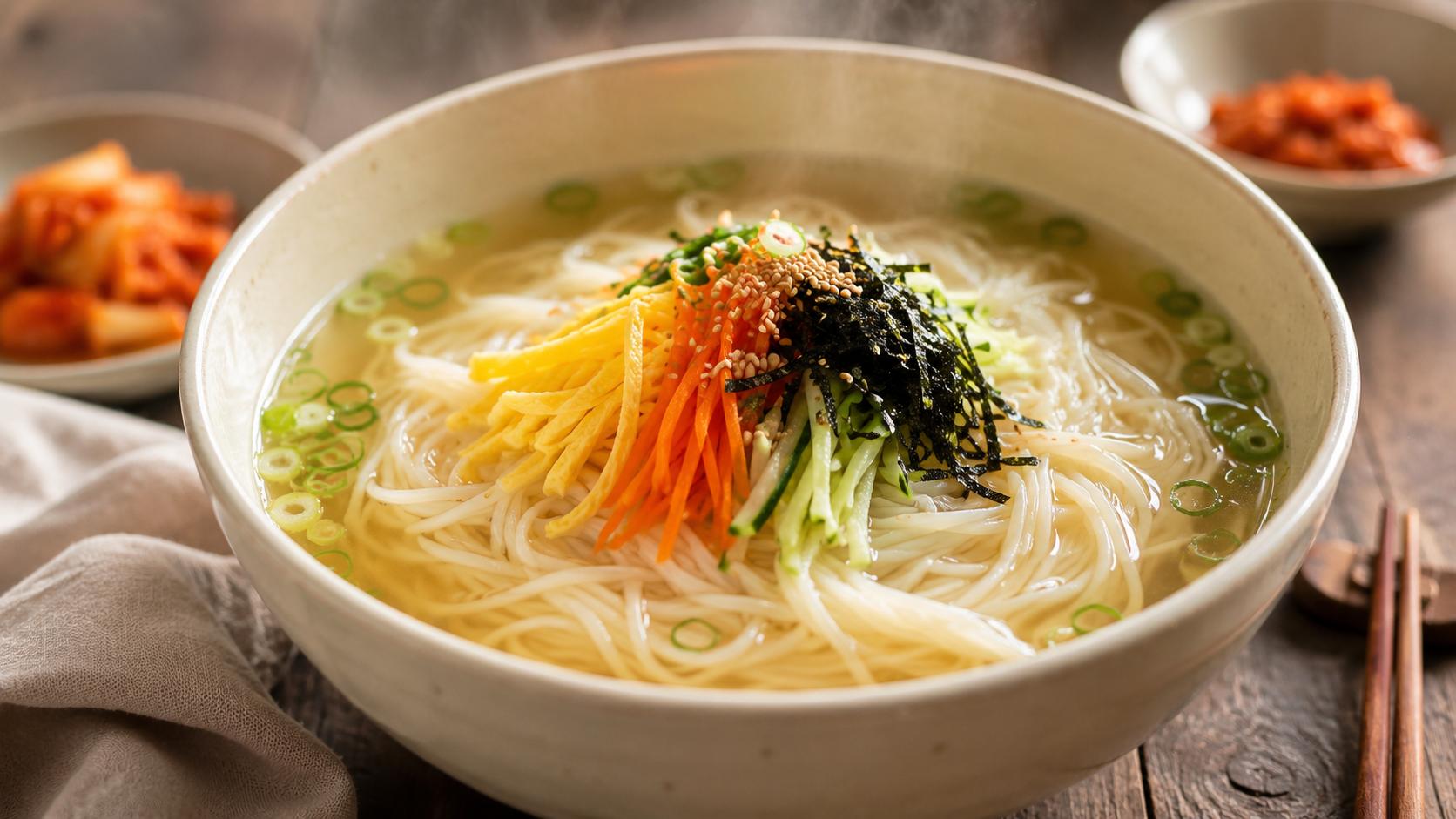
In Korea, you do not ask someone when they are getting married. You ask when they are going to feed you noodles.
In This Article
In Korea, you do not ask someone when they are getting married. You ask when they are going to feed you noodles. The answer is the same. The noodles are not just food. They are part of the message.
When Someone Asks "When Will You Feed Me Noodles?"
The phrase GUKSU EONJE MEOKYEO JULGEOYA (국수 언제 먹여줄 거야) translates literally as "when are you going to feed me noodles?" In Korean, it means "when are you getting married?" Historically, attending a wedding was often associated with "going to eat noodles," reflecting how closely weddings and janchi guksu were connected. For much of Korea's history, noodles were one of the foods most strongly associated with weddings, and understanding why reveals something important about how Koreans think about food, celebration, and the meaning of a long life together.
What Janchi Guksu Actually Is
JANCHI GUKSU (잔치국수) is a simple dish. Thin wheat noodles, called SOMYEON (소면), are cooked and placed in a clear broth made from anchovies, kelp, or sometimes beef. On top go thinly sliced egg garnish, vegetables, and occasionally strips of seasoned meat. The broth is light, the noodles are delicate, and the whole bowl is clean and mild in a way that makes it easy to eat in large quantities at a crowded celebration. JANCHI means feast or celebration. GUKSU means noodles. The name says exactly what it is: the noodle dish you eat at a party.
Why Noodles at a Wedding
The core reason is the shape. A noodle is long. In Korean traditional belief, length represents longevity. Eating long noodles at a wedding was a way of wishing the couple a long life and a long marriage together. In some regions and traditions, cutting noodles before eating them was associated with breaking the symbolism of a long life. Likewise, keeping the noodles as long as possible while eating was sometimes seen as a way of preserving that symbolism. This belief in noodles as a symbol of long life was not unique to Korea. Similar traditions exist across East Asia. In Korea, however, the symbolism became especially associated with weddings, birthdays, and HWANGAP (환갑), the celebration of a person's 60th birthday.
Flour Was a Luxury
There was a practical dimension too. A Chinese diplomat who visited Korea in 1123 recorded in his account GORYEO DOGYEONG (고려도경) that wheat was scarce on the peninsula and had to be imported from northern China, making wheat flour extremely expensive. Serving wheat noodles at a celebration was not a cheap shortcut. It was a genuine act of hospitality, bringing out an ingredient that most households could not afford on an ordinary day. The fact that noodles now seem humble and inexpensive is a function of how much food production changed over the centuries. At the time they were served at weddings, they were considered a special and worthy offering for guests.
The Village Bowl
Traditional Korean weddings were not catered events. They were village affairs. Neighbors brought ingredients, women gathered in the courtyard to cook together, and everyone ate from the same large pots. Janchi guksu was practical for this kind of communal cooking. It could be made in enormous batches, served quickly to large numbers of guests, and eaten almost anywhere around the yard. The act of eating it was itself a form of participation. You were not just a guest at someone's wedding. You were part of the celebration in a physical, shared way that a modern buffet line does not quite replicate.
From Noodles to Galbitang — and Back Again
The dominance of janchi guksu at Korean weddings did not last forever. As meat consumption increased during the late twentieth century, many families began to feel that serving noodles alone was no longer sufficient for formal hospitality. GALBITANG (갈비탕), a rich beef short rib soup, became one of the most popular wedding meal choices and was often seen as a sign of generous hosting. For a period, noodles at weddings came to feel somewhat old-fashioned. More recently, however, some couples have chosen to reintroduce janchi guksu as a way of honoring tradition and reconnecting with the symbolism behind the dish.
A Bowl That Still Means Something
Janchi guksu is easy to find in Korea today, from market stalls and neighborhood restaurants to school cafeterias. Today, it is one of Korea's most accessible noodle dishes, a striking contrast to the time when wheat flour itself was considered a luxury. But the version that carries the deepest meaning is not the everyday bowl. It is the one served at a crowded wedding table, shared among guests gathered to celebrate the same couple. In that setting, the noodle is more than food. Its length becomes a symbol of the long and prosperous life people hope the newlyweds will share together.