


The Secret Behind K-Beauty Eyes: Korea's Color Contact Lens Culture
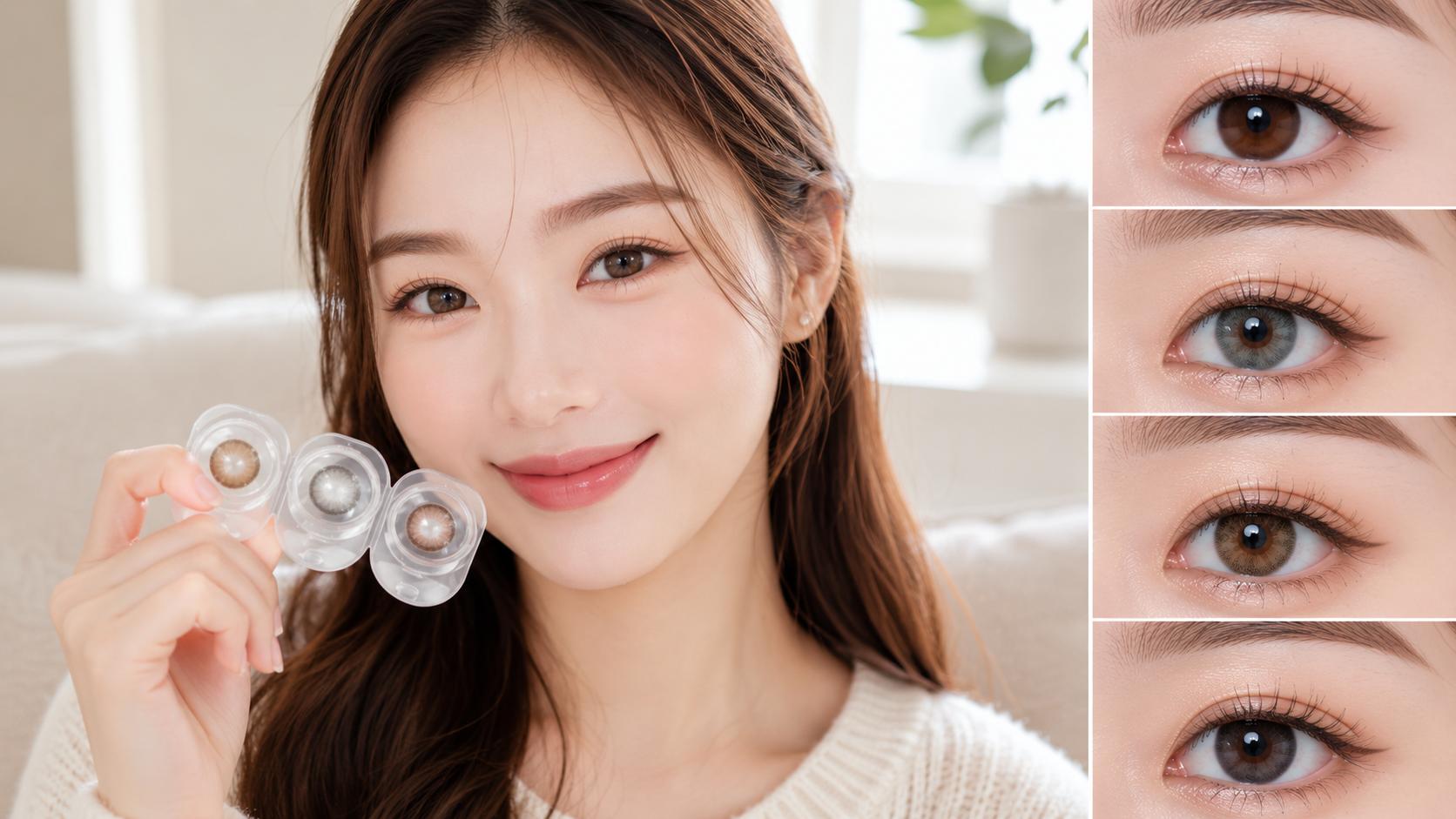
You are watching a K-pop music video. The makeup looks minimal.
AI-generated image
In This Article
You are watching a K-pop music video. The makeup looks minimal. The skin is clean, the lips are subtle, and the eye shadow is barely noticeable. Yet something about the eyes immediately stands out. They appear deeper, rounder, and more luminous than expected. In many cases, that effect comes from color contact lenses rather than digital filters. While they may seem like a small styling detail, color lenses have become one of the most recognizable elements of modern Korean beauty culture.
The Question Every K-Beauty Fan Eventually Asks
Anyone who has spent time following Korean beauty trends eventually notices the eyes. Not eye shadow, eyeliner, or lash extensions. The iris itself often looks different. Larger. Softer around the edges. More dimensional. For many viewers outside Korea, the effect does not immediately register as makeup because it looks surprisingly natural. That subtle enhancement is one of the key goals of the Korean KEOLLEO RENJEUU (컬러렌즈), or color contact lens. Rather than dramatically transforming appearance, many Korean lens designs aim to enhance existing features in a way that feels effortless.
What Korean Color Lenses Actually Are
Korean color contact lenses are cosmetic lenses worn over the iris to change or enhance the appearance of the eye. What often separates them from many Western equivalents is their design philosophy. While some color lenses focus on dramatically changing eye color, many Korean lenses are designed to make the iris appear larger and more defined. One of the most common techniques is the SSEOKEULLAIN (써클라인), or circle line, a darkened limbal ring printed around the outer edge of the lens. This creates the visual impression of a wider iris and a more defined eye shape. The result is often subtle enough that people notice the eyes without immediately realizing why.
The Graphic Design Behind the Lens
The design sophistication of Korean color lenses is one of their defining characteristics. Rather than relying on a flat layer of color, many Korean manufacturers use multi-layered graphic patterns that mimic the natural complexity of the iris. Common design features include multi-tone color gradients that create depth, highlight patterns that simulate natural light reflection, soft diffusion effects that add dimension, and limbal rings of varying thickness depending on the intended look. Some designs create a youthful doll-like effect, while others aim for a subtle glassy appearance. Major brands regularly introduce new collections that reflect changing beauty trends and seasonal aesthetics.
How K-Pop Made Color Lenses a Global Accessory
Korean color lenses existed long before K-pop became a global cultural force, but their international popularity grew alongside the rise of Korean entertainment. K-pop idols are among the most closely observed performers in the world, and fans often analyze styling details ranging from fashion and makeup to hair color and contact lenses. Fans frequently search for the lens styles worn by idols in music videos, stage performances, and promotional photos. As Korean beauty trends spread internationally, color lenses became more than a niche product. They evolved into a widely recognized K-beauty accessory embraced by consumers around the world.
Among Korean consumers, light brown remains one of the most popular everyday lens colors because it enhances the eyes while maintaining a natural appearance. Grey lenses are also common, offering a slightly cooler and more sophisticated look. Blue lenses tend to appear more often in concept-driven styling, photoshoots, and stage performances where a stronger visual impact is desired.
Where to Buy Them in Korea
For international visitors, buying color lenses has become a common part of the Korean beauty shopping experience. Some Olive Young locations carry selected color lens products, making them an accessible starting point for tourists already shopping for skincare and cosmetics. However, dedicated lens specialty stores generally offer a wider selection of colors, diameters, and graphic designs.
Areas such as Hongdae and Myeongdong are known for their concentration of lens retailers, where shoppers can compare different styles and receive guidance on lens specifications. Online marketplaces including Coupang and Musinsa also carry products from many well-known brands. Both prescription and cosmetic options are widely available. Popular domestic brands include GEO Medical, O-Lens, and Olola, several of which provide international shipping options for overseas customers.
What to Know Before You Try Them
Color contact lenses are considered medical devices regardless of whether they provide vision correction. Reputable Korean manufacturers comply with regulations established by the Korean Ministry of Food and Drug Safety, and many products are also certified for export markets. First-time wearers should consider having an eye examination, selecting the correct base curve, and following proper lens hygiene practices.
Daily disposable lenses are often the most convenient option for occasional wear or travel. One detail that is especially important when shopping for Korean lenses is graphic diameter, which refers to the size of the printed design rather than the overall lens itself. A larger graphic diameter creates a stronger enlargement effect, while a smaller one appears more natural. For beginners, choosing a graphic diameter close to the size of the natural iris is usually the easiest way to achieve the subtle enhancement that has become a signature of the Korean color lens aesthetic.