


Purple Is Having a Moment — Ube Is Taking Over Korea
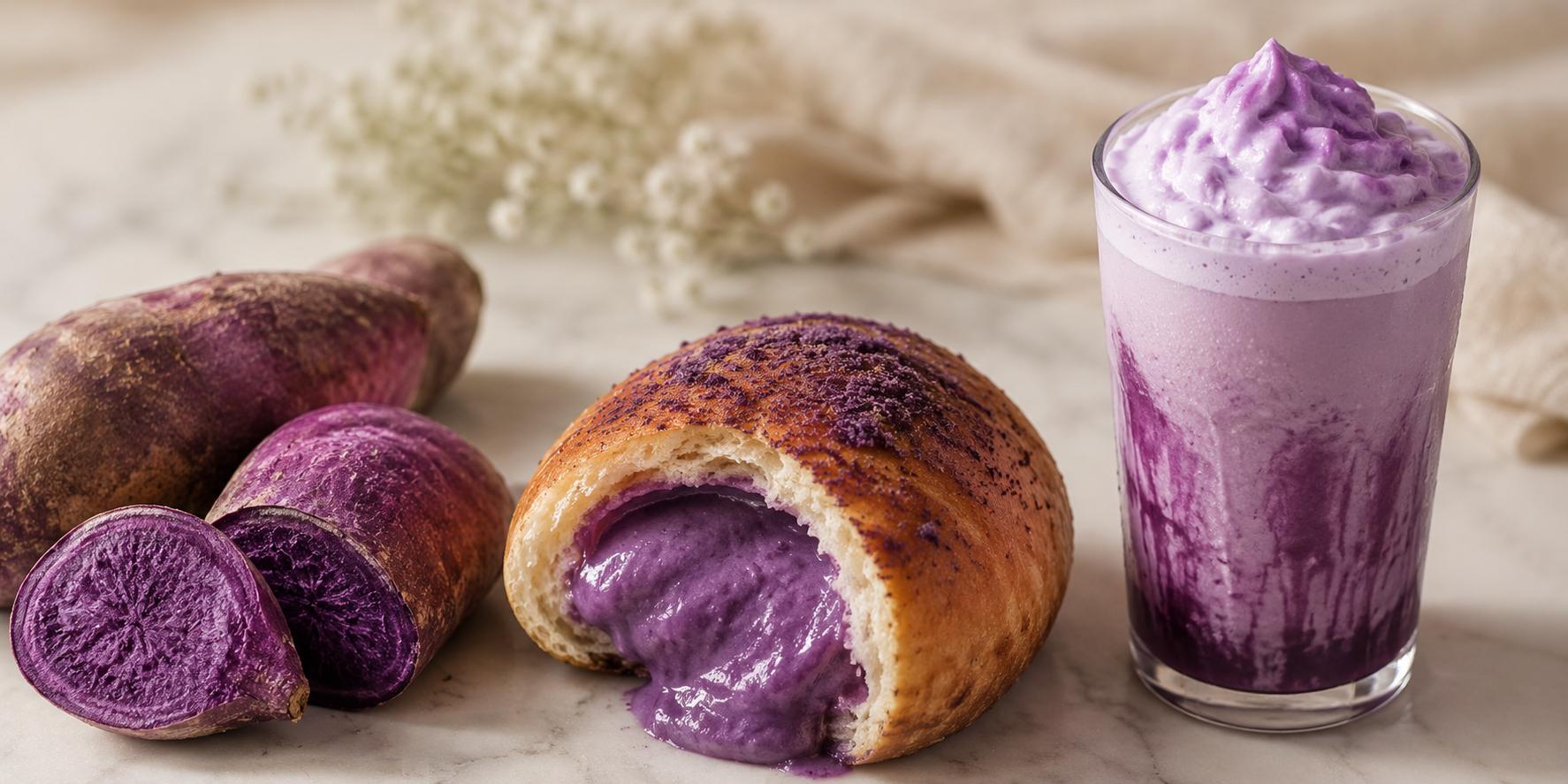
Something purple started showing up on café menu boards across Korea. That's ube — a vibrant purple root vegetable originally from the Philippines.
In This Article
Purple Is Having a Moment — Ube Is Taking Over Korea
Something purple started showing up on café menu boards across Korea. That's ube — a vibrant purple root vegetable originally from the Philippines. After the global matcha wave, ube has become one of the most talked-about ingredients in the dessert world. In Korea, it began spreading rapidly through cafés and bakeries in 2026.
What Is Ube?
Ube is a type of purple yam that has long been used in Filipino desserts. It looks similar to purple sweet potato but they are botanically different ingredients. The flavor is sweet and creamy, somewhere between vanilla and roasted nuts. What makes it stand out most is its ability to produce a vivid, natural purple color without artificial dye. It also has a glycemic index of 24, which puts it on the lower end of the scale — a point that health-conscious consumers have noticed.
Why Is It Trending in Korea Right Now?
After matcha, the café industry had been looking for its next signature ingredient. Ube delivers on two fronts simultaneously: a visually striking purple color that photographs well, and a health-food image that appeals to a generation that reads nutrition labels. Global demand for ube has been growing sharply. According to the Philippines' Department of Trade and Industry, Philippine exports of yams including ube reached approximately 610 metric tons in 2025 — a 43 percent increase from 2024. In the United States, the surge in demand has been referred to as the "purple gold rush." Starbucks in the US also launched a coconut macchiato featuring ube as a spring 2026 menu item. Korea picked up on this momentum quickly.
Drinks, Cakes, Bread — Ube Is Everywhere
Ube started with drinks and spread fast into bakeries. Ube lattes, ube bubble tea, ube cream pancakes, ube cakes, and ube cream buns have all appeared across the market. Even convenience stores have launched ube cream bread. On the supply side, ingredient brand NatureTee released a new ube powder product in January 2026 to meet early demand.
Full mainstream adoption, however, still faces some friction. Industry insiders point to two consistent issues: ube is an unfamiliar ingredient in Korea, which makes supply chains harder to establish, and raw material costs remain high. Whether ube settles in as a permanent fixture or fades like other short-lived trends is still an open question.