


Bungeoppang & Hoppang(붕어빵 & 호빵): The Golden Warmth That Defines a Korean Winter
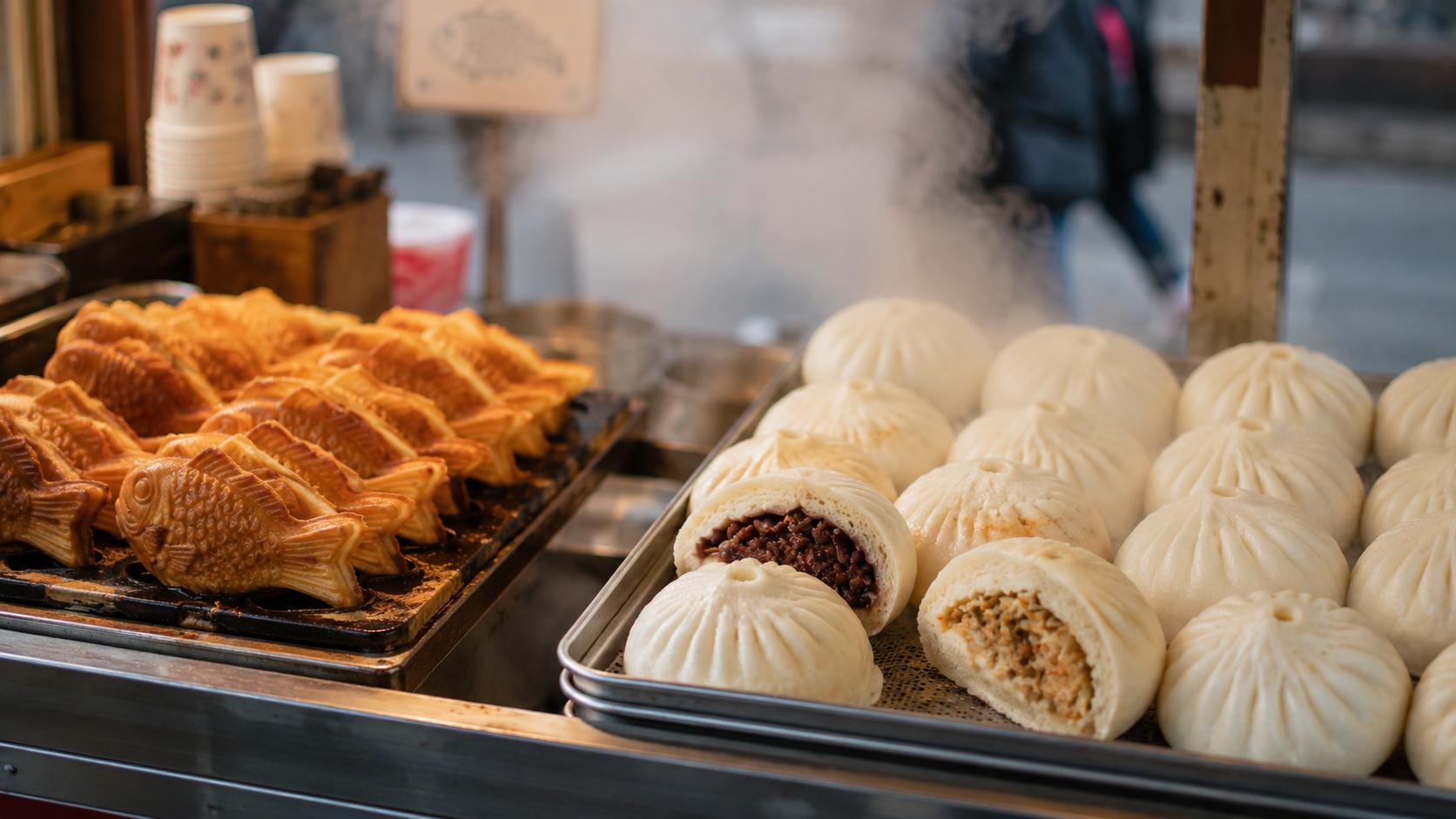
In Korea, comfort food is not just about the flavor—it is about the temperature of the memories attached to it. When the bitter wind of winter begins to bite, the streets transform, and the familiar, sweet aroma of baking dough becomes the signal that the season has truly arrived. For millions of Koreans, the ritual of clutching a hot Bungeoppang or Hoppang during a commute is the ultimate cure for the cold.
In This Article
The Currency of Winter Warmth
For many Koreans, winter has a distinct "currency." It is the tradition of keeping a few thousand-won bills tucked deep inside a jacket pocket—not for a big purchase, but specifically to exchange for the immediate, steaming comfort of street snacks. It is a shared, unspoken pact that helps everyone get through the freezing commute.
Bungeoppang: The Crispy Gold of the Streets
Bungeoppang, the iconic fish-shaped pastry, is the quintessential winter companion. There is a specific joy in waiting by the small metal mold for the batter to crisp into a golden brown, revealing a heart of sweet red bean paste. It is a snack that demands to be eaten immediately, its heat searing the fingertips in a way that feels strangely comforting against the icy air.
Hoppang: The Fluffy Hug in a Paper Bag
If Bungeoppang is the snack of the street, Hoppang is the warmth of the home and the convenience store. Named for the sound of blowing on the hot bun to cool it down ("hop!"), this fluffy, steamed treat serves as a soft, white hug. Whether filled with sweet bean, savory meat, or spicy vegetables, it is the perfect antidote to a long, exhausting day.
A Taste That Defines the Season
These foods are fleeting; they appear with the first frost and vanish when the cherry blossoms bloom. Perhaps that is why they hold such a deep place in the Korean heart. They are not just calories; they are seasonal reminders of survival, shared laughter, and the warmth of human connection amidst the coldest months of the year.