


From "덕통사고 (Deoktong-sago)" to "어덕행덕 (Eodeok-haengdeok)": Korean Fandom Slang Guide
Korean fandom culture has developed its own rich vocabulary—a lexicon that goes far beyond simple slang. These "deokjil terms" (덕질 용어) capture the psychology, rituals, and philosophy of being a devoted fan in Korea.
In This Article
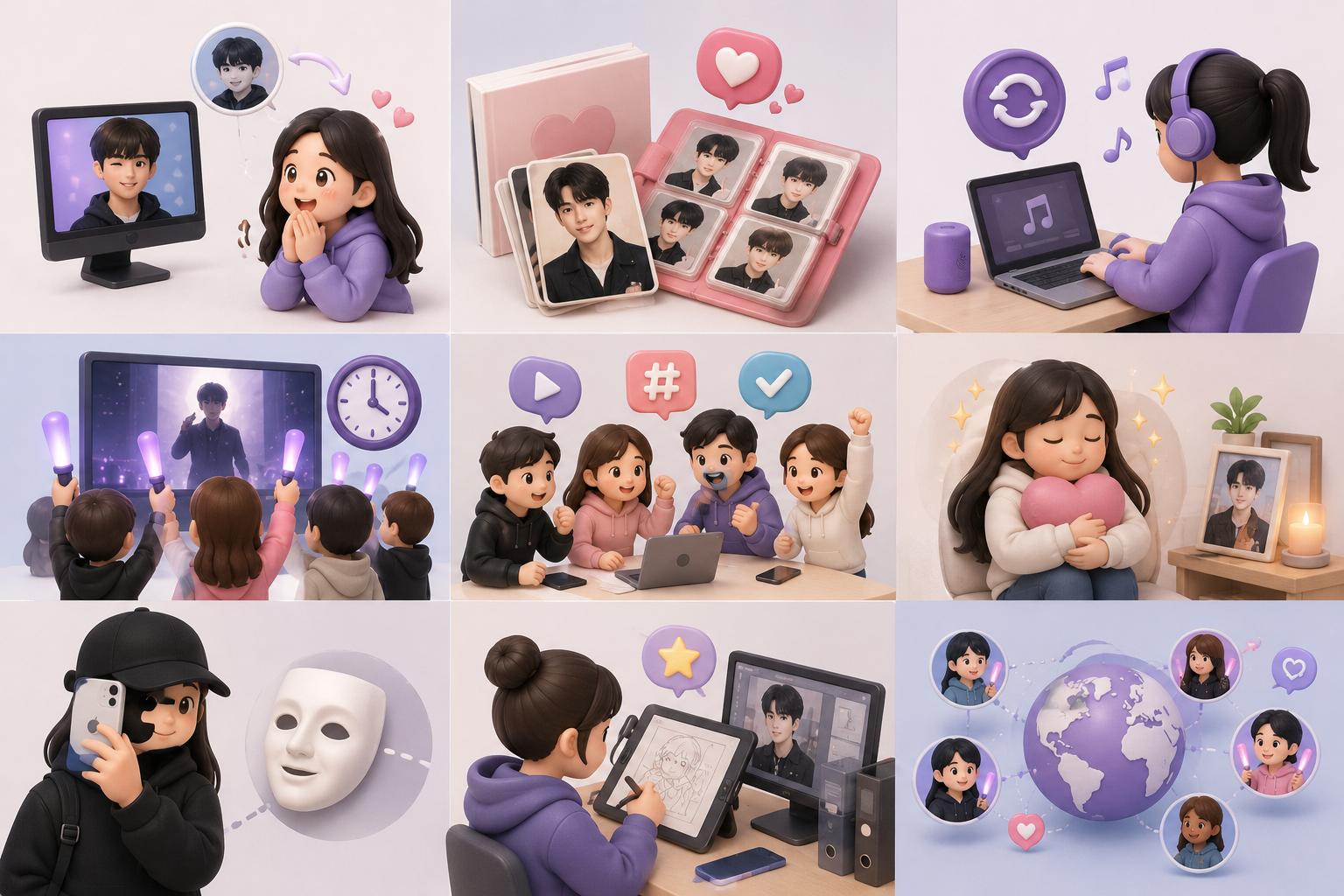
Ipddeok & Deoktong-sago: The Moment You Fall
Korean fans have a highly dramatic vocabulary for the moment they become devoted to something. These terms reflect just how all-consuming the experience can feel.
- 입덕 Ipddeok (入+덕): A compound of 入 (to enter) and 덕후 (deokhu, derived from the Japanese "otaku"), this means becoming a fan of a specific celebrity or interest. Its opposite is 탈덕 talddeok (leaving fandom), and 휴덕 hyuddeok means taking a break from it.
- 덕통사고 Deoktong-sago: A portmanteau of 덕질 (deokjil, fan activity) and 교통사고 (gyotong-sago, traffic accident). Just like an unexpected crash, it describes the moment someone is suddenly and completely swept away by a star—without any warning, while scrolling a video or simply walking down the street.
- 최애 Choeae / 차애 Chaae: 최애 (最愛) means your most-loved member, combining the Chinese characters for "most" (最) and "love" (愛). 차애 is the runner-up—the second favorite.
Everyday Fan Behaviors
Beyond emotional attachment, deokjil culture involves a set of organized, collective behaviors that fans carry out on a daily basis.
- 스밍 Seuming (스트리밍 Streaming): The act of repeatedly streaming a favorite artist's songs on music platforms in order to boost their chart rankings. It is widely regarded as one of the clearest displays of a fandom's organizational power.
- 총공 Chonggong (총공격 Total Attack): At a designated time, an entire fandom simultaneously concentrates its efforts—streaming, voting, spreading hashtags—to maximize impact. The term literally means "total offensive."
- 덕업일치 Deokup-ilchi: The state of having your passion (deokjil) align with your profession (職業). A football fan who becomes a sports journalist, or an idol fan who lands a job at an entertainment company—this is 덕업일치.
Fan Mindset & Philosophy
Some deokjil terms are less about actions and more about attitude—guiding principles for how to approach fandom in a healthy and fulfilling way.
- 어덕행덕 Eodeok-haengdeok: An abbreviation of "어차피 덕질할 거 행복하게 덕질하자" — roughly, "Since you're going to be a fan anyway, be a happy fan." It is considered a core healing motto of modern Korean fandom: don't let chart rankings or comparisons with other fandoms stress you out. Enjoy it.
- 덕질은 삶을 풍요롭게 한다: A widely shared belief among fans: deokjil is not a waste of time, but a genuine source of energy and motivation that helps people endure the pressures of daily life.
Ilko: The Art of Hiding Your Fandom
Perhaps the most widely recognized term outside fandom circles is 일코 ilko, short for 일반인 코스프레 ilbanin cosplay—literally "cosplaying as a normal person." It refers to the practice of concealing one's true status as a passionate fan (덕후 deokhu) in everyday life or professional settings, presenting oneself as an ordinary, non-fan individual. For many, it is a pragmatic and quietly amusing act of social self-preservation.
A Language That Became a Culture
To an outsider, Korean deokjil vocabulary can look like a secret code. But each term, looked at closely, carries something genuine: the warmth and intensity of people who cheer for others wholeheartedly and find real happiness in doing so.
Understanding this glossary doesn't just help you decode fan conversations—it opens a window into a vibrant, self-aware subculture that has become one of the defining features of contemporary Korean popular culture. Once you crack the code, K-pop and K-content become a richer experience altogether.