


The Hanok Library Hiding Under Seoul’s Mountains
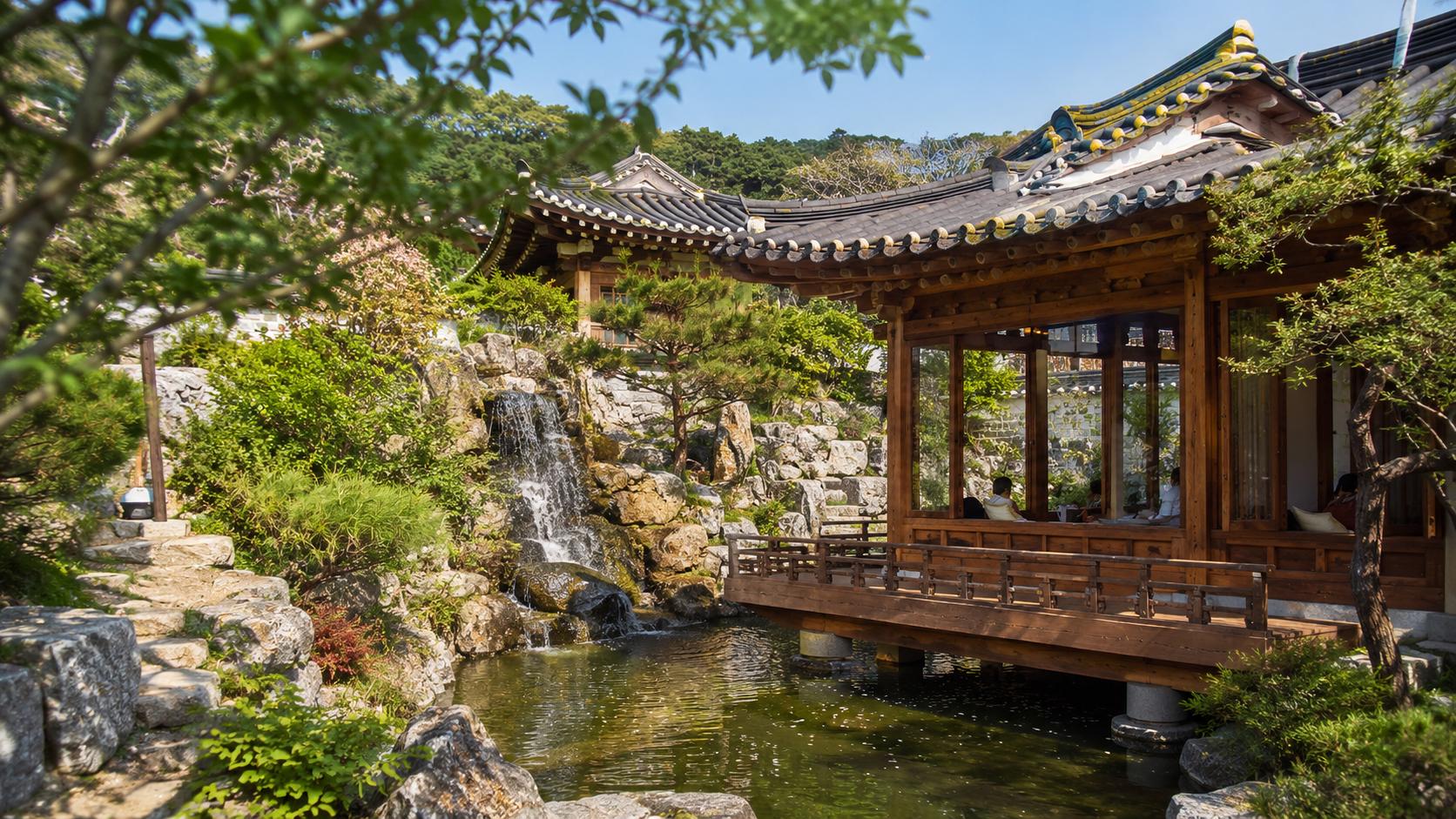
While Starfield Library dazzles with its massive, futuristic towers of books, another literary sanctuary offers a completely different kind of architectural awe. Tucked away at the foot of Mount Inwang, Chongun Literature Library is Seoul’s hidden hanok oasis. Combining the clean lines of modern engineering with the serene soul of traditional Korean architecture, this public space invites travelers to escape the concrete jungle and step into a living watercolor painting.
In This Article
The Architectural Flip: Modernity Underground, Heritage Above
Most travelers expect public libraries to be monoliths of concrete and glass. Chongun Literature Library challenges this expectation through a clever bi-level design. Built into the slope of a hill, the lower level operates as a modern, sleek public facility housing over 30,000 literary works, comfortable seminar rooms, and contemporary reading desks.
However, the true magic happens when you ascend the stairs to the ground level. Emerging from the underground modern library, you suddenly find yourself standing in a courtyard of authentic Hanok (traditional Korean house) pavilions. Built using traditional Korean pine and topped with heavy, hand-pressed clay tiles (giwa), this level mirrors the noble villas of Joseon-era scholars, striking a seamless balance between modern utility and timeless heritage.
Sensory Reading: A Hanok Pavilion Over a Waterfall
What makes Chongun Library an unforgettable aesthetic experience is its deliberate integration with nature. The star of the upper courtyard is a detached hanok pavilion that juts out over a small, custom-engineered artificial pond. From the adjacent rocky hillside, a steady stream of water cascades into the pool, providing a natural soundtrack of rushing water.
Inside the pavilion, the large wooden window frames contain no glass. Instead, they act as "living picture frames" that capture the shifting seasons of Mount Inwang—from the explosive cherry blossoms of spring to the deep snow drifts of winter. Visitors are encouraged to take off their shoes, step onto the smooth wooden floors, and read while breathing in the scent of fresh pine and damp mountain air.
Spatial Welfare: Why Seoul Open-Sources Its Best Views
In many mega-cities around the world, prime real estate overlooking scenic mountain ranges is reserved for luxury resorts, private villas, or expensive cafes. Chongun Literature Library is a prime example of Korea’s concept of "Spatial Welfare"—the political and social philosophy that premium spatial and cultural experiences should be shared equally by all citizens.
Run entirely by the local Jongno-gu district government, this space costs absolutely nothing to enter. Anyone, from a local grandfather reading the daily poetry column to an international traveler seeking a quiet moment of reflection, can access this million-dollar view for free. It shows a softer, more community-driven side of Seoul that exists just beneath its high-tech, fast-paced facade.
FrontLens Walker’s Guide: Seochon to Mount Inwang
Because it is tucked away from the main tourist drag, getting to Chongun Library is half the charm. To make a perfect afternoon out of it, FrontLens recommends starting your journey at Gyeongbokgung Station (Exit 3) and walking up through the historic alleys of Seochon.
As you pass local artisanal bakeries and indie art galleries, the path will naturally tilt upward toward the base of Mount Inwang. The library sits right next to the Yoon Dong-ju Literature Museum (built out of an abandoned water pressurization station) and the Poet’s Hill trail. After spending an hour resting and reading at the library, walk up to Poet’s Hill just before dusk to witness the city lights of Seoul flicker on below.