


The Island of Isolation: Why "제주 (Jeju)" Was Chosun's Dreaded Exile Site
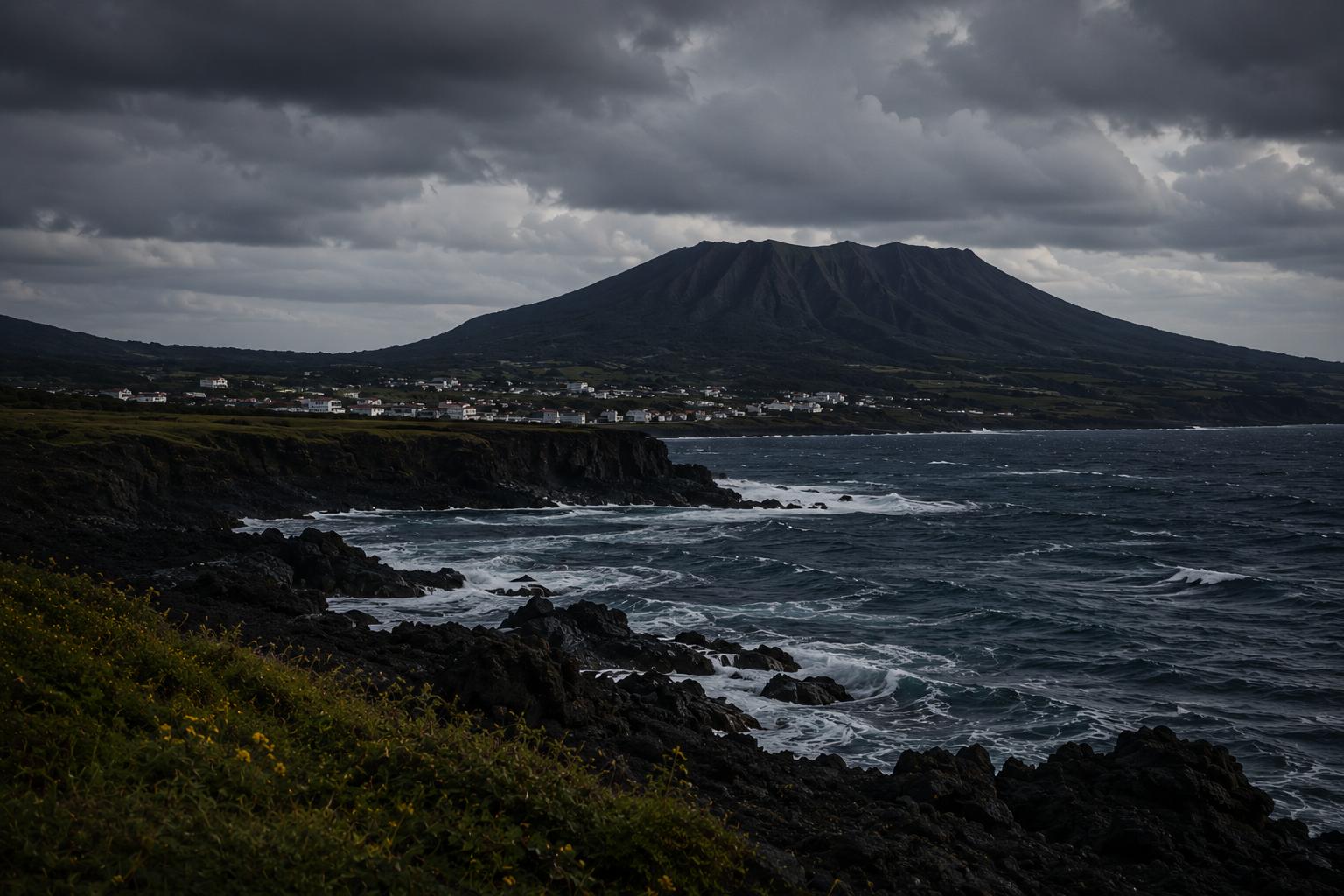
Today, Jeju Island is celebrated as one of Korea's most beloved holiday destinations. But for much of the Joseon Dynasty, it was something else entirely: a place of dread, exile, and political erasure. For five centuries, Korea's kings sent their most dangerous enemies here—and few who arrived ever truly escaped.
In This Article
The Island Exile: A Prison Without Walls
In the Joseon Dynasty's penal system, the most severe punishment short of death was exile (yubaehyeong, 流配刑)—the forced removal of a person far from their hometown or the capital. Among the various forms of exile, the harshest was jeoldo-anchi (絶島安置): banishment to a remote island surrounded by open sea.
Jeju was ideally suited for this purpose. Located at the southernmost edge of the Korean peninsula, the island was the farthest point from the capital, Hanyang (present-day Seoul). The Korea Strait separating Jeju from the mainland was notoriously treacherous, plagued by strong winds and unpredictable waves that made sea crossings genuinely dangerous.
Once an exile arrived on the island, access to boats was strictly controlled. There was no escaping back to the mainland. For political prisoners, Jeju functioned as a perfect natural prison—its walls made not of stone, but of ocean.
The severity of a Jeju exile was well understood at the time. Scholar-official Song Si-yeol (우암 송시열), one of the most prominent Confucian figures of the 17th century, was ordered exiled to Jeju—a sentence considered among the gravest political punishments a person could receive. He was later brought back toward the capital, where he was made to drink poison en route.
Political Isolation from the Capital
Exile was not merely a physical punishment. Its deeper purpose was political: to sever a person from the networks of power that sustained them.
The further an exile was sent from Hanyang, the harder it became to receive news of political developments at court, or to maintain contact with supporters back on the mainland. On Jeju, information arrived slowly and irregularly. An exile on the island was, for practical purposes, politically dead—removed from the court's sight and unable to influence events.
From the king's perspective, Jeju offered the most complete form of political erasure available. Sending a high-profile opponent there did not just remove them physically; it effectively excised them from the ongoing drama of the capital's political life.
The Hardships of Life in Exile
Daily life for exiles on Jeju was harsh in ways that compounded the psychological burden of political disgrace.
The most severe form of confinement was wirianchi (圍籬安置): the exile's place of residence was enclosed by a high fence of thorned tangerine-tree branches, effectively making the house itself a cell. The deposed King Gwanghaegun was among those subjected to this treatment on Jeju.
Beyond physical confinement, exiles faced unfamiliar climate and health challenges. Jeju's hot, humid conditions and different water sources reportedly caused illness among those accustomed to mainland living. Rice—a staple of aristocratic diet—was scarce on the island, and exiles were often reduced to eating barley and millet. The Jeju dialect, distinct from the language of the capital, made ordinary communication with local residents difficult.
For aristocrats (yangban) who had lived privileged lives at court, being housed in a local villager's home under constant surveillance—confined, isolated, and stripped of status—was a punishment that many found as psychologically devastating as any physical penalty.
An Unexpected Legacy
Despite its reputation as an island of despair, the concentration of Joseon's finest minds in Jeju exile produced an unintended cultural consequence: it elevated the island's intellectual and educational life in ways that outlasted the dynasty itself.
Many exiled scholars gathered local young people and established private schools (seodang), transmitting the high learning of the capital to a remote community that had previously had little access to it.
The most celebrated example is Kim Jeong-hui (추사 김정희, 1786–1856), one of the greatest calligraphers and scholars of the late Joseon period. During his approximately eight years and four months of exile on Jeju—part of which was spent under wirianchi confinement—he refined and completed his distinctive personal calligraphic style, now known as Chusache (추사체). He also produced Sehando (세한도, 歲寒圖), a spare ink painting expressing gratitude to his devoted student Yi Sang-jeok, which is today designated a National Treasure of Korea.
The story of Jeju's exile culture is, in this sense, a deeply paradoxical one: out of political punishment and personal suffering came some of the most enduring works in Korean cultural history.