


Raw Nature vs. Emerald Sunsets: The Ultimate Jeju Travel Dilemma (East vs. West)
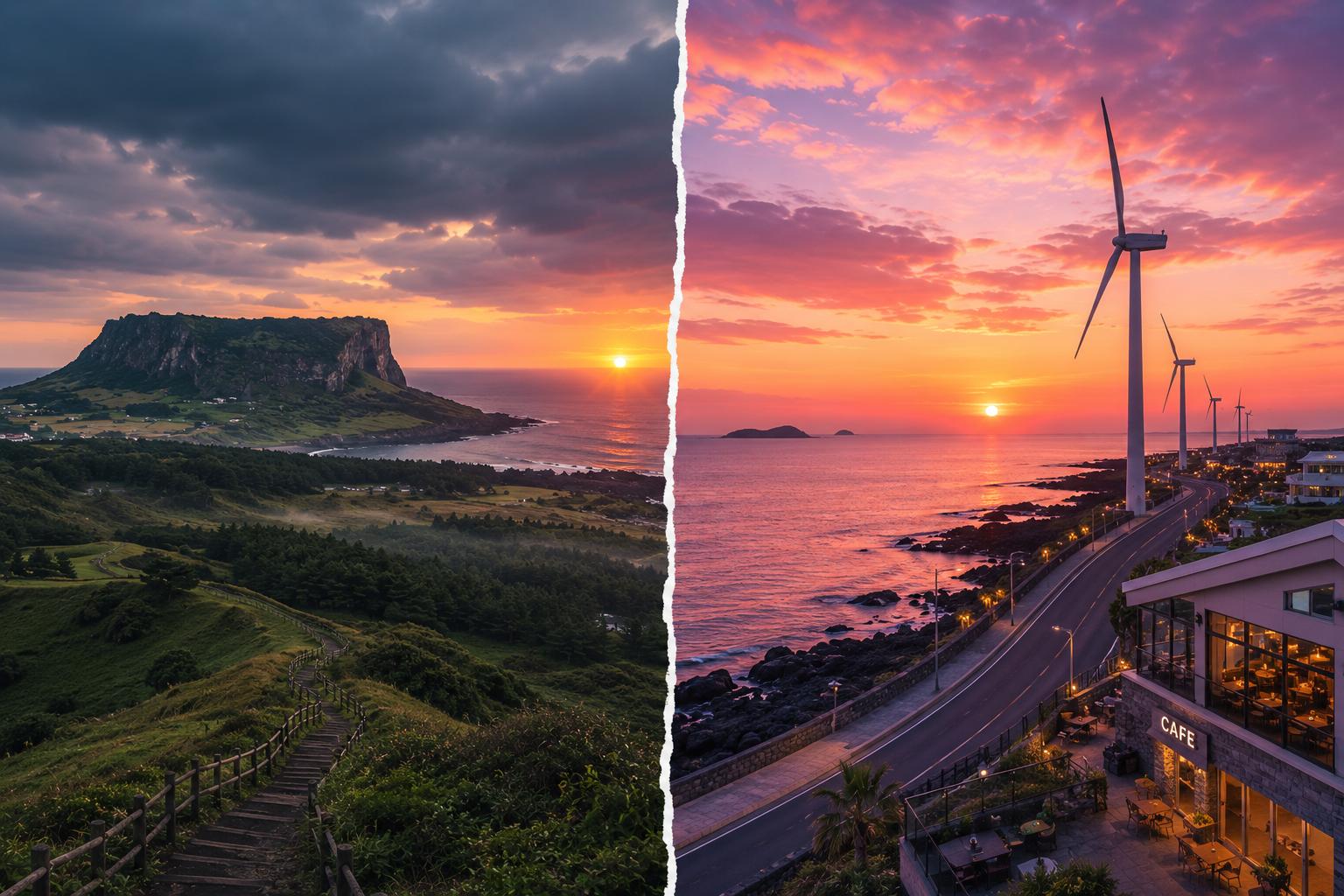
Jeju Island is divided by Hallasan Mountain into two distinct travel worlds: the east, with its raw volcanic landscapes and ancient forests, and the west, with its emerald beaches and stylish sunset culture. Which side matches your travel style?
In This Article
East vs. West: Two Faces of One Island
One of the most debated decisions among Jeju travellers is deceptively simple: go east or go west? Despite being part of the same island, the two sides feel strikingly different in terms of landscape texture, travel pace, and overall atmosphere.
In recent years, both sides have developed a healthy mix of charming cafés and scenic oreums (volcanic hills). But each region still holds a distinct identity—and understanding that difference is the key to making your Jeju trip feel like it was made for you.
The East: Raw Volcanic Nature
Eastern Jeju, covering areas such as Seongsan, Gujwa, and Jocheon, is where the island's volcanic origins are felt most directly. It is the part of the island best suited to travellers who love early mornings, hiking, and a sense of genuine discovery.
The centrepiece of the east is Seongsan Ilchulbong (Sunrise Peak), one of Jeju's most iconic landmarks. Alongside it, Sanbangburi—a vast crater located in Jocheon—anchors the region's dramatic geological character. The area around Gujwa is also home to a cluster of oreums, including Andol Oreum and Baekyak-i Oreum, whose gentle yet powerful curved silhouettes are unique to Jeju.
Beyond the open landscape, eastern Jeju holds some of the island's most atmospheric forests. Geomunoreum, a UNESCO World Natural Heritage site, offers ancient primeval woodland. Bijarim, a grove of hundreds-of-years-old nutmeg yew trees, fills the air with the scent of phytoncides. And Saryoni Forest Path winds through the mid-mountain belt in a quietly dreamlike way.
The mood of the east is best described as exploratory. Quiet villages like Pyongdae-ri and Hado-ri add a sense of unhurried rural calm, making the east particularly well suited to solo travellers or anyone who wants to slow down and reflect.
The West: Emerald Coast and Sunset Culture
Western Jeju—centred on Aewol, Hallim, and Hangyeong—offers a different kind of beauty. The coastline here is defined by clear, turquoise water and well-maintained beaches, set against a backdrop of modern cafés, boutique shops, and stylish accommodation.
Hyeopjae and Geumneung beaches are widely regarded as having some of the most striking sea colours on the island, with the small island of Biyangdo visible just offshore. The soft white sand and brilliant water make these beaches a standout destination.
The west truly comes into its own at sunset. Sinchang Windmill Coastal Road, lined with large wind turbines that create a distinctive silhouette against the evening sky, and Aewol Handam Coastal Walk, which follows rugged clifftops above the sea, are both well-known sunset spots in the region. The colours here at dusk are widely considered one of the highlights of any Jeju visit.
Western Jeju also has a strong concentration of trendy cafés, design shops, and restaurants that have attracted significant attention in Korean media. For travellers whose ideal day includes lingering over coffee with an ocean view and wrapping up the afternoon watching the light fade over the sea, the west is a natural fit.
Which Side Is Right for You?
Your ideal side of Jeju often depends on who you're travelling with and what kind of energy you're looking for. Here is a rough guide:
- Solo or reflective travel: East (Gujwa, Seongsan) — quieter trails, fewer crowds, and a more introspective pace.
- Family travel with children or elderly parents: West (Aewol, Hallim) — gentler beaches, good facilities, and large indoor attractions such as Arte Museum that are not weather-dependent. Note that eastern options like Snoopy Garden and Aqua Planet are also solid alternatives.
- Activity and nature exploration: East (Jocheon, Seongsan) — oreum hiking, Geomunoreum trekking, and Seongsan Ilchulbong climbing offer rich outdoor experiences.
- Café tours, photography, and design-conscious travel: West (Aewol, Hangyeong) — a high density of ocean-view cafés, well-designed guesthouses, and photogenic spaces.
If your time is limited, the practical recommendation is to commit to one side rather than trying to cover both. Spreading the itinerary too thin tends to produce a rushed experience. Two nights and three days is often considered the minimum for Jeju, and even that can feel short.
A Note on the South
Southern Jeju, centred on Seogwipo, is worth mentioning as a third option. With the infrastructure of Jungmun Resort, dramatic natural landmarks such as Cheonjiyeon Falls, Jeongbang Falls, and the Jusangjeolli Cliff, the south offers a balance between the raw nature of the east and the convenience of the west. It functions well as a "middle ground" destination for those who want a bit of both.