


Beyond Fandom: How K-POP Fans Are Reshaping Global Donation Culture
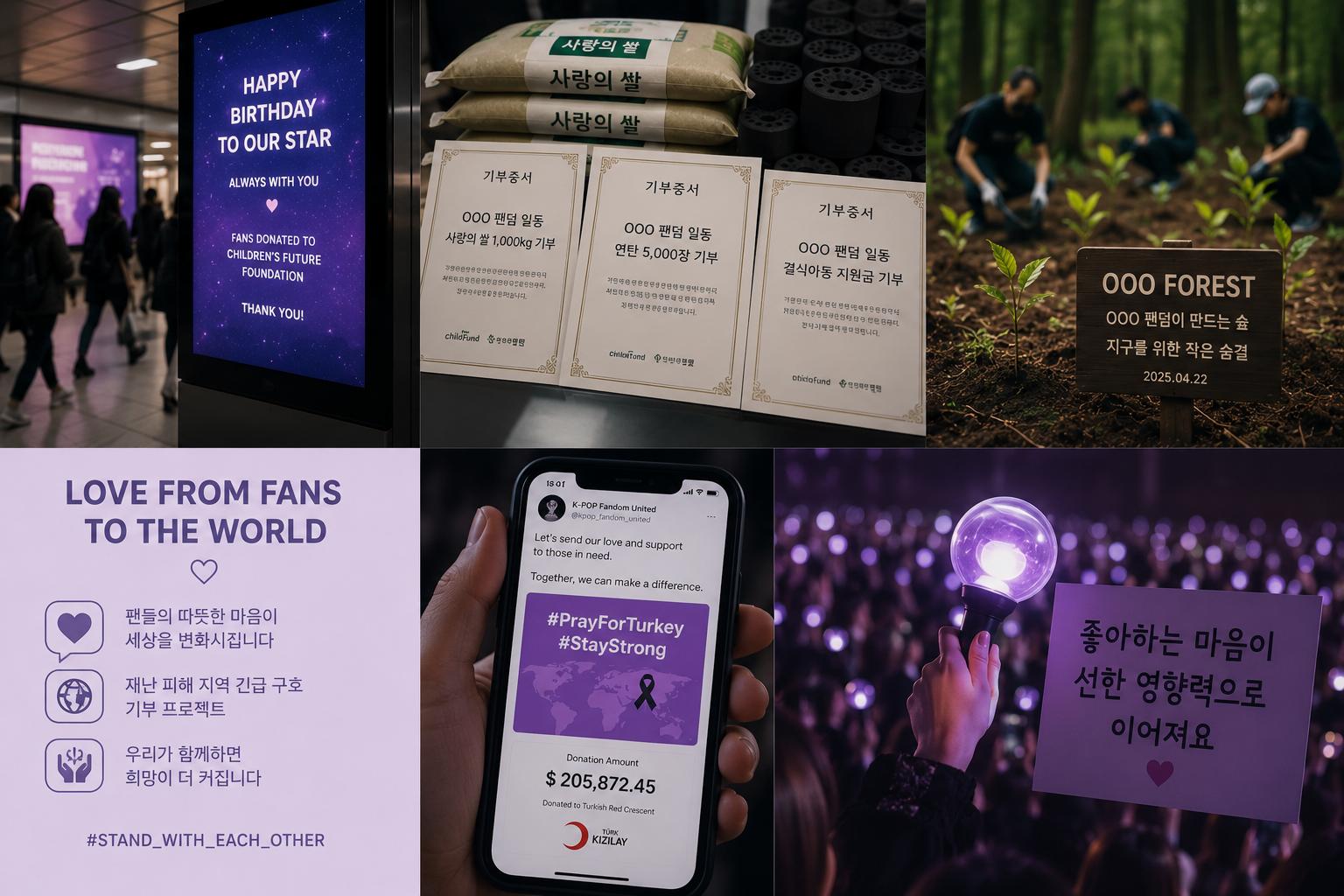
K-POP fandom culture has evolved far beyond simply supporting a favorite artist. Today, fan communities are emerging as meaningful contributors to society—organizing charity drives, responding to global disasters, and leading environmental campaigns, all in the name of the artists they love.
In This Article
From Fan Ads to Charitable Giving
Fandom charity culture has continuously evolved alongside changes in media and technology. In the past, fans would send rice wreaths or briquettes in an artist's name to be donated to vulnerable communities—a tradition that replaced disposable floral arrangements at concerts and press events. This practice continues at some events today, and has gradually expanded into a variety of digital giving projects.
Where fans once focused on placing transit advertisements to mark an artist's birthday or debut anniversary, a new value-driven giving culture has taken hold. A growing number of fan communities now direct some or all of that advertising budget toward donations—to children's foundations, environmental organizations, and animal welfare groups—all made in the artist's name.
Environmental awareness has also shaped fandom giving. Global fan communities with a strong interest in climate change have been actively funding urban forest projects named after their favorite artists, and leading zero-waste campaigns within their own communities to reduce plastic consumption.
Cross-Border Solidarity
K-POP fandom giving is not confined to any one country. When large-scale disasters strike, fan communities scattered across the world mobilize quickly through social media platforms like X (formerly Twitter), spreading donation hashtags and pooling significant relief funds through online crowdfunding in a short period of time.
In many cases, local fan communities take the lead by identifying credible relief organizations in the affected area, enabling fans worldwide to send funds directly and efficiently across borders.
Artists themselves play a role in shaping this behavior. When a musician consistently advocates for values such as human rights or self-acceptance through their music and public statements, fans often respond by donating to relevant social causes on their own initiative.
The Positive Ripple Effect on Society
These movements are introducing a new paradigm to both the entertainment industry and society at large. The cycle tends to follow a recognizable pattern: an artist's positive message inspires voluntary charitable action from fans, which in turn elevates the public image of both artist and fandom, and contributes to a healthier cultural ecosystem overall.
This shift has helped challenge the perception that idol fandom is driven purely by consumption. For charitable organizations, it has also opened a new channel for engaging younger, digitally native generations.
K-POP fandoms are evolving beyond passive audiences into a new kind of civic participant—communities that channel the energy of fan support into meaningful social impact.