


MMCA Seoul: Where History Meets Modern Design
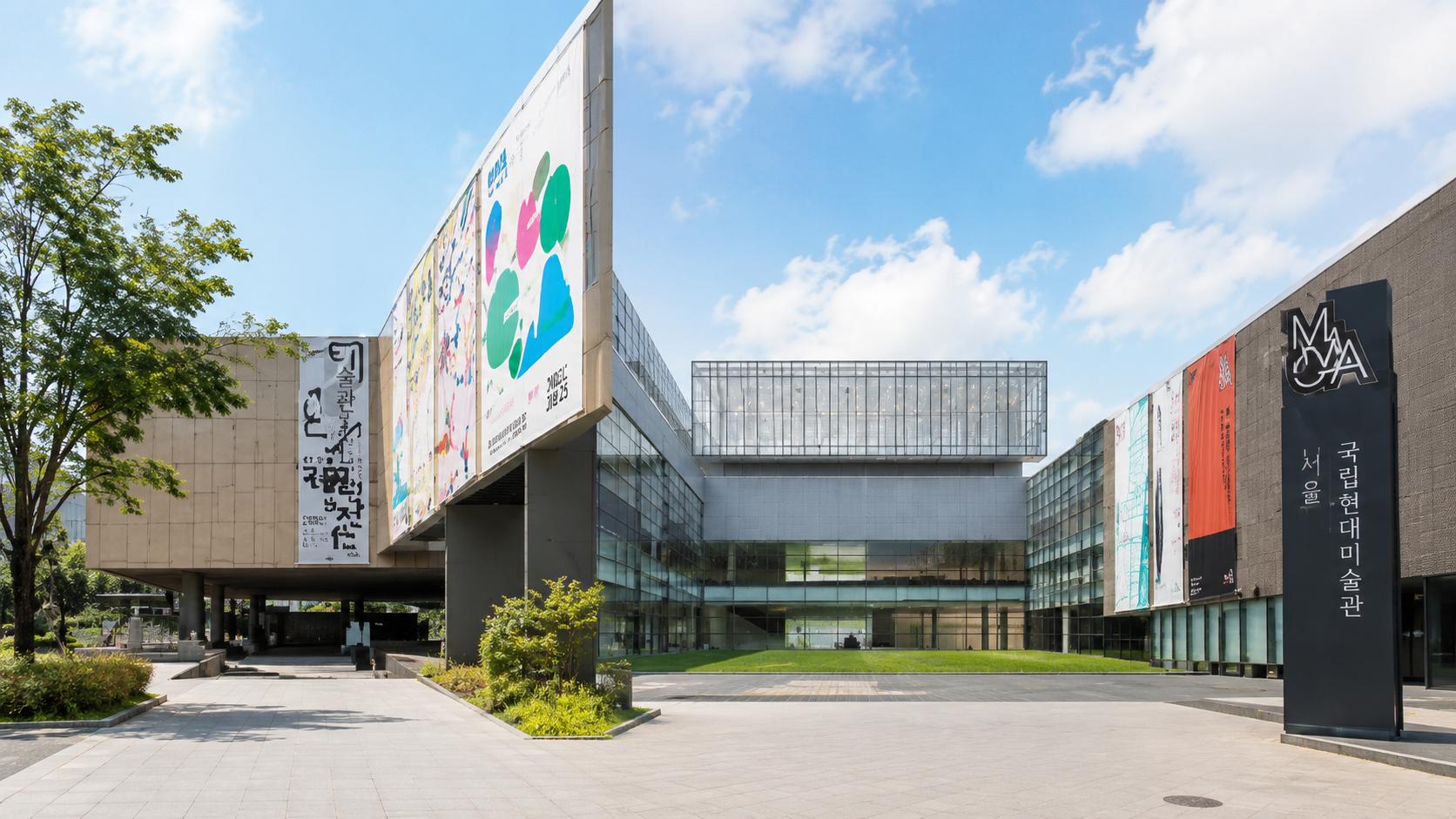
In the heart of Seoul, where royal palaces of the Joseon Dynasty meet the bustling energy of contemporary urban life, art does not lock itself behind intimidating stone walls. The National Museum of Modern and Contemporary Art (MMCA), Seoul, redefines the museum experience through a masterclass in architectural humility—using low-slung, terracotta-tiled structures and open communal courtyards to create a space where history, art, and the daily lives of Seoulites seamlessly flow into one another.
In This Article
The Madang Philosophy: Architecture as an Open Invitation
Unlike traditional monumental museums that demand a grand, singular entrance, MMCA Seoul is designed around the concept of "Madang"—the traditional Korean open courtyard. The campus features six distinct courtyards interspersed between the buildings, creating multiple porous entry points from the surrounding streets of Samcheong-dong and Sogyeok-dong.
There are no towering gates or intimidating staircases. Instead, the museum's grass-covered and paved courtyards act as a public plaza where office workers eat lunch, families stroll on weekends, and art enthusiasts gather. By treating architecture as an extension of the street, MMCA Seoul achieves a rare democratic openness, capturing the true lifestyle of modern Seoul where culture is woven into the ordinary routine.
The Collision of Eras: Red Brick Heritage and Terracotta Minimalism
The visual identity of MMCA Seoul is a sophisticated exercise in juxtaposition, preserving historical layers while introducing cutting-edge modern aesthetics. At the front of the complex stands the former Defense Security Command building—a 1930s historic red-brick structure built during the colonial era, displaying early modern geometric design.
Architect Mihn Hyun-jun did not overshadow this heritage; instead, he built the main contemporary galleries directly behind and beneath it, wrapping them in custom-made digital terracotta tiles that mimic the earthy tones of traditional Korean clay. From the outside, the museum appears as a low-slung, unassuming village that respects the neighboring Gyeongbokgung Palace's stone walls, offering a brilliant visual archive of how Seoul meticulously balances its heavy historical memories with a sleek, forward-looking design language.
The Subterranean Sanctuary: The Scale of Shifting Light
While the above-ground facade is intentionally modest to respect the historical landscape, the true spatial drama unfolds underground. Stepping into the central atrium, visitors are met with an unexpected, breathtaking sense of scale—a vast, multi-story subterranean white cube illuminated by massive glass curtain walls that cut through the courtyards above.
This design creates a mesmerizing interplay of light and shadow that shifts every hour, casting long geometric reflections across the concrete floors. It is a quiet, contemplative sanctuary hidden right beneath the bustling city center. Whether you are observing a monumental installation in the central hall or simply watching the sunlight travel down a pristine white wall, MMCA Seoul provides the ultimate cinematic space for solitary observation and creative inspiration.