


What is a "Petit Procedure"? The Rise of Non-Invasive Beauty Treatments
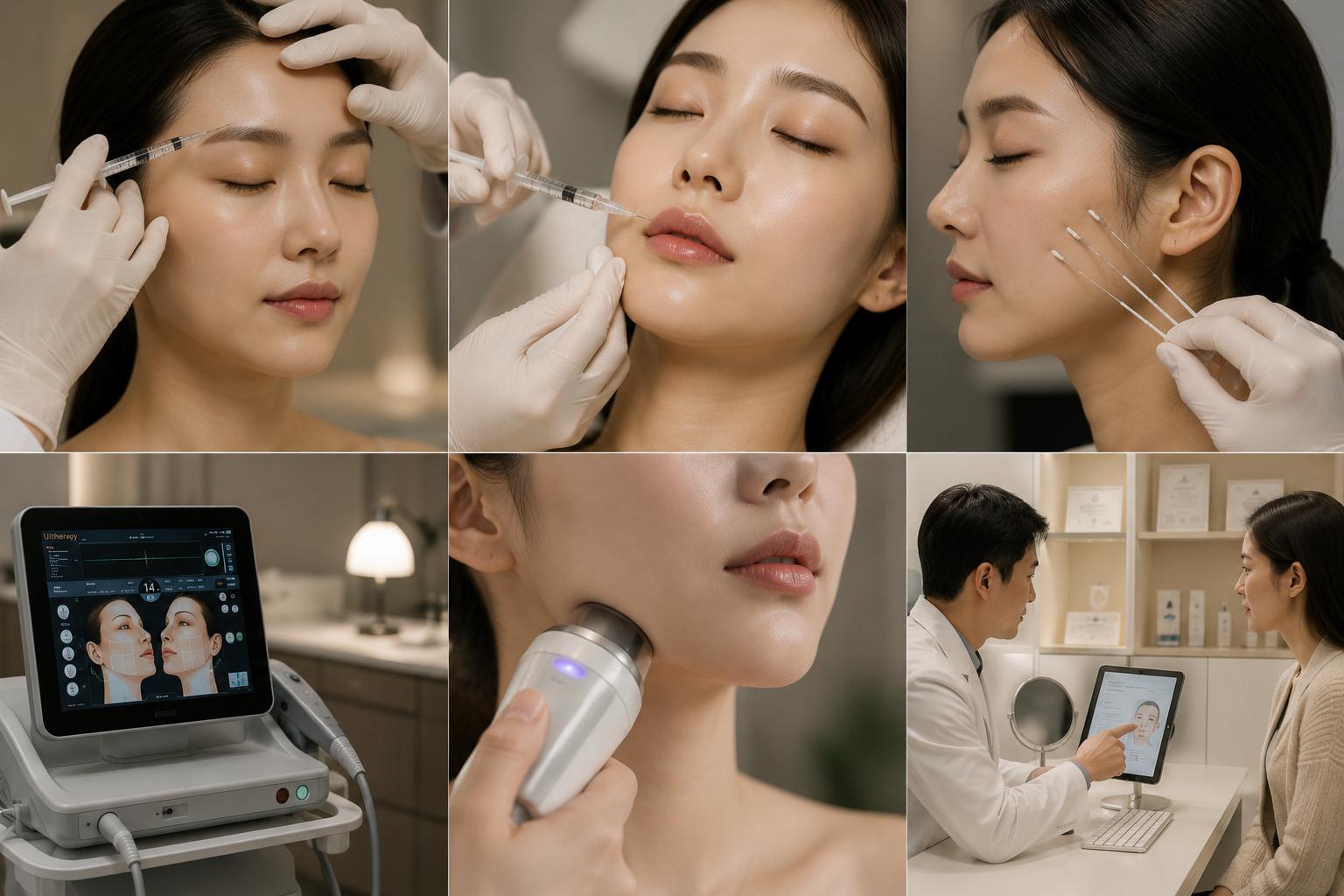
Walk past any dermatology or plastic surgery clinic in Korea and you'll likely spot the word "Ppeuti Sisuль" on the window. It's not quite surgery, not quite a spa treatment—it sits somewhere in between, and it has quietly reshaped how Koreans approach beauty and self-care.
In This Article
What Is "Ppeuti Sisuł"?
"Ppeuti Sisuł" (쁘띠시술) is a Korean industry term that blends the French word petit (meaning "small") with the Korean word sisuł, which refers to a medical procedure. Together, the term describes non-surgical or minimally invasive cosmetic procedures—treatments that reshape or enhance appearance without the need for incisions, general anesthesia, or extended recovery.
Unlike traditional plastic surgery, which involves cutting, implants, and weeks of downtime, ppeuti sisuł typically uses injections, medical threads, or device-based energy to achieve cosmetic effects. The term is widely used in Korean clinics and advertising, though internationally these treatments are more commonly categorized as non-surgical or minimally invasive aesthetic procedures.
Korea is frequently cited as one of the countries where treatments like Botox, fillers, and device-based procedures have become most accessible and normalized, supported by a dense network of clinics and a competitive medical aesthetics market.
The Three Main Types
Ppeuti sisuł procedures are broadly grouped into three categories based on their method and purpose:
- Botox (Botulinum Toxin) — Muscle relaxation and wrinkle reduction: A purified botulinum toxin formulation is injected to temporarily paralyze the facial muscles responsible for expression lines. Common uses include smoothing forehead lines, frown lines between the brows, and crow's feet, as well as reducing the masseter (jaw) muscle to slim the face shape.
- Fillers (Volume-adding injections) — Contouring and volume restoration: Substances compatible with the body are injected beneath the skin to fill in sunken or flat areas. Common targets include the nose bridge, forehead, cheeks, and lips. Hyaluronic acid fillers—the most widely used type—can, in principle, be dissolved with an enzyme if correction or removal is needed.
- Thread lifts and energy-based devices — Lifting and skin tightening: Medical-grade threads are inserted under the skin to mechanically lift sagging tissue. Alternatively, high-intensity focused ultrasound (HIFU) devices such as Ulthera or Shurink, as well as radiofrequency (RF) devices, are used to stimulate collagen production and improve skin elasticity from within.
Why It Went Mainstream
One of the most commonly cited reasons for the rise of ppeuti sisuł is how it lowers the barriers associated with traditional plastic surgery. The contrast between the two approaches is significant:
- Procedure time: Traditional surgery can take one hour or more; most ppeuti sisuł procedures take between 5 and 30 minutes—sometimes called a "lunchtime treatment."
- Recovery: Surgery typically requires weeks to months of downtime for swelling and bruising; most non-surgical procedures allow a comparatively quicker return to daily activities.
- Reversibility: Surgical revisions are complex and carry risks; hyaluronic acid fillers can be dissolved with an enzyme if needed.
Beyond practicality, these procedures align with a prevailing aesthetic preference in contemporary Korean beauty culture—one that favors subtle, natural-looking enhancement over dramatic transformation. The appeal lies in changes that are noticeable but not conspicuous.
Safety and Side Effects
As ppeuti sisuł has become more accessible, it is important to remember that these are still medical procedures involving injections, tissue changes, and pharmaceutical agents. The low barrier to entry should not obscure the risks involved.
With filler injections, there is a risk—though uncommon—that the substance could enter a blood vessel, potentially causing tissue necrosis or, in rare cases, vision complications. Botox injected into unintended areas can result in unnatural facial expressions or drooping eyelids (ptosis). These risks underline the importance of consulting with a qualified medical professional who has thorough knowledge of facial anatomy, using verified authentic products, and not making choices based solely on discounted promotional offers.
A useful checklist before any procedure might include: confirming that authentic, properly dosed products are used; verifying the practitioner's credentials and anatomical expertise; discussing individual suitability during consultation; and avoiding the temptation to over-treat.