


The Crispy History: Exploring Suwon Chicken Street and the Famous Galbi Chicken
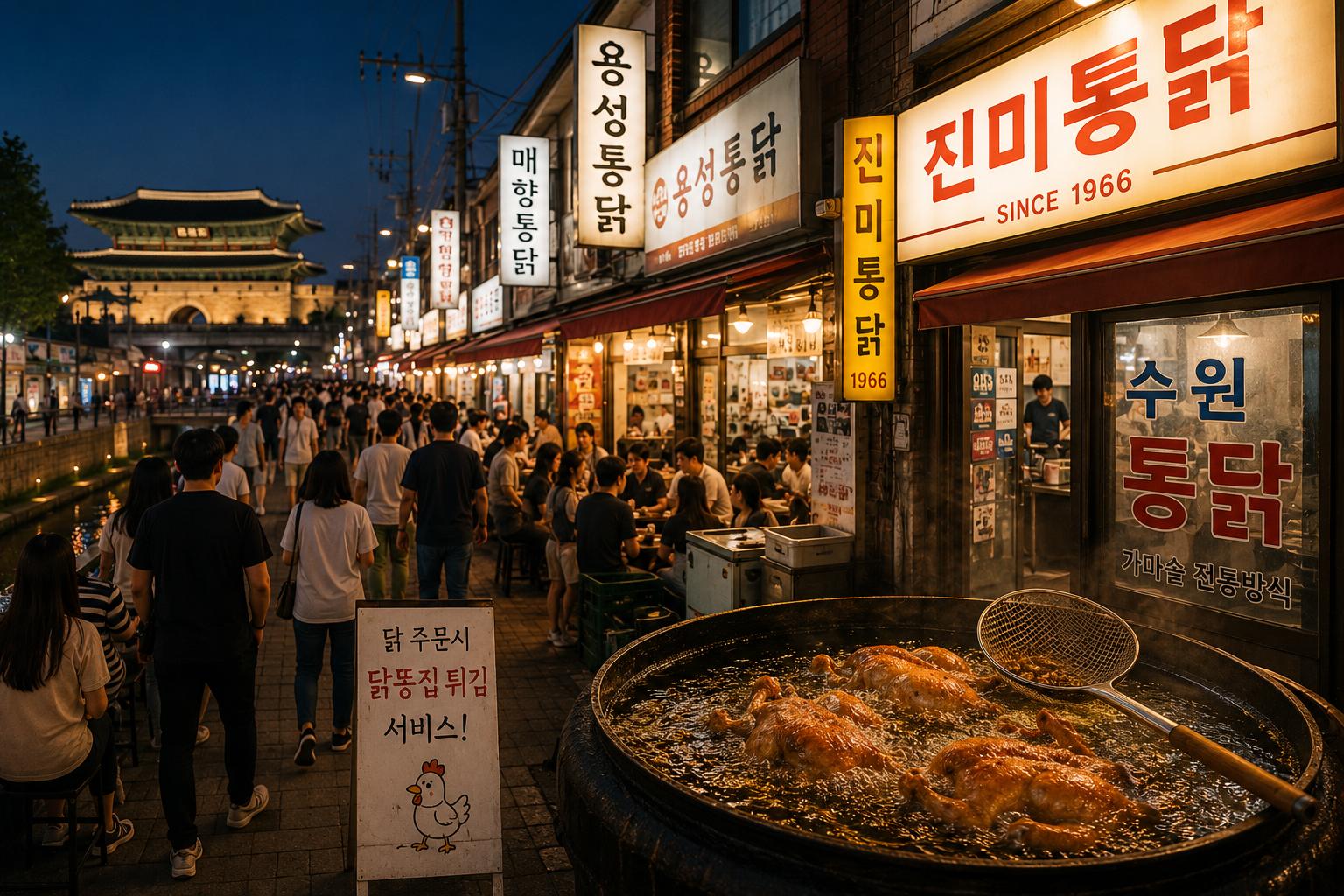
Down a narrow alley near Paldalmun Gate—the southern entrance to Suwon Hwaseong Fortress—the smell of hot oil and golden chicken fills the air. Welcome to Suwon Tongdak Street, one of Korea's most beloved food destinations, where whole chickens have been fried in cast-iron cauldrons for decades.
In This Article
History and Origins
Suwon Tongdak Street (수원 통닭거리) traces its roots to small stalls near the Paldalmun market, where vendors would pour oil into large cast-iron cauldrons and fry whole chickens to order. Over time, these humble stalls grew into a stretch of roughly 100 meters lined with established restaurants, each with its own loyal following.
The defining cooking method—frying chicken in a thick iron cauldron at high heat—produces a texture that Koreans describe as gyeotbaksokcchok (겉바속촉): crispy on the outside, juicy on the inside. Because a heavy cauldron retains heat far better than a standard deep fryer, the oil temperature stays stable throughout cooking, resulting in an even, consistent crunch that is difficult to replicate elsewhere.
As iconic local restaurants such as Jinmi Tongdak (진미통닭), Yongseong Tongdak (용성통닭), Maeahyang Tongdak (매향통닭), and Nammun Tongdak (남문통닭) established themselves side by side, a food alley was born organically. Today, long queues stretch down the lane on weekends as visitors arrive from across the country and beyond.
Signature Menus and Food Culture
The menus here differ from those of standard fried chicken chains in both preparation and culture. The following are the key items you are likely to encounter:
- Gamasot Huraied Tongdak (가마솥 후라이드 통닭) — A whole or jointed chicken brined and fried in a cast-iron cauldron. A small complimentary serving of crispy dak-ddong-jib (닭똥집, chicken gizzard) is typically included as a bonus side, considered a local treat in its own right.
- Suwon Wanggalbi Tongdak (수원 왕갈비통닭) — A cauldron-fried chicken finished with a special soy-based marinade inspired by Suwon's historic wanggalbi (왕갈비) beef rib tradition. The sauce is sweet and lightly savory. This dish gained nationwide attention following the success of the Korean film Extreme Job (극한직업, 2019), which featured a fictionalized take on the concept.
- Morning Bun Chicken Sandwich — Crispy chicken and cabbage salad served alongside soft dinner rolls. Diners are encouraged to assemble their own combination, reflecting the Korean modisumer (모디슈머) trend—consumers who modify standard dishes to their own taste.
The Wanggalbi Tongdak in particular is often cited as an example of successful local branding: it draws on Suwon's identity as a historic cattle market town and adapts that culinary heritage into a dish that resonates with a modern, broad audience.
A Local Landmark Beyond Food
Suwon Tongdak Street functions not only as a dining destination but as a key node in a broader local tourism circuit. Suwon Hwaseong Fortress (수원 화성), a UNESCO World Heritage Site, stands just minutes away, and the nearby Haenggunddong café district—locally called Haengni-dan-gil (행리단길)—along with traditional markets such as Jidong Market (지동시장) and Paldal Market (팔달시장), are all connected by a short walk across the Suwon Stream.
This proximity creates a natural full-day itinerary: explore the fortress walls and the historic Haenggung Palace district during the day, then cross the stream in the evening to experience the analogue warmth of the chicken alley. The combination has made Suwon Tongdak Street a favored stop for both younger domestic travelers and international visitors looking for an authentic, non-franchised food experience.
Closing Note
In an era when chain restaurants and standardized flavors dominate the dining landscape, Suwon Tongdak Street has held its ground by staying true to its cast-iron roots. The smell of hot oil, the generous portions, and the unpretentious atmosphere have kept generations of visitors returning. As long as the cauldrons keep boiling, this alley will remain one of Korea's most distinctive food culture destinations.