


Jeon (전): The Food That Brings Korean Families Together
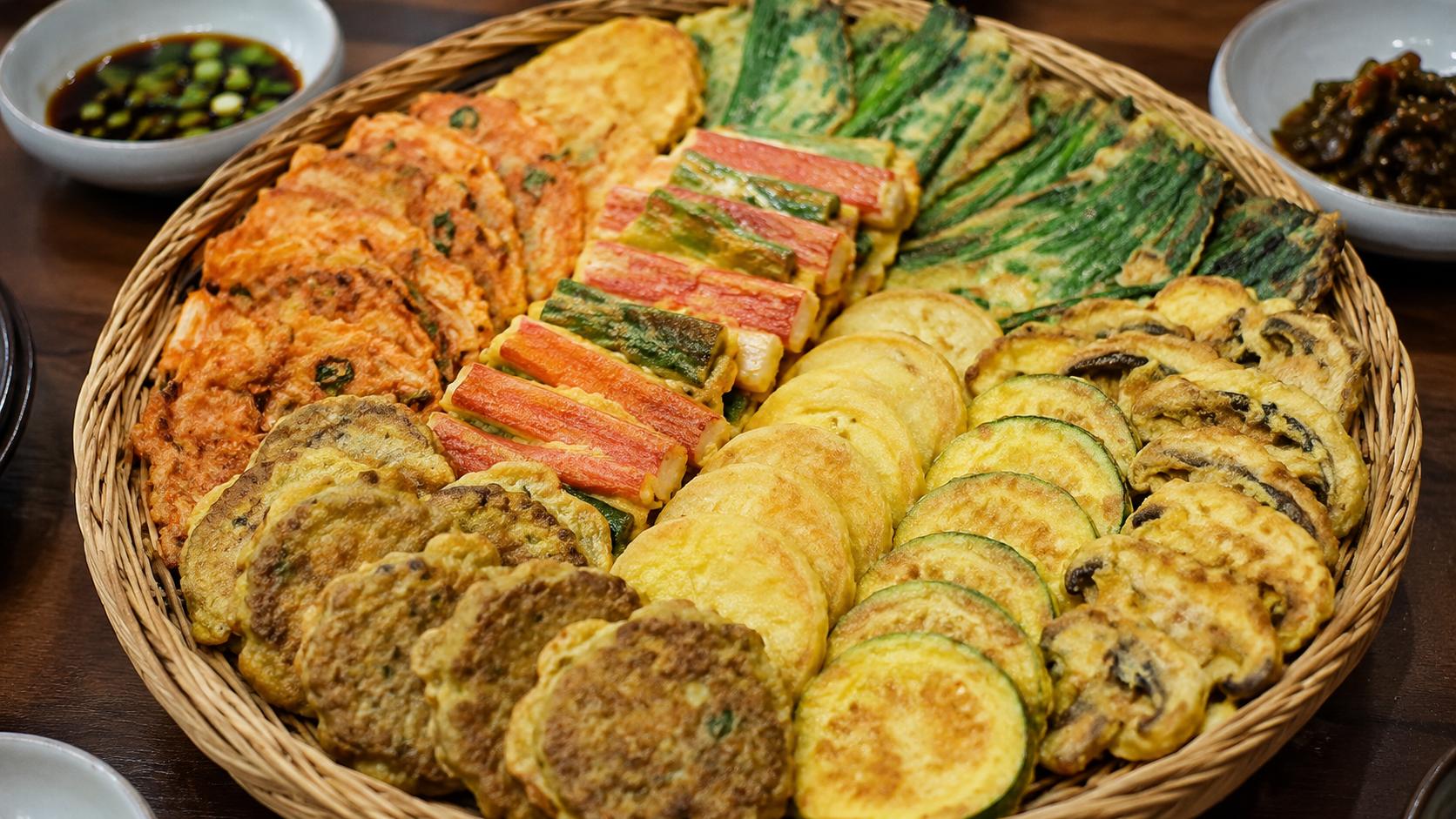
In the culinary lexicon of South Korea, few sounds evoke as much immediate, sensory nostalgia as the violent sizzle of batter hitting a generously oiled skillet. This is the sound of "Jeon"—the quintessential Korean savory pancake. While outsiders might see it as a simple appetizer or a rainy-day snack, Jeon serves a far more profound cultural purpose. It is the ultimate culinary glue of the Korean household, an edible ritual that has spent centuries transforming labor-intensive kitchen duties into intergenerational symphonies of family bonding and shared celebration.
In This Article
The Sizzling Rhythm of a Rainy Day
There is a famous cultural reflex in Korea: the moment the first raindrop hits the pavement, thoughts instantly turn to Jeon paired with a cold bowl of Makgeolli (milky rice wine). Urban myth often attributes this to a psychological link between the patter of rainfall and the sound of frying oil. Whatever the scientific truth, the emotional reality is undeniable. Rain in Korea does not signal isolation; it acts as an invitation to gather inside, light up the stove, and crowd around a communal plate.
Unlike dishes that are portioned out individually, Jeon is inherently democratic. It is placed in the absolute center of the table, usually served piping hot straight from the pan. Family members instinctively tear it apart with their chopsticks—a tactile, informal style of dining that immediately strips away any lingering social stiffness and invites open conversation.
The Holiday Hearth: Bonding Over the Hot Griddle
Nowhere is the unifying power of Jeon more evident than during Korea’s major traditional holidays, Chuseok and Seollal. The preparation of "Mijeon" (an assortment of different pan-fried delicacies) is a massive undertaking. Historically, this labor fell heavily upon individual homemakers, but the modern Korean kitchen has reframed this process as a collaborative, multi-generational event.
Sitting on the living room floor around a wide electric griddle, grandparents, parents, and children sit together for hours. One dips the ingredients in flour, another coats them in beaten egg, and a third manages the heat. In this shared space, the monotonous rhythm of frying unlocks a unique arena for storytelling. Old family lore is passed down to children, marital advice is shared, and the generational gap is bridged over the mesmerizing aroma of browning batter. The prize for the workers? Slighting burning their tongues on the freshest, crispiest pieces snatched directly from the grill.
An Aesthetic of Inclusion: The Universal Canvas
Architecturally, Jeon is remarkably inclusive. It does not demand rare or prohibitively expensive ingredients. Instead, it elevates the mundane. Whether it is aged kimchi (Kimchijeon), bundles of scallions (Pajeon), delicate slices of zucchini (Hobakjeon), or minced seafood, almost anything can be bound together by a simple flour-and-water batter and transformed into a crisp masterpiece.
This adaptability makes it an incredibly forgiving dish that reflects the resourceful spirit of the Korean household. It is a dish born from the philosophy that no matter what is left in the refrigerator, there is always enough to stretch into a feast capable of feeding an unexpected guest or an impromptu family gathering. It turns a lack of ingredients into a bounty of warmth.
A Democratic Comfort Food for the Global Table
As Korean cuisine continues its relentless expansion across the global culinary stage, Jeon is emerging as an effortless ambassador. While complex stews or intense ferments can occasionally intimidate uninitiated palates, the universal language of a crispy, savory pancake is instantly understood by everyone, regardless of cultural background.
Yet, even as it finds a home on trendy menus in New York, London, or Paris, the true essence of Jeon remains fiercely domestic. It is a food that cannot be fully appreciated in a vacuum of solitary consumption. It demands a crowd, a bit of noise, and a willingness to share. In a fast-paced world that constantly pulls families apart into separate digital screens, the humble griddle of Jeon remains a delicious, sizzling sanctuary where people are compelled to slow down, sit close, and remember what it means to be together.