


Busan's Red Eomuk and Mul-tteok: The Ultimate Street Food Duo
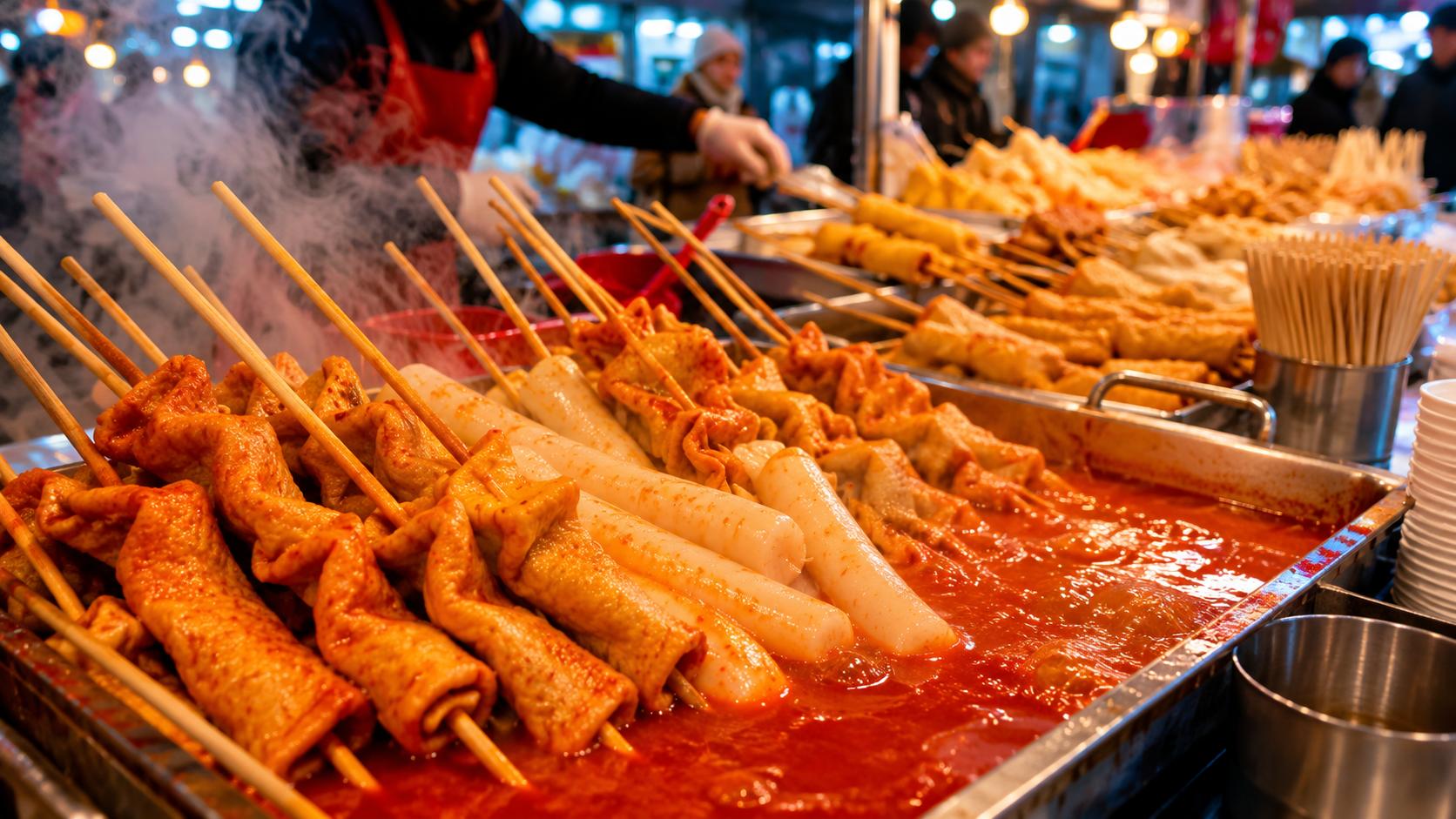
For international travelers, South Korea’s culinary landscape is often defined by the neon-lit barbecue joints of Seoul or the structured royalty of Jeonju’s bibimbap. Yet, to discover the true, unvarnished emotional baseline of Korean comfort food, one must travel south to the rugged port city of Busan. Here, amid the salty sea breeze and bustling traditional markets, lies an extraordinary street food ritual: "Red Eomuk" (spicy fish cake) and "Mul-tteok" (broth-soaked rice cake). Skewered on long wooden sticks and submerged in boiling vats of fiery crimson broth, these humble snacks offer a profound window into Busan’s history, its residents' resilient spirit, and a unique cross-cultural lesson in how heat can heal the soul.
In This Article
The Port City’s Alchemy: How Busan Became South Korea’s Fish Cake Capital
To understand why *Eomuk* (fish cake) tastes fundamentally different in Busan is to look at the city’s geographic and historical infrastructure. As South Korea's largest maritime gateway, Busan has always possessed an unparalleled logistical advantage: immediate access to fresh, high-quality white fish caught straight from the Pacific undercurrents. Following the geopolitical shifts of the mid-20th century, local artisans blended Japanese fish-processing techniques with Korean flavor profiles, turning surplus seafood into a nutrient-dense, affordable protein source for the working class.
While standard Korean fish cakes are gently simmered in a mild, golden radish and kelp broth, Busan took this culinary staple a step further. In local strongholds like Bupyeong Kkangtong Market and BIFF Square, street vendors began simmering the fish cakes in a dense, heavily concentrated gochujang (red chili paste) base infused with blue crabs, garlic, and wild leeks. The result was "Red Eomuk"—a fierce, deeply aromatic variant that quickly became the definitive comfort food of the southern coast.
The Crimson Broth: The Culinary Psychology of Spiced Solace
For international visitors, the initial sight of Red Eomuk can be intimidating. The broth bubbles with a deep, uncompromising crimson hue, sending up clouds of steam fragrant with capsicum. However, taking a bite reveals a complex flavor profile that goes far beyond raw heat. The natural umami of the high-content fish cake cuts through the spice, creating a sweet, savory, and slow-building warmth.
This fiery profile ties directly into a fascinating aspect of Korean gastro-psychology. In Korea, eating intensely spicy food is a culturally institutionalized method for releasing *Hwa* (pent-up stress or emotional frustration). Standing before a boiling vat on a cold night, sweating slightly while consuming spicy broth, functions as a form of sensory therapy. It is a counter-intuitive comfort mechanism: using external, physical heat to soothe internal emotional pressure.
The Chewy Paradox: Decoding the Magic of Broth-Infused 'Mul-tteok'
Sitting directly alongside the fiery red skewers is arguably Busan’s most brilliant culinary paradox: *Mul-tteok*. To the uninitiated, it looks deceptively simple—a thick, cylindrical log of plain white *garaetteok* (unflavored cylinder rice cake) skewered on a stick. It is neither grilled, fried, nor coated in sauce. Instead, it is left to submerge for hours inside the seasoned fish cake broth.
What happens during this prolonged soaking is nothing short of food science magic. The dense, starchy matrix of the rice cake gradually absorbs the rich, savory seafood essence of the broth without losing its structural integrity. When a traveler takes a bite, the texture is reminiscent of artisanal mozzarella—soft, incredibly chewy, and subtly infused with a deep umami flavor. It provides a gentle, soothing, carbohydrate-rich contrast to the intense spice of the neighboring Red Eomuk, making the two an inseparable duo.
The Communal Hearth: Street Gastronomy as a Social Equalizer
Ultimately, the magic of Red Eomuk and Mul-tteok cannot be fully separated from the physical environment in which they are consumed. These dishes are not meant for formal dining rooms or curated plating. They belong exclusively to the red-tented *Pojangmacha* (street food kiosks) and open-air market stalls where the city's social contracts are rewritten every evening.
Around the glowing steel broth vats, a unique communal space emerges. Backpacking global tourists, corporate executives in tailored suits, and local market vendors stand shoulder-to-shoulder, sharing the same steam, dipping their skewers in communal trays, and sipping hot broth from paper cups. In a fast-paced society, this 10-minute pause at a street corner kiosk acts as a powerful social equalizer. Busan proves that a city’s most profound comfort doesn't hide behind luxury barriers; it bubbles openly on a street corner, welcoming anyone with a wooden skewer and a craving for warmth.