


Gilgeori Toast (길거리 토스트): Korea’s Fastest Comfort Breakfast
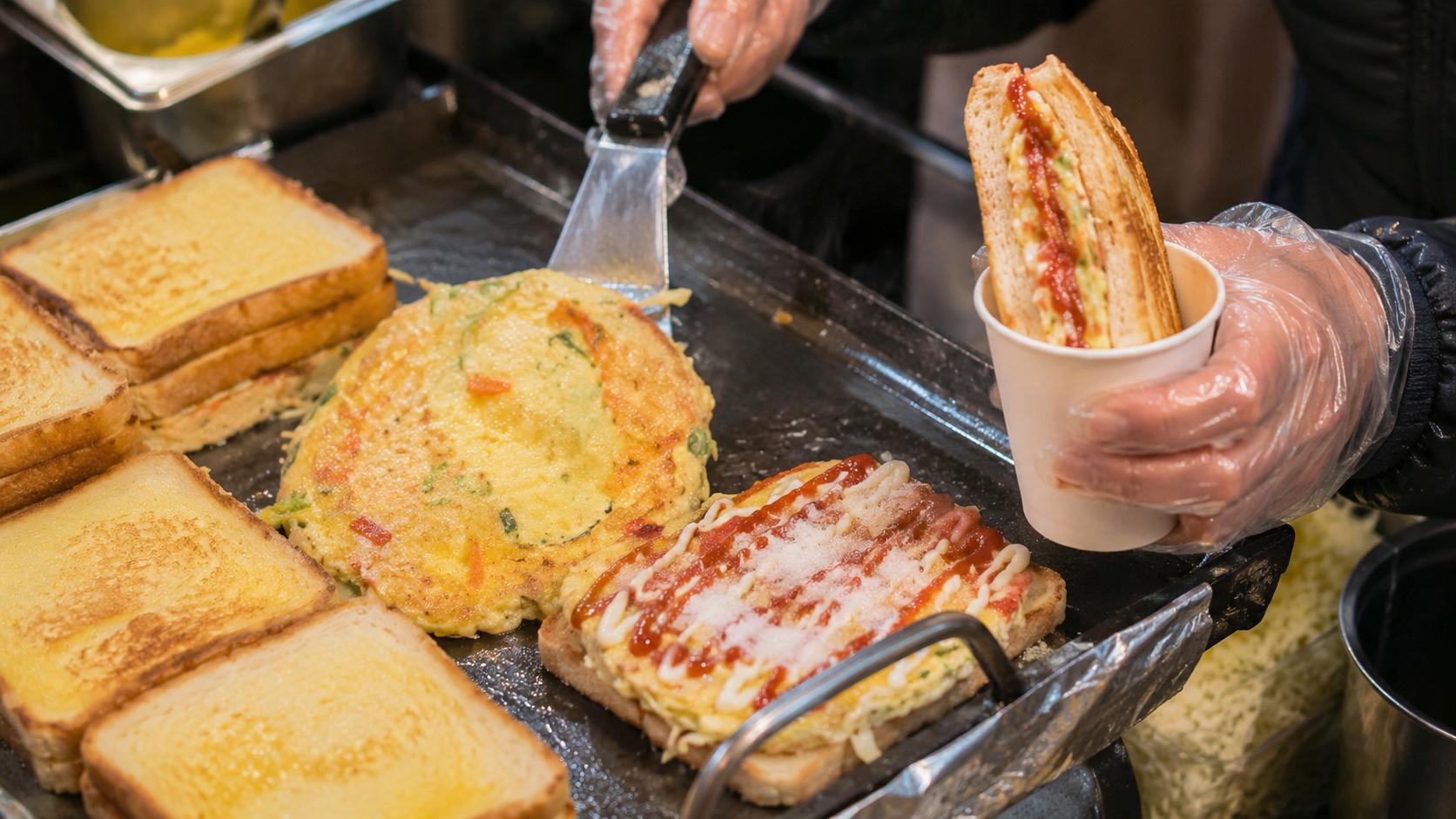
For many global travelers, the phrase "egg toast" conjures images of a quiet, aesthetic brunch cafe with perfectly poached eggs on sourdough. But in the high-octane business districts of South Korea, breakfast operates on a completely different rhythm. Here, the ultimate morning fueling station is a humble street-side cart or truck, serving what locals affectionately call "Gilgeori Toast" (Street Toast). Cooked on a sizzling flat-top griddle slathered in margarine, this sandwich features a crunchy cabbage-and-egg patty, finished with an unapologetic dusting of white sugar and a heavy squirt of ketchup. Served folded inside a paper cup, it is a masterclass in culinary efficiency and a dazzling contrast of sweet and salty flavors that keeps Korea’s workforce moving.
In This Article
The Sidewalk Dining Phenomenon
Step out of any major Seoul subway station at 8:00 AM, and your senses will immediately be hit by a rich, savory aroma cutting through the crisp morning air. It is the scent of melting margarine and sizzling eggs wafting from a metal food cart. Around it, a crowd of neatly dressed office workers stands shoulder-to-shoulder, quietly waiting for their numbers to be called.
There are no chairs, no tables, and no reservations. This is Korea's original pop-up restaurant. For foreigners, watching businessmen in tailored suits and corporate executives eating a messy sandwich directly on the sidewalk is an fascinating cultural contrast, highlighting a shared urban ritual where social hierarchy melts away in front of a hot griddle.
The Anatomy of the Perfect Sweet & Salty Toast
While Western breakfast sandwiches rely heavily on savory elements like bacon, cheese, or avocado, Gilgeori Toast achieves its legendary status through an addictive flavor profile known in Korea as "Dan-Zzan" (Sweet and Salty). The base is a thick egg patty packed with finely shredded cabbage, carrots, and green onions, providing a distinct, fresh crunch that balances the richness of the egg.
The true cultural plot twist, however, happens right before the sandwich is assembled. As the toast is flipped, the vendor heavily sprinkles a spoonful of white granulated sugar directly onto the hot egg patty, followed by a generous zigzag of ketchup and occasionally mayonnaise. The heat partially melts the sugar into a glaze, creating an explosion of contrasting flavors that feels completely unexpected yet utterly brilliant to the uninitiated palate.
The Paper Cup Architecture
Street food requires street-smart packaging, and Gilgeori Toast features one of the most innovative, low-tech designs in the culinary world: the standard paper coffee cup. Once the sandwich is fully assembled, the vendor expertly folds the hot, buttery square in half and slides it vertically into a narrow paper cup.
This simple structural choice serves multiple genius purposes. It acts as an insulation barrier, protecting the commuter's hands from the blistering heat of the griddle-fresh bread. It also catches any stray drops of ketchup or melting sugar, preventing stains on expensive work clothes. Most importantly, it makes the sandwich completely mobile, allowing busy commuters to eat on the move without needing a plate or a mountain of napkins.
The Logic of Fast Fuel in a Hurry-Hurry Society
Ultimately, Gilgeori Toast is a delicious byproduct of Korea’s famous "Ppalli-Ppalli" (hurry-hurry) culture. It is a meal engineered entirely for speed and high-yield energy. A vendor can crank out a finished sandwich in under two minutes, and a seasoned commuter can easily devour it in three, getting a massive hit of carbohydrates, protein, and sugar to kickstart a demanding workday.
In a modern society increasingly dominated by global fast-food chains and sleek, automated cafes, this humble street toast remains irreplaceable. It represents a living piece of contemporary Korean history—a testament to how the country took basic, affordable ingredients and weaponized them with sheer pragmatism and flavor logic to fuel a nation on the rise.