


Inside Korea’s Red Devils: The Fan Culture That Changed World Football
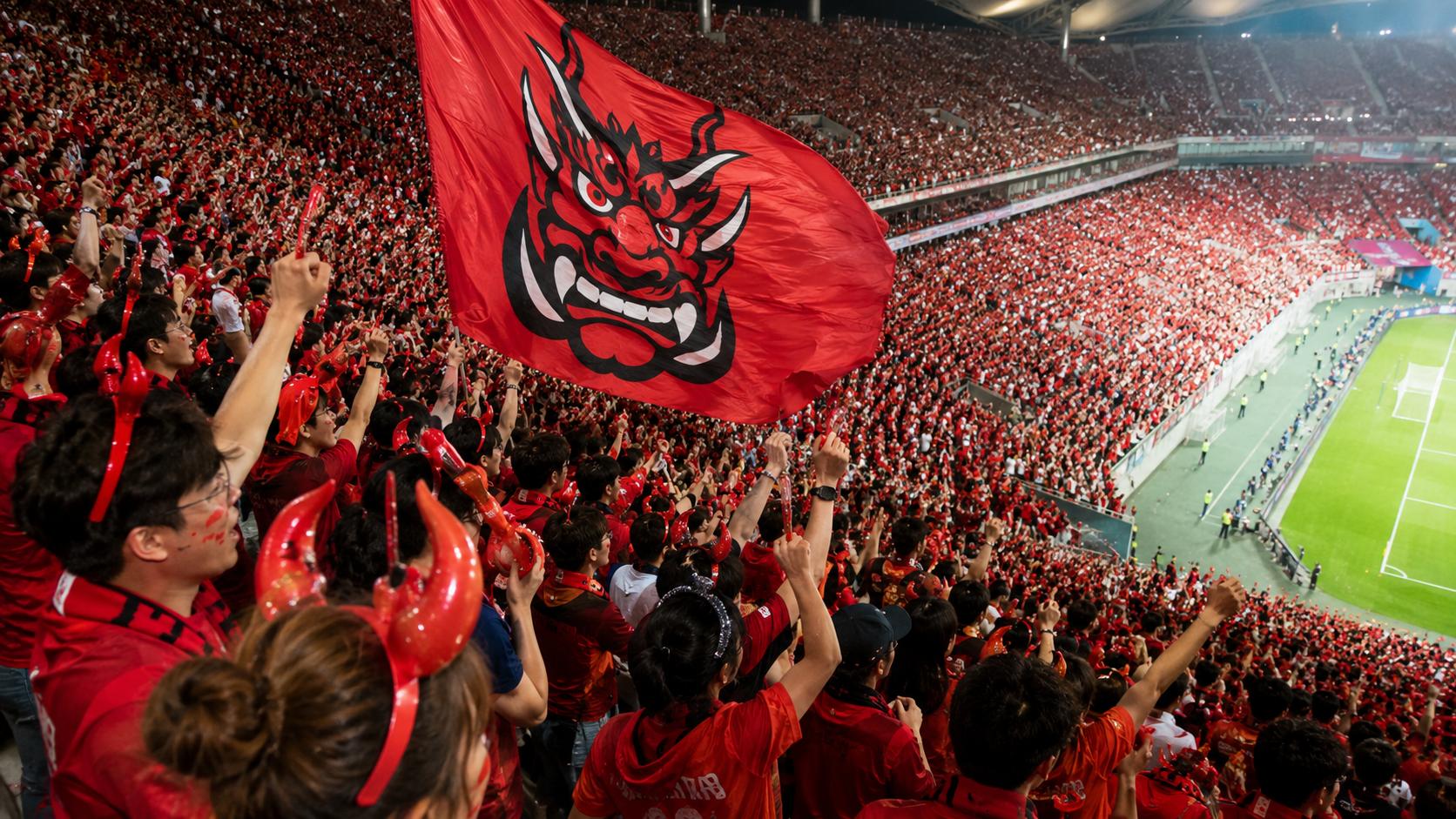
As the 2026 FIFA World Cup ignites stadiums across North America, international football fans tuning into South Korea’s matches are treated to a jaw-dropping visual spectacle: a massive, coordinated ocean of fiery crimson taking over both the stands and the streets. Welcome to the world of the "Red Devils" (붉은악마)—South Korea’s official national football supporters' club, whose hyper-passionate, stadium-shaking energy has fundamentally redefined global fan culture. To an outsider, thousands of people chanting in perfect synchronization while wearing devil horns might look like a surreal tribal ritual. Yet, this precise phenomenon represents one of the most powerful pillars of modern K-culture. It is a brilliant masterclass in collective joy, where sports merchandise transforms into a symbol of national unity, and a harmless piece of folklore serves as the ultimate engine for global celebration.
In This Article
The Accidental Moniker: Born from Foreign Praise
While the name "Red Devils" sounds intensely fierce, its origins are actually rooted in international admiration rather than domestic intimidation. In 1983, during the FIFA World Youth Championship in Mexico, the underdog South Korean youth team shocked the football world by miraculously advancing to the semi-finals. Dressed in vibrant red uniforms and running across the pitch with seemingly infinite stamina, the foreign press was completely mesmerized. Local media began calling them the "Red Furies" and the "Red Devils" to praise their relentless spirit. Decades later, in 1997, South Korea's passionate PC-commune football clubs officially adopted this legendary nickname, turning a journalistic compliment into a nationwide institution.
Chiwoo Cheonwang and the Visual Identity of Battle
Look closely at any Red Devils banner, scarf, or t-shirt during the 2026 World Cup, and you will spot a menacing, fanged goblin-like face staring back at you. This isn't a cartoon monster; it is "Chiwoo Cheonwang" (치우천왕), a legendary figure from ancient folklore revered as the mythical God of War. By modernizing this traditional roof-tile design, the Red Devils created a striking visual mascot that perfectly encapsulates their football philosophy: to visually overwhelm opponents on the field while channeling an unbreakable, ancient warrior spirit that dates back millennia.
The Invention of the Global Street Cheering Phenomenon
What truly elevated the Red Devils into global folklore was their revolutionary approach to public spaces during the iconic 2002 World Cup, a legacy that proudly continues today. Instead of confining the party to the stadium seats, millions of ordinary citizens flooded public squares, turning entire city centers into giant, open-air stadiums. This massive "Street Cheering" (거리응원) stunned international journalists, not just due to its staggering scale, but because of its paradoxical nature. Despite hundreds of thousands of people tightly packed together under pure adrenaline, the crowds remained remarkably orderly, clean, and safe—routinely picking up every piece of trash before leaving.
The Rhythmic Infrastructure of Unity
At the core of this red empire lies a simple, universal auditory signature: "Dae~Han-Min-Guk! (Clap-Clap, Clap-Clap-Clap!)" This five-beat clap sequence, engineered by the Red Devils, transcends age, social status, and political leanings in South Korea. It acts as an instant psychological trigger for solidarity. During this 2026 tournament, as South Korea battles fiercely on the global stage, this chant serves as a gentle reminder of the true power of K-culture. It proves that the ultimate strength of a fandom doesn't just lie in passive consumption, but in turning a massive sports event into a beautiful, harmonious carnival that captivates the world.