


Why Koreans Eat Kimchi with Sweet Potatoes
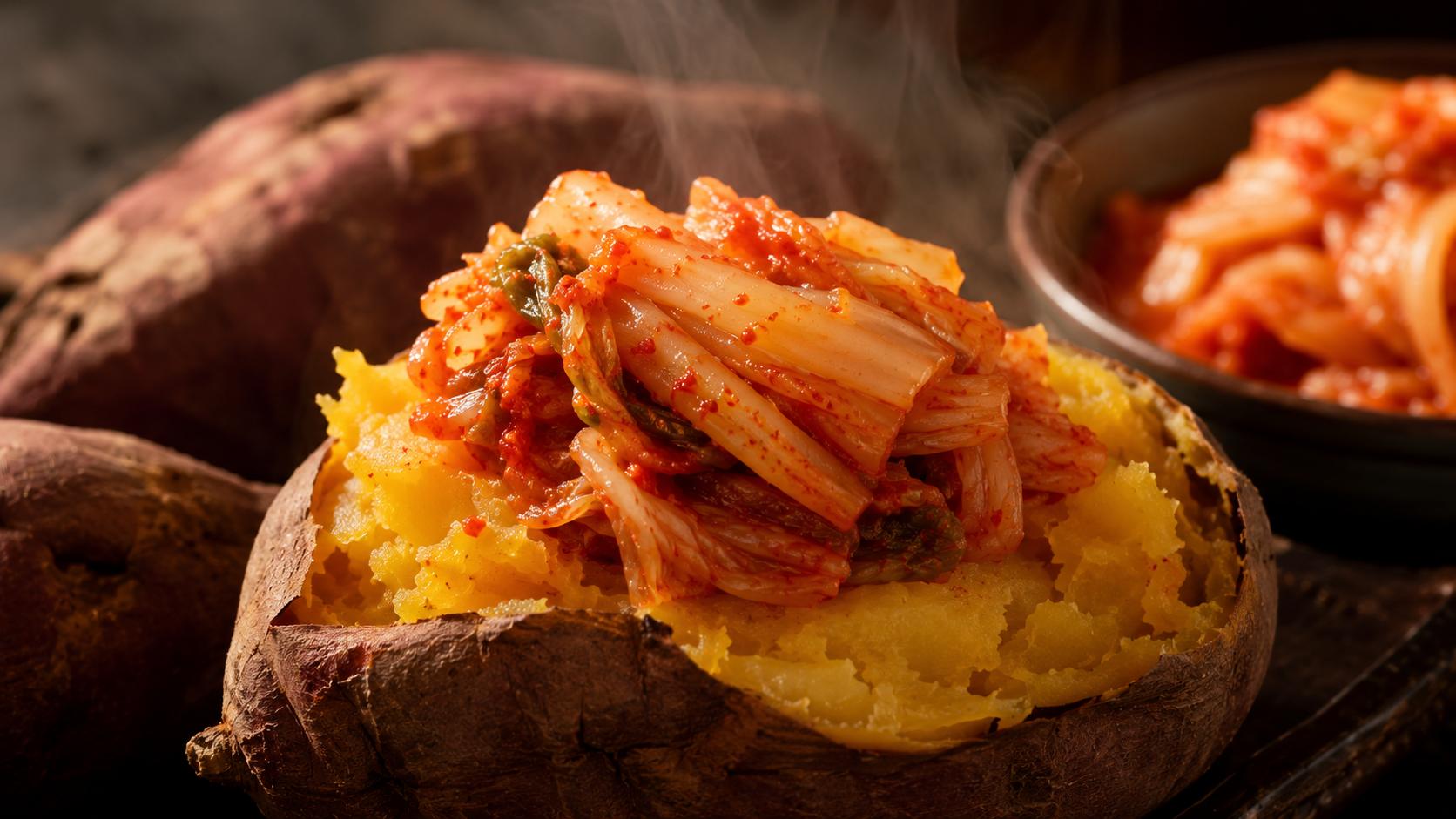
When winter winds chill the streets of South Korea, locals seek solace in a culinary pairing that sounds utterly baffling to outsiders but represents the pinnacle of K-comfort food: piping hot, caramelized roasted sweet potatoes ("Gun-goguma") topped with a cold, crisp piece of well-fermented Kimchi. To the uninitiated, merging a sugary, dense root vegetable with spicy, pungent fermented cabbage might seem like a texture and flavor collision. However, for Koreans, this duality is pure magic. It is a masterful symphony of hot and cold, sweet and savory, heavy and refreshing. This hyper-local combination transcends simple sustenance; it is a nostalgic, emotional anchor that transforms winter’s harshest days into a cozy, gut-healing ritual.
In This Article
The Dynamic Duet: Sweet Potato Meets Fermentation
Korean roasted sweet potatoes are not your average yams. Slowly baked—traditionally over charcoal drums on street corners—they develop a jammy, honey-like core with a smoky, charred skin. They are intensely sweet, comforting, and remarkably dense. But eating them solo can eventually feel heavy or dry on the palate, a sensation Koreans call "bup-bup-hada" (텁텁하다). Enter Kimchi. By placing a cold, spicy strip of well-aged Kimchi directly onto a steaming, golden spoonful of sweet potato, you instantly cut through the heaviness. The sharp, lactic acid fermentation of the cabbage cuts the cloying sweetness, resetting your tastebuds for the next bite.
The Science of the Perfect Bite: Contrast and Chemistry
Beyond the sheer culinary joy, there is an accidental nutritional and structural genius to this pairing. Sweet potatoes are packed with potassium, which naturally helps the body flush out excess sodium—making it the ideal biological counterweight to the salt content in Kimchi. Structurally, the soft, melting texture of the hot potato acts as a canvas for the cold, watery crunch of the cabbage. It is a culinary micro-climate inside your mouth, where the temperature drops from fiery hot to refreshingly cool in a split second, releasing a burst of umami that elevates both humble ingredients into something transcendent.
A Nostalgic Blueprint of Korean Winter
For generations of Koreans, this flavor profile is hardwired into memories of family warmth. It evokes images of coming inside from a snowstorm, gathered around a living room table while a grandmother peels a steaming potato, handing it over with a piece of hand-torn, beautifully ripe Kimchi on top. In a culture that places massive emotional weight on communal eating and "Jeong" (affectionate attachment), sharing this specific snack is an act of love. It is the ultimate cold-weather defense system, warming the hands, filling the stomach, and comforting the mind.
From Humble Streets to Instagram-Worthy Comfort
In today's modern food scene, this pairing has evolved into a celebrated aesthetic. While the nostalgic charcoal drums on street corners are rarer now, the tradition has moved into hip convenience stores, specialized dessert cafes, and home kitchens equipped with air fryers. Young Koreans regularly post cinematic "mukbang" close-ups of vibrant red Kimchi draped over oozing, yellow sweet potatoes, introducing global foodies to the genius of this contrast. It proves that Korea’s finest culinary wisdom doesn’t always reside in royal courts, but rather in the brilliant, intuitive ways everyday people balance fermentation with the simple sweetness of the earth.