


The Secret Behind Korea’s Photo Pose Culture
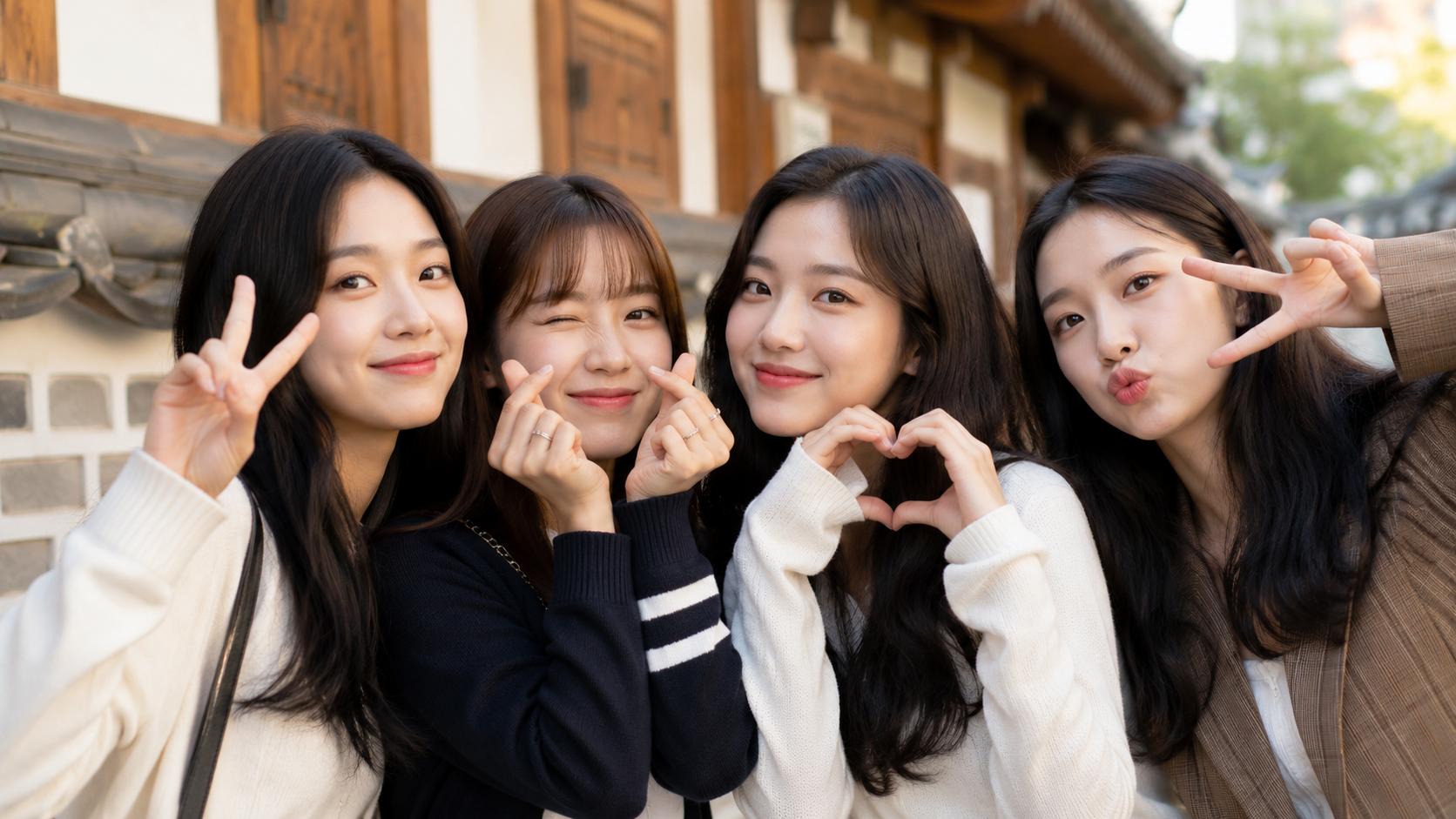
The V-sign and the finger heart appear reflexively every time a camera clicks. To foreigners, these "K-poses" might seem quirky, but they are much more than simple hand gestures. For Koreans, taking a photo is not just a solo record; it is a "communal ritual" of the shared moment. From the global phenomenon of the "K-heart" to the reasons why Koreans feel the need to synchronize their poses in front of a lens, we explore the roots of this unique collective cuteness.
In This Article
The Magic of Hands: When the Camera Clicks
In Korea, taking a photo is an active "event." When the shutter clicks, the V-sign and finger heart are the safest, most effective answers for those who feel awkward with their hands. These "K-poses" go beyond making the face look smaller or emphasizing cuteness; they function as a "non-verbal signal" that everyone in the photo is sharing the same emotion.
Why Can't Koreans Let Go of the V-Sign?
While the V-sign represents "Peace" in the West, in Korea, it is an expression of friendliness, saying, "I'm here!" or "We are together!" Placing a V-sign under the chin or waving it near the eyes is a staple of Korean photography. It is the most popular way for camera-shy Koreans to fill the frame and gain confidence.
The K-Heart: A Global Meme Phenomenon
The "finger heart," made by crossing the thumb and index finger, has transcended its origins as a K-pop symbol to become a global meme. Even international stars who were initially awkward with it now showcase it as a "must-do" when visiting Korea. It has become the fastest and most certain "global communication method" to convey both intimacy and respect.
Collective Cuteness: Why We Synchronize Our Poses
When Koreans take group photos, if one person suggests a pose, everyone follows suit. This reflects a cultural preference for "we-ness" over individual expression. By striking the same pose, we confirm that we are part of the same team, sharing the same joy. This collective cuteness is another face of the Korean concept of "Jeong" (connection/affection).