


Why Korean Convenience Stores Double as Social Spaces
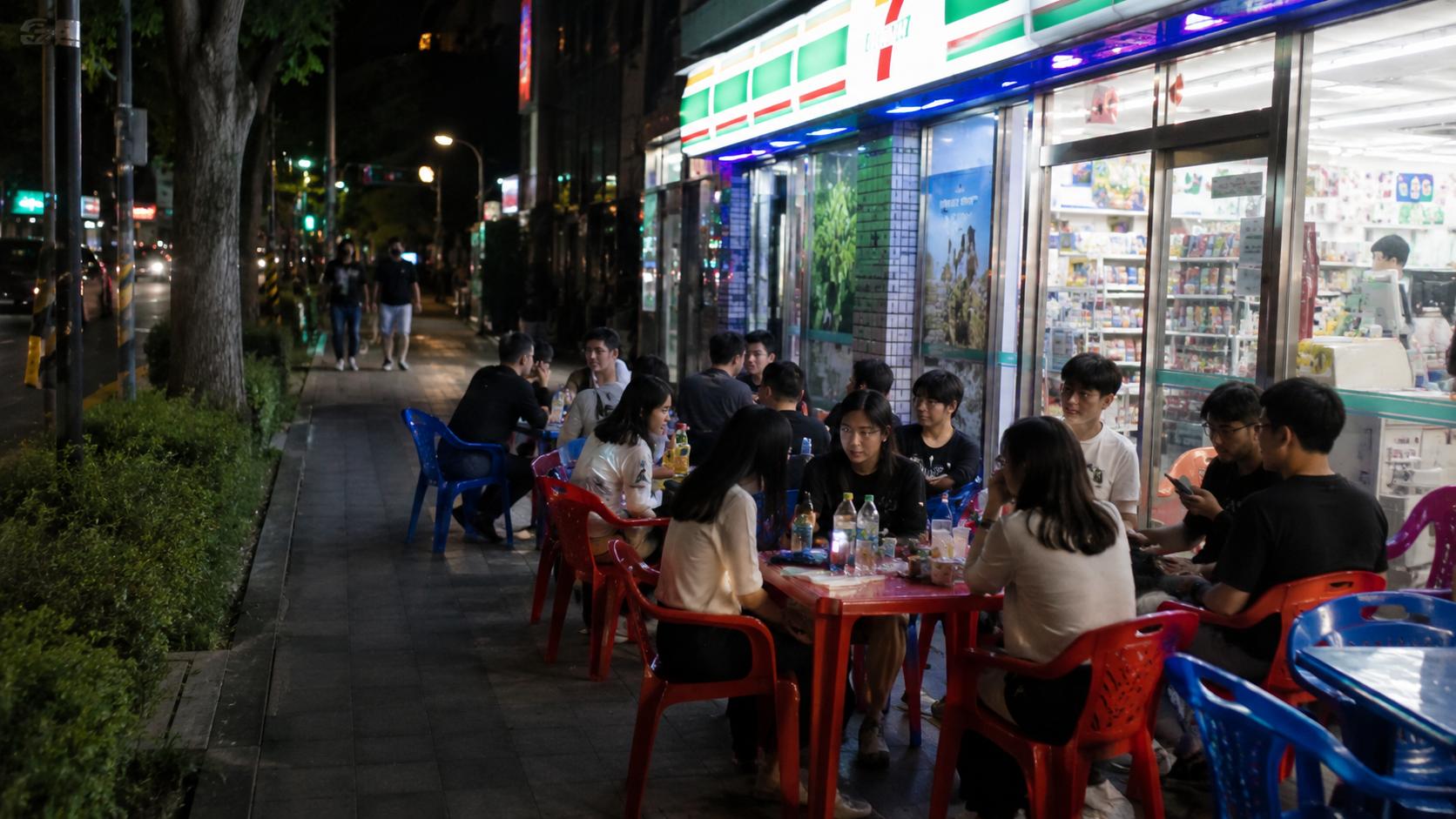
To the uninitiated global traveler, a convenience store is a transitional space—a brightly lit, utilitarian pitstop to purchase a bottled coffee or a quick snack before rushing back to the privacy of one's home. But in South Korea, the neon-tinted storefronts of CU, GS25, and Seven-Eleven undergo a radical, nocturnal transformation. As sundown approaches, property perimeters are hastily lined with lightweight, primary-colored plastic tables and chairs. Within minutes, these cheap plastic setups become the most democratic, highly sought-after outdoor lounges in the city. For the price of a four-can beer bundle and a steaming cup of instant ramyun, Koreans tap into an impromptu urban social ecosystem. This feature dives into the sociology of South Korea’s "Pyeon-Maek" (Convenience Store Beer) phenomenon, exploring how a simple plastic chair subverted the definition of modern urban third spaces.
In This Feature
The Geometry of the Plastic Terrace
The iconic blue and red plastic chairs branded with local brewery logos are an architectural paradox. They boast zero aesthetic pretense, minimal ergonomic comfort, and can be stacked away in seconds. Yet, when deployed under the white glare of a convenience store awning, they form a powerful socio-spatial boundary. This temporary outdoor setup creates a fluid "pseudo-public space." It bridges the gap between the hyper-commercialized, expensive interior of Seoul’s trendy bars and the absolute isolation of one’s tiny studio apartment. On any given Friday night, you will find corporate salarymen in tailored suits sharing elbow room with university students in sweatpants, all occupying the same basic plastic geometry.
The Anatomy of the Budget Nocturnal Hub
In a sprawling metropolis like Seoul, where real estate is at a premium and a single cocktail at a rooftop bar can cost upwards of 20,000 KRW, the plastic terrace offers a liberating alternative. Known colloquially among locals as "Pyeon-Maek" (a portmanteau of pyeonuijeom/convenience store and maekju/beer), this ritual is built on effortless affordability. With less than 15,000 KRW ($11 USD), a duo can curate a multi-course street-side feast: premium imported beers, a hot bowl of ramyun customized with a slice of processed cheese, and a couple of triangular kimbaps. There are no dress codes, no reservations, and no waiters rushing you to finish. It is high-velocity chill—an egalitarian refuge for the urban weary.
The Open-Container Exception
For international visitors hailing from Western metropolises, the sheer act of cracking open a cold lager on a public sidewalk without a paper bag is an exhilarating culture shock. While strict "open-container laws" in cities like New York, London, or Sydney heavily penalize public drinking, South Korea’s legal and cultural frameworks treat the convenience store terrace as a benign gray zone. As long as the consumption happens within the store's designated property line or outdoor perimeter, it is entirely legal. This unique urban tolerance transforms ordinary sidewalks into vibrant, organic neighborhoods where communities organically collide over late-night chatter.
The Invisible Infrastructure of Absolute Trust
Ultimately, the survival of this plastic chair culture hinges on a structural phenomenon that continuously baffles global expats: an unparalleled level of public safety. It is a common sight to see a lone patron leave a MacBook, an iPhone, and a designer wallet completely unattended on a plastic outdoor table while they step inside the store for three minutes to wait for their ramyun water to boil. The absolute certainty that your belongings will remain untouched highlights the social trust that anchors Seoul’s nightlife. The plastic chair is more than just cheap furniture; it stands as a monument to a society comfortable enough to let its guard down, look around, and share a casual night under the neon lights.