


The Pastry Xi Jinping Loved — and Three Other Gyeongju Foods
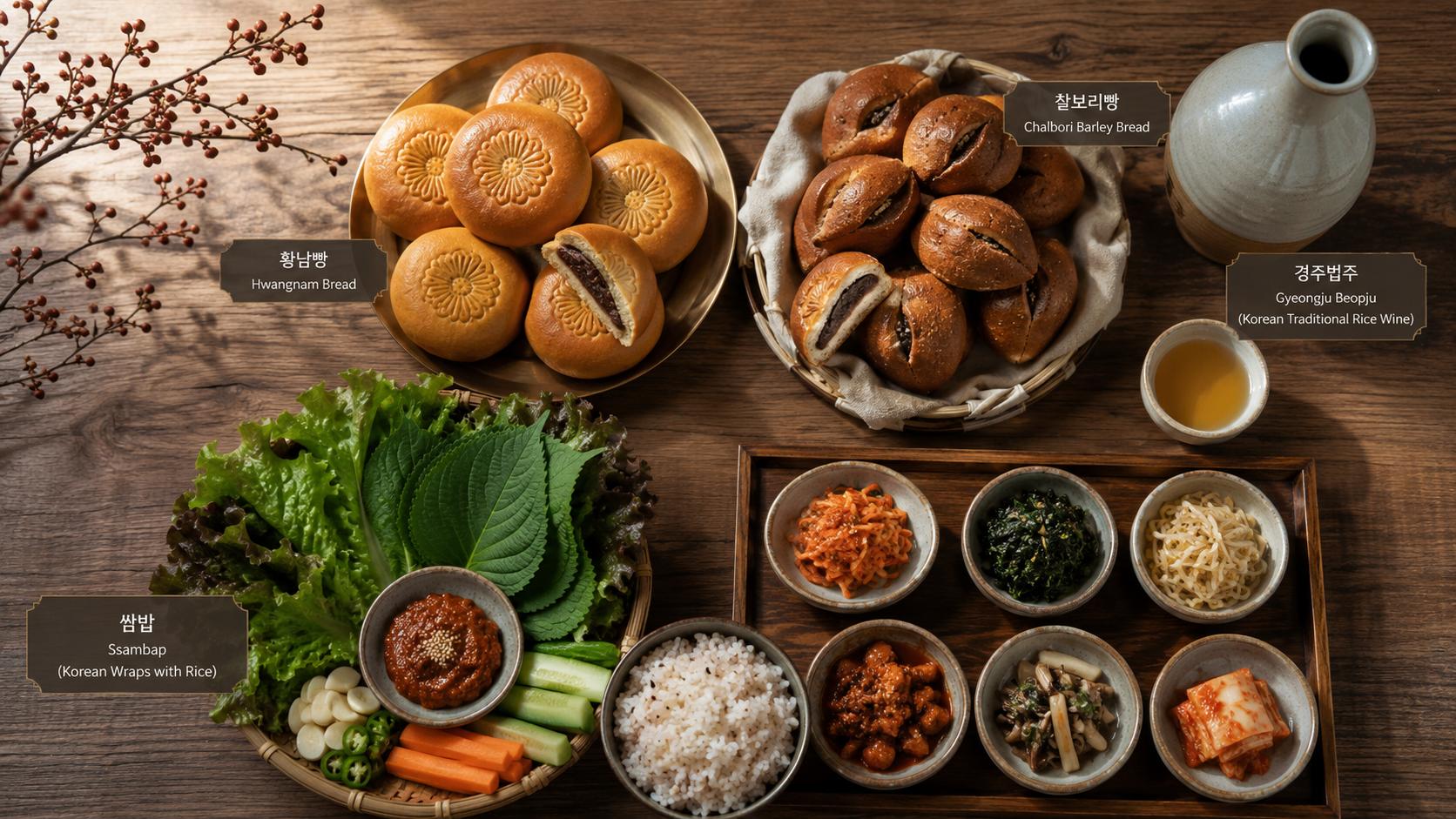
From a red bean pastry praised by world leaders to a 300-year-old rice wine, here are four foods that define a visit to Gyeongju.
In This Article
What to Eat in Gyeongju
Gyeongju, the thousand-year capital of the Silla Kingdom, isn't known for an elaborate food scene. Instead, what has survived alongside the city's history is simple, traditional, and unhurried. Here are four foods worth seeking out on a visit.
Hwangnam Bread — Gyeongju's Most Famous Pastry
First baked in 1939 in Gyeongju's Hwangnam-dong neighborhood, Hwangnam bread is the city's signature snack. A wheat-flour batter is filled with whole red bean paste and stamped with a chrysanthemum pattern before baking. The filling makes up close to 70 percent of the pastry, so each bite delivers a concentrated red bean flavor. The same family has run the original bakery for three generations across more than 85 years, and the pastry has been officially designated a traditional food of Gyeongju and a regional specialty product by Gyeongsangbuk-do Province.
The pastry recently drew international attention. During the 2025 APEC summit held in Gyeongju, Chinese President Xi Jinping was reported to have enjoyed Hwangnam bread, and South Korean President Lee Jae-myung mentioned it directly in a CNN interview, saying that visitors to Gyeongju "try this bread nine times out of ten." It also appeared at official summit functions, reinforcing its position as the city's signature dessert on an international stage.
Chalbori Bread — A Healthier Alternative Made from Barley
Chalbori bread is the pastry that challenges Hwangnam bread's dominance. Made primarily from glutinous barley grown in the Gyeongju region, it has a chewier texture and is considered easier to digest. Like Hwangnam bread, it's filled with red bean paste, but the overall flavor is less sweet and more understated. The row of chalbori bread shops lined up outside Gyeongju Station gives a sense of just how popular it has become.
Ssambap — A Meal Rooted in Silla Temple Food
Ssambap grew naturally out of Gyeongju's rural surroundings. The meal consists of warm rice and 10 to 15 small side dishes, all eaten wrapped in fresh leaves — lettuce, perilla, cabbage, and other seasonal greens. Its roots trace back to the temple food tradition of the mountain monasteries near Gyeongju, where vegetables and grains made up the core of the diet. Modern restaurants have added meat options over the years, but the vegetable-heavy banchan spread remains central to the dish. The Gyochon Village area has the highest concentration of restaurants serving traditional ssambap.
Gyeongju Gyodong Beopju — 300 Years of Rice Wine from One Family
Gyeongju Gyodong Beopju is a traditional rice wine that has been brewed for eight generations by the Choe family of Gyeongju — known locally as the "Choe rich family." The recipe is said to trace back to a Joseon-era official in charge of the royal kitchen who returned to his hometown of Gyeongju and began brewing it there. It's made from native glutinous rice and traditional nuruk fermentation starter, using well water drawn from the family's own courtyard, and aged through a 100-day fermentation process. The result is a clear, pale golden liquid with an alcohol content of 16 to 18 percent. It was designated a National Intangible Cultural Heritage in 1986. Worth noting: it's a different product from the more commonly sold commercial liquor labeled "Gyeongju Beopju," which is a separate, unrelated brand — easy to confuse given the similar name.