


Pepero Day (빼빼로데이): How a Snack Became a National Celebration
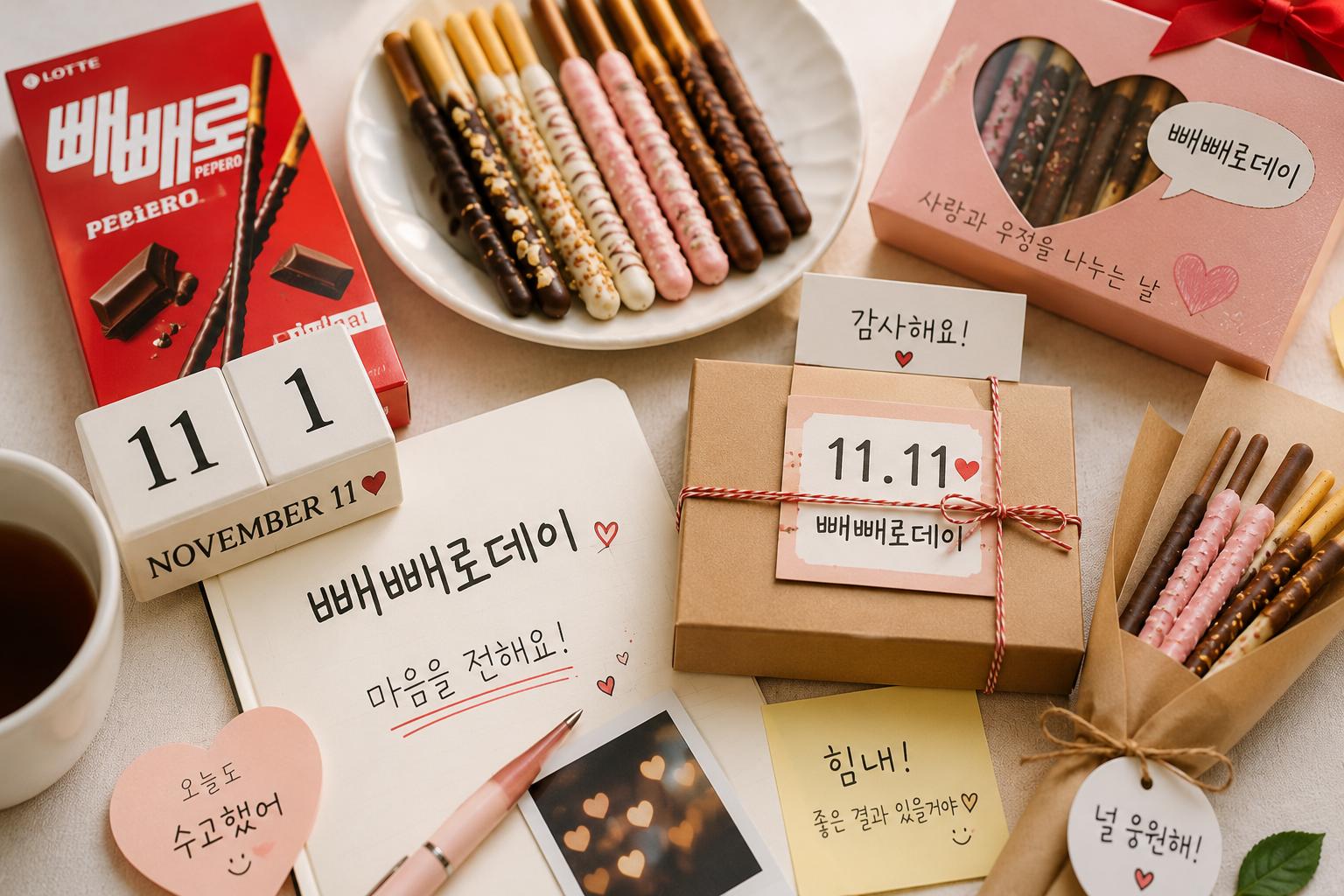
Every year on November 11, South Korea celebrates "Pepero Day," a day for exchanging long, thin chocolate-dipped biscuit sticks. We explore the origins and modern significance of this unique cultural phenomenon.
In This Article
Origins and Evolution of Pepero Day
Pepero Day is a Korean holiday celebrated annually on November 11, where people gift "Pepero," a long, thin cookie stick, to friends and acquaintances to express their affection. The date was chosen because the four number '1's resemble the shape of the snack.
The exact origin of Pepero Day is not clearly confirmed. However, it is widely believed that in the early 1990s, high school girls in the Yeongnam region exchanged Pepero with the wish to "become slim," which later became the representative backstory of the day. Subsequently, the day developed into a nationwide event through a combination of marketing by confectionery companies and the spread of pop culture.
Why Did It Become a Popular Celebration?
The successful establishment of Pepero Day is deeply connected to Korea's "gift-giving culture."
- Affordable Gifts: Rather than expensive items, exchanging cheap and familiar snacks allows people to express interest without putting much pressure on the relationship.
- Diverse Relationships: While Valentine's Day and White Day are centered on couples, Pepero Day has expanded into an event for exchanging gifts among various relationships, including friends, family, and colleagues.
Pepero Day in Modern Times
Today, Pepero Day goes beyond just gifting cookies; it is gaining positive meanings, such as wishing for success for exam takers or practicing sharing with neighbors in need. While there are critical perspectives regarding its commercial aspects, it has deeply settled into daily life as a form of light gift culture that expresses gratitude and interest.