


Beyond Seoul: Why Jeonju is Korea’s Ultimate Cultural and Culinary Capital
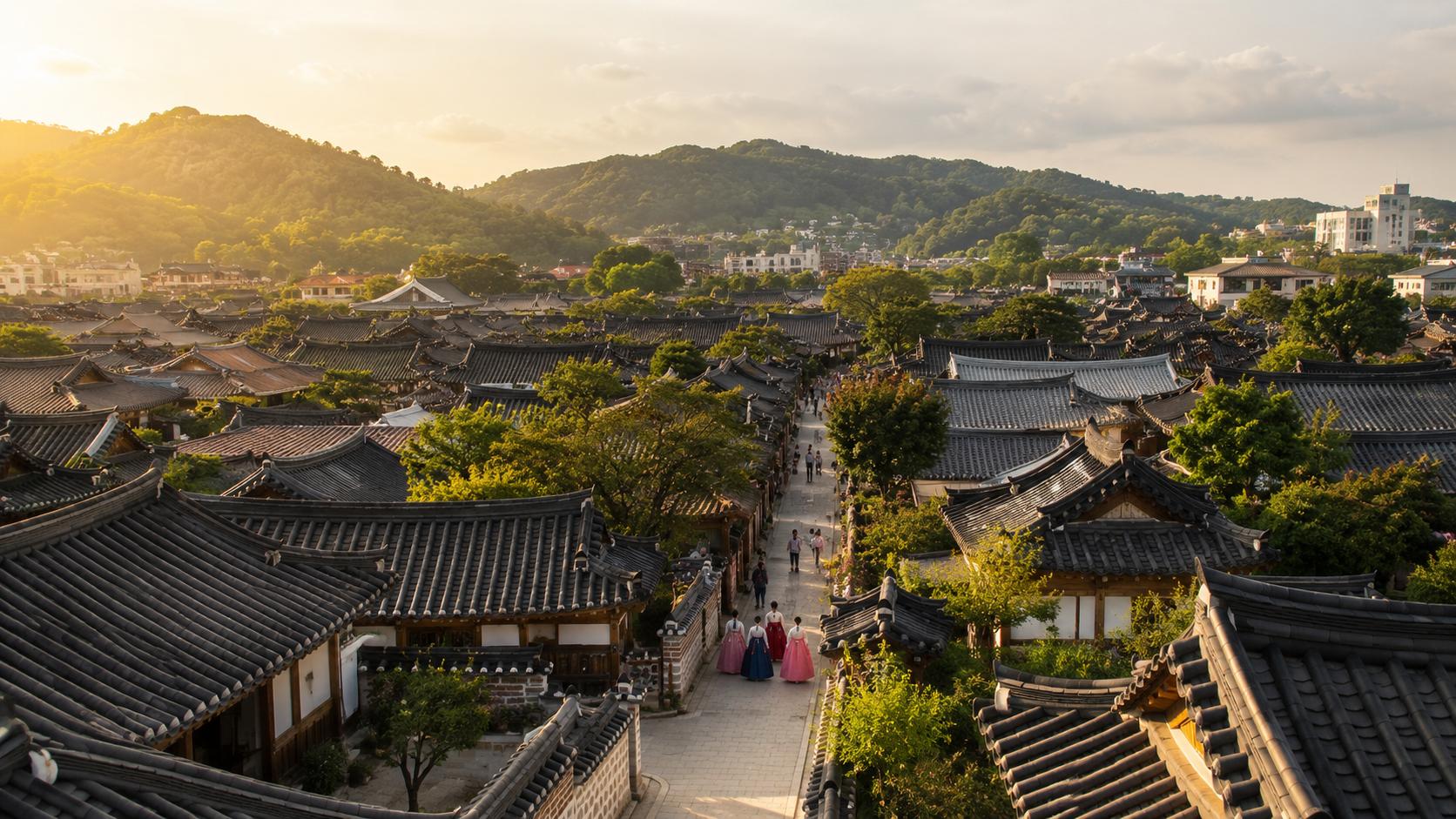
While Seoul glitters with modern K-pop energy, travelers seeking the true soul of traditional Korea are heading south to Jeonju—a city where history is lived, not just displayed.
In This Article
The Heart of Korean Heritage: Welcome to Jeonju
For many international travelers, South Korea begins and ends with the towering skyscrapers and neon lights of Seoul. However, just an hour and a half away via the KTX high-speed train lies Jeonju, a city that offers a complete shift in pace and atmosphere. As the spiritual capital of the Joseon Dynasty’s royal family, Jeonju has fiercely preserved its architectural and culinary roots for centuries.
In a fast-paced country known for hyper-connectivity, Jeonju stands proudly as a champion of "slow travel." Here, the modern world fades into the background, replaced by the sweeping, tiled curves of traditional roofs, the rich aroma of simmering broth, and the texture of handmade mulberry paper. It is a destination that does not just showcase Korean culture behind glass—it invites you to wear it, taste it, and live it.
Jeonju Hanok Village: Living History in the Modern Era
The crown jewel of the city is the Jeonju Hanok Village, an urban enclave featuring over 700 traditional Korean houses (*hanok*). Unlike open-air museums that feel artificial, this village is a vibrant, breathing neighborhood where residents live, artisans work, and travelers can stay overnight.
Walking through the cobblestone alleys of the village reveals a sea of dark tiled roofs (*giwa*) that contrast beautifully with the surrounding green hills. The best way to experience this space is by renting a *Hanbok* (traditional Korean clothing). Thousands of domestic and international visitors alike wander the streets clad in vibrant silks, creating a living time-capsule effect that makes you feel as though you have stepped onto a historical drama set.
Key historical landmarks dot the village perimeter, including **Gyeonggijeon Shrine**, built in 1410 to hold the portrait of King Taejo, the founder of the Joseon Dynasty. Just across the street, the **Jeondong Cathedral** stands as a stunning architectural juxtaposition, blending Byzantine and Romanesque styles on the very site where Korea's early Catholic martyrs held their ground.
The Capital of Taste: Birthplace of Authentic Jeonju Bibimbap
You cannot talk about Jeonju without talking about food. In fact, Jeonju's culinary prestige is so profound that it was designated a **UNESCO Creative City of Gastronomy**, cementing its status as the ultimate food capital of the Korean Peninsula.
This city is the proud birthplace of *Jeonju Bibimbap*, arguably Korea's most famous culinary export. While you can find bibimbap anywhere in the world, the authentic Jeonju version is an art form. It traditionally features rice cooked in a rich beef brisket broth, topped with up to 30 meticulously prepared ingredients—ranging from crisp bean sprouts and fresh wild greens to gingko nuts and a dollop of locally fermented *gochujang* (chili paste). The dish is served in a hot stone or brass bowl, arranged in a vibrant color wheel that represents the five cardinal elements of traditional Korean philosophy.
Beyond gourmet dining, Jeonju is a street-food paradise. The **Nambu Night Market** comes alive after dark, offering modern twists on traditional street snacks, while local lanes are packed with vendors selling grilled cheese skewers, handmade choco pies, and *Makgeolli* (milky rice wine) served in copper kettles alongside an endless parade of free side dishes.
Slow Travel and Craftsmanship: Unwinding in a UNESCO Creative City
What truly sets Jeonju apart for global travelers is its dedication to craftsmanship. For centuries, the region has been celebrated for producing *Hanji*, a highly durable traditional paper made from mulberry bark. At local workshops, visitors can try their hand at the ancient papermaking process, creating a souvenir that can literally last a thousand years.
The city’s preservation efforts extend into the intangible. It remains a major hub for *Pansori*—a traditional genre of musical storytelling performed by a vocalist and a drummer—and hosts world-renowned cultural gatherings like the **Jeonju International Film Festival (JIFF)**, showing how seamlessly the city bridges the gap between historical heritage and contemporary art.
If Seoul is the brain of modern South Korea, Jeonju is undoubtedly its heart. For anyone looking to understand the depth of Korean identity, a journey through Jeonju’s quiet streets and flavorful kitchens is an indispensable chapter of the trip.