


Jarijeot(자리젓): A Traditional Fermented Seafood from Jeju Island
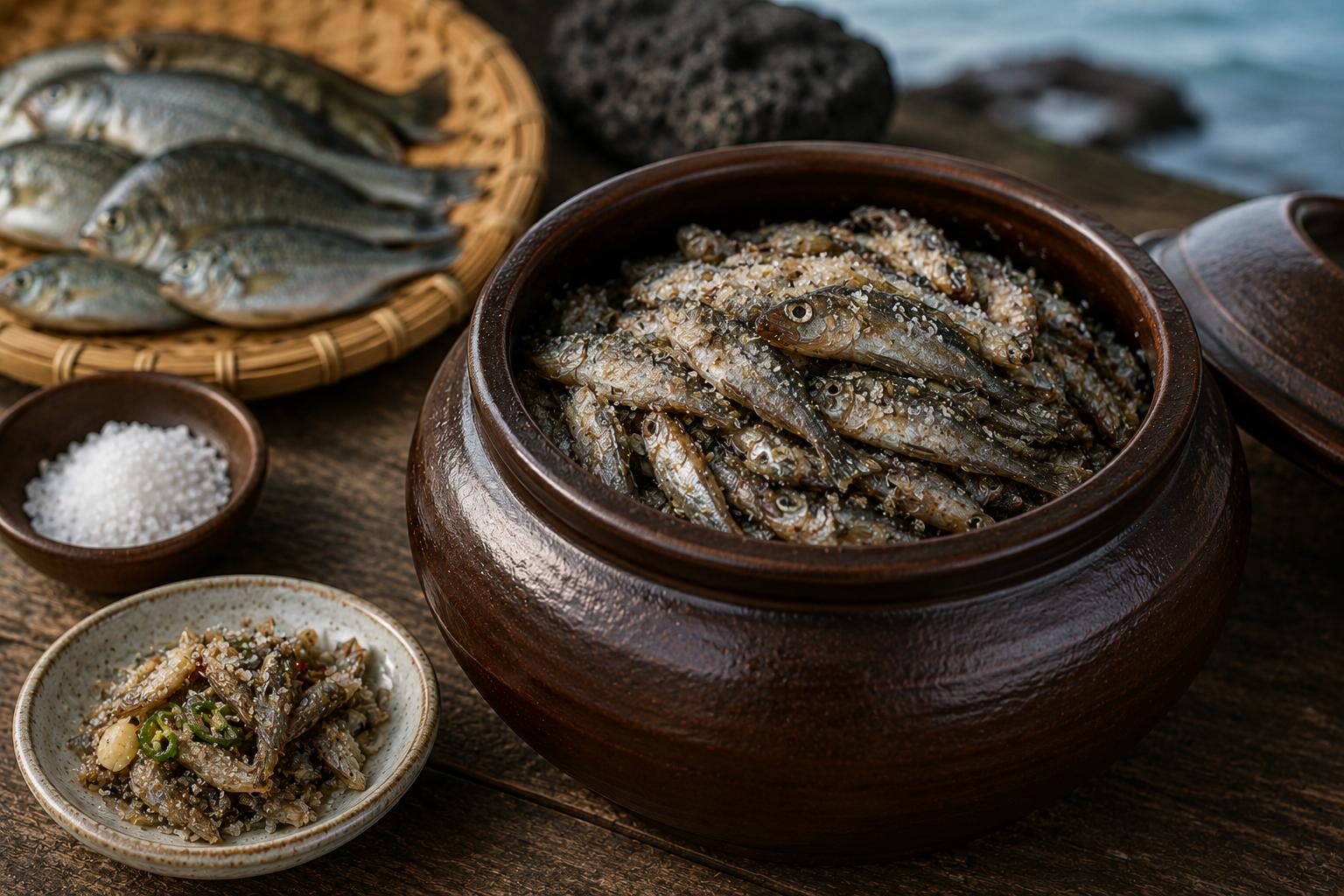
A gift from the Jeju sea, 'Jarijeot' (damselfish salted seafood) is a testament to the wisdom and food heritage of the Jeju people, who thrived even in harsh environments.
In This Article
Damselfish and Jeju's Food Culture
The damselfish, a small fish commonly found along the coasts of Jeju Island, is a cornerstone of local cuisine. 'Jarijeot,' made by salting and fermenting these fish, is an essential fermented food in the Jeju diet and a valuable cultural heritage reflecting the wisdom of Jeju's ancestors.
Because damselfish were abundant in local waters, rapid processing and preservation were vital. When harvested in large quantities, residents would salt them to create a fermented product—a clever preservation technique that allowed them to enjoy the bounty of the sea for long periods, even in harsh conditions.
The Aesthetics of Aging
Jarijeot matures slowly within the unique environment of Jeju.
- Complex Fermentation: Since damselfish are small, they are often consumed whole with the bones. During the maturation process, the protein breaks down to produce a deep umami flavor, while the firm flesh and tissues soften, making it perfect as a side dish.
- Regional Characteristics: The relatively mild climate of Jeju and traditional aging methods are crucial elements in forming the unique flavor profile of Jarijeot.
Culinary Uses
While Jarijeot is an excellent side dish on its own, a culture of pairing it with meat has developed in Jeju. Various salted seafood products, such as meljeot (anchovy) and galchisokjeot (hairtail guts), are used with meat dishes to enhance flavor and stimulate the appetite.
It is famously known for its intense umami that pairs perfectly with warm white rice, often requiring no other side dishes to complete a meal.
A Legacy of Jeju Fermentation
Jarijeot embodies the lives of the Jeju people, who sought to extract the best flavors from their given environment without working against nature. This fermented culture, which continues to this day, is an important food heritage that preserves the history of Jeju.