


Why Insadong Remains Seoul’s Most Traditional Street
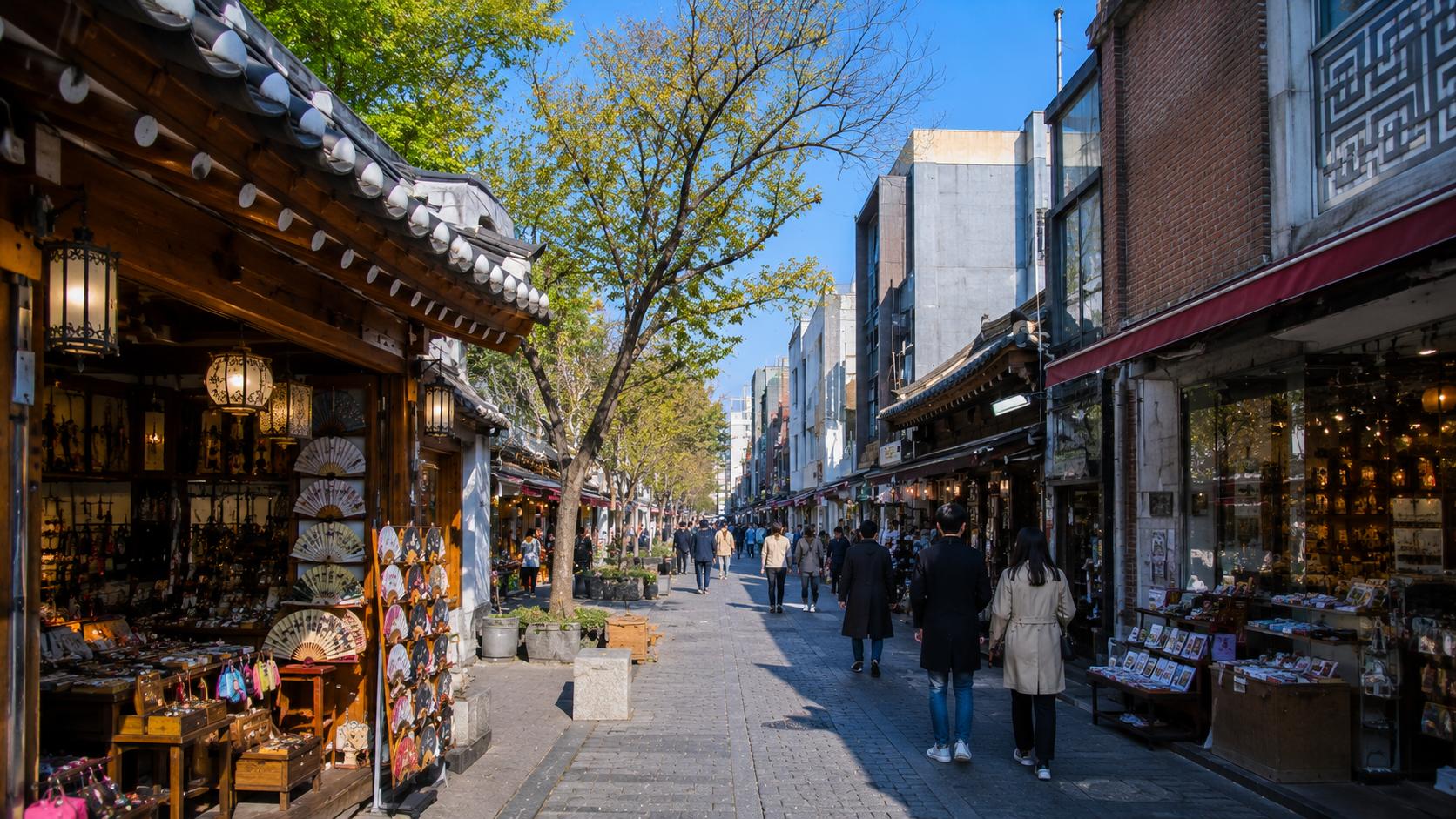
In the middle of one of Asia’s most modern capitals lies a street where old Korea still quietly survives. Insadong has remained one of Seoul’s most important cultural neighborhoods for decades, preserving traditional tea houses, antique stores, calligraphy shops, and handmade crafts while the rest of the city rapidly transformed into a global high-tech metropolis.
In This Article
What Is Insadong?
Insadong is one of Seoul’s most historically significant neighborhoods, located in the Jongno district at the center of the city. Unlike modern districts dominated by skyscrapers and luxury shopping malls, Insadong offers visitors a very different side of Korea. Narrow streets lined with traditional shops, historic architecture, and old businesses create an atmosphere that feels far removed from the fast-moving modern capital surrounding it.
A Street That Preserved Traditional Korea
During the Joseon Dynasty, this area was home to government officials, scholars, and wealthy families. Over time, many antique dealers and art merchants began gathering here, especially during the 20th century. As Seoul modernized, many traditional neighborhoods disappeared, but Insadong remained one of the few places where traces of old Korea continued surviving through local businesses and cultural institutions.
The Center of Korean Traditional Arts
For decades, Insadong has been known as one of Korea’s most important cultural streets. Traditional calligraphy stores sell handmade brushes, ink stones, and hanji paper used in Korean writing arts. Art galleries regularly showcase both classical and contemporary Korean artists, while nearby workshops continue producing ceramics, carved wooden crafts, and traditional decorative objects that represent centuries of Korean artistic heritage.
What Makes Insadong Different
Walking through Insadong feels completely different from visiting other shopping districts in Seoul. Instead of global fashion brands and department stores, visitors encounter antique shops filled with old Korean furniture, traditional tea houses serving herbal drinks, stores selling handmade souvenirs, and quiet alleyways where older generations continue running family businesses that have existed for decades.
Why It Survived Modern Seoul
Seoul is famous for constant redevelopment, with older neighborhoods frequently replaced by newer buildings. Insadong survived partly because of its cultural significance and growing recognition as one of the city’s most important heritage districts. Rather than disappearing under modernization, the area became protected as a place where Korea could continue preserving visible pieces of its traditional identity within a rapidly changing urban landscape.
One of Korea’s Living Cultural Streets
Today, Insadong represents something increasingly rare in modern cities. It is not simply a tourist attraction or a historical reconstruction, but a neighborhood where traditional culture continues functioning as part of everyday life. For international visitors hoping to understand Korea beyond technology, K-pop, and skyscrapers, Insadong offers one of the clearest windows into the country’s living cultural heritage.