


Why Haebangchon Became Seoul’s Most Unexpected Neighborhood
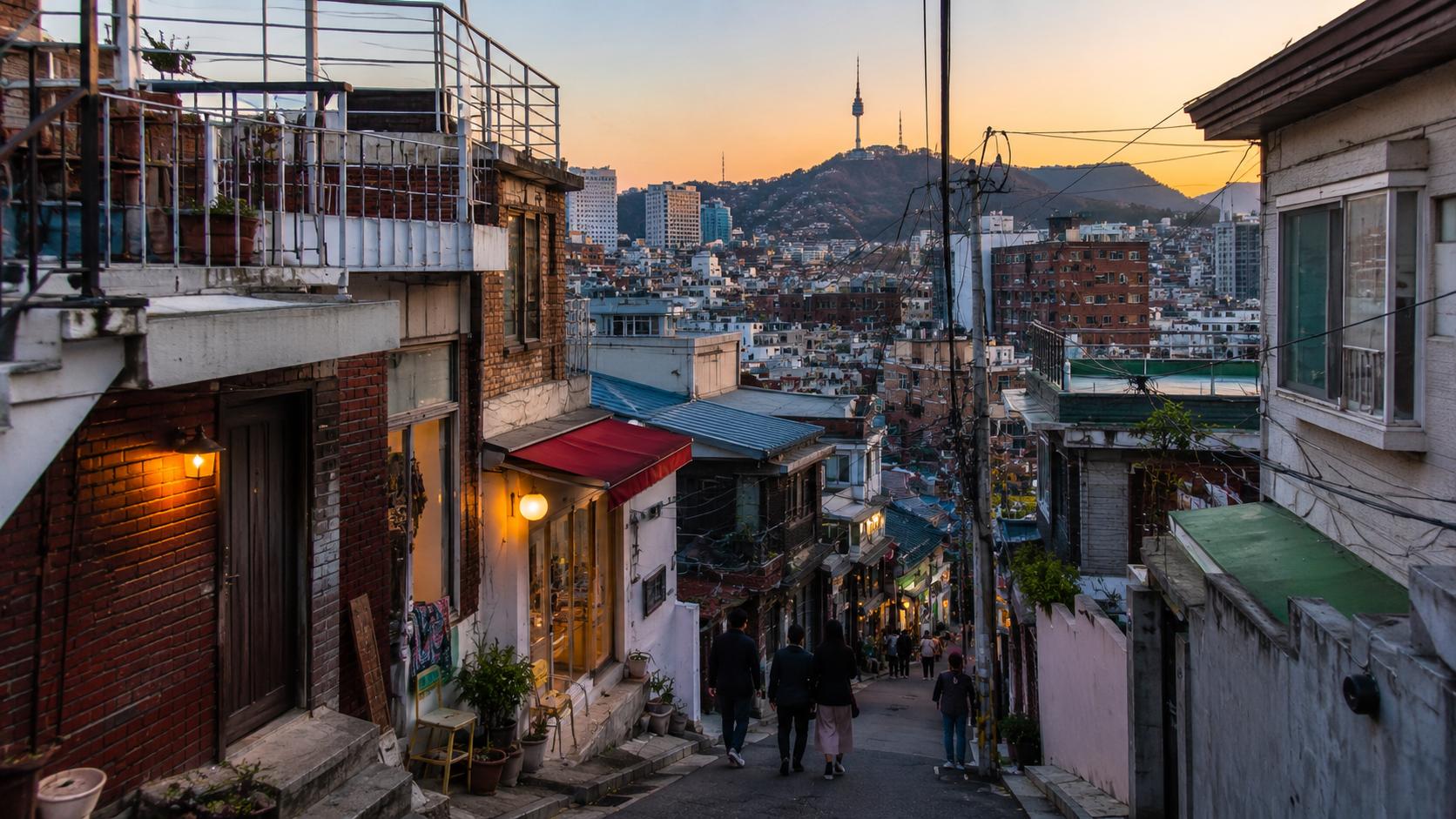
Tucked into the steep hills beneath Namsan Mountain, Haebangchon is one of Seoul’s most fascinating neighborhoods shaped by modern Korean history. What began as a settlement for displaced families after Korea’s liberation and the Korean War has gradually transformed into one of the city’s most unique districts, where old alleyways, rooftop cafes, international communities, and traces of the past coexist in unexpected ways.
In This Article
What Is Haebangchon?
Haebangchon, located on the southern slopes of Namsan in central Seoul, is a neighborhood unlike almost anywhere else in Korea. Unlike carefully planned districts filled with modern apartment towers, Haebangchon is defined by narrow winding streets, steep staircases, aging residential buildings, and a layered atmosphere that feels deeply connected to Seoul’s modern history. Even today, the neighborhood carries a very different energy from the rest of the city.
A Village Born After Liberation
The name Haebangchon literally means “Liberation Village.” After Korea was freed from Japanese colonial rule in 1945, thousands of returning Koreans and displaced families arrived in Seoul with nowhere to settle. Many built temporary homes on the hillsides near Yongsan, creating what eventually became Haebangchon. The neighborhood itself was born directly from one of the most dramatic turning points in modern Korean history.
How War Shaped the Neighborhood
The Korean War further changed Haebangchon’s identity. Refugees fleeing conflict continued settling in the area, expanding the hillside community with simple houses built wherever space was available. Unlike Seoul’s newer neighborhoods that were carefully redeveloped over time, Haebangchon retained much of its original urban structure, allowing traces of postwar Korea to remain physically visible even decades later.
Why It Became an International District
Haebangchon’s proximity to Yongsan Garrison and neighboring Itaewon gradually attracted a growing international population over the decades. Foreign residents, artists, musicians, and entrepreneurs began opening restaurants, bakeries, pubs, and small creative businesses throughout the area. Today, it has quietly become one of Seoul’s most multicultural neighborhoods, offering an atmosphere rarely found elsewhere in Korea.
The Unique Atmosphere of Haebangchon
Walking through Haebangchon feels very different from visiting tourist-heavy districts like Myeongdong or Gangnam. Rooftop cafes overlook the Seoul skyline, small alleyways reveal independent bookstores and hidden restaurants, and old homes stand beside modern creative spaces. The neighborhood feels imperfect, organic, and deeply lived-in, which is exactly what many visitors find most appealing.
A Neighborhood That Mirrors Modern Korea
Haebangchon represents something larger than simply a trendy neighborhood. Its streets tell the story of liberation, war, migration, globalization, and urban change all layered together in one small part of Seoul. For visitors hoping to understand modern Korea beyond famous landmarks, Haebangchon offers one of the city’s most authentic and quietly fascinating perspectives.