


How Seoul’s Factory District Became Korea’s Brooklyn
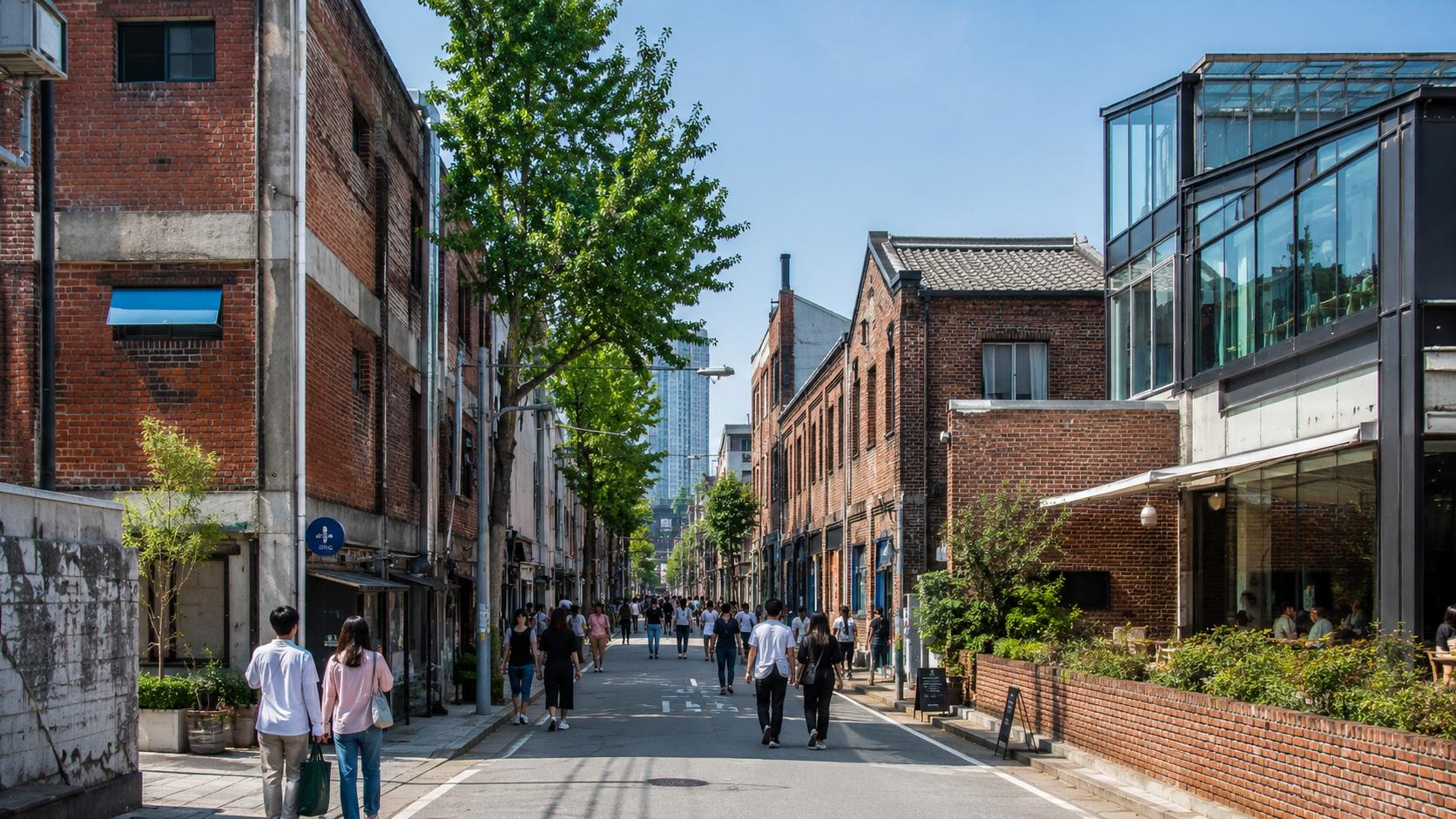
On the eastern side of Seoul sits a neighborhood that perfectly captures how modern Korea constantly reinvents itself. Once known primarily for small factories, warehouses, and handmade shoe workshops, Seongsu-dong has transformed into one of the city’s most influential creative districts, where industrial history, independent brands, global pop-up stores, and youth culture now collide in unexpected ways.
In This Article
What Is Seongsu-dong?
Seongsu-dong is a neighborhood located in eastern Seoul within Seongdong District. Today, many visitors know it as one of Korea’s trendiest places filled with concept stores, designer cafes, fashion brands, and young crowds. But long before becoming one of Seoul’s most fashionable districts, Seongsu was a working-class industrial neighborhood that played a very different role in Korea’s economic development.
An Industrial District Built on Small Factories
During Korea’s rapid industrialization in the 1970s and 1980s, Seongsu became home to hundreds of small factories, warehouses, and manufacturing workshops. The area developed around light industry and production, with rows of red brick factory buildings becoming one of its defining visual characteristics. Even today, many of these original industrial structures still remain standing throughout the neighborhood.
The Neighborhood Famous for Handmade Shoes
For decades, Seongsu-dong was especially known as Seoul’s center for handmade shoe manufacturing. Small family-run workshops produced shoes for local Korean brands, creating an entire ecosystem of skilled craftsmen working within the district. This shoemaking history remains an important part of Seongsu’s identity and helped shape its reputation long before the neighborhood became internationally recognized for its creative culture.
How Seongsu Became Seoul’s Trendiest District
In the 2010s, young entrepreneurs, designers, and creative businesses began moving into old industrial buildings that had become increasingly underused. Instead of demolishing these aging warehouses and factories, many were converted into minimalist cafes, design studios, galleries, flagship stores, and cultural spaces. This urban transformation quickly turned Seongsu into one of Seoul’s fastest-growing creative districts. :contentReference[oaicite:0]{index=0}
Where Industry and Creativity Now Meet
What makes Seongsu unique is the unusual coexistence between its industrial past and modern creative identity. Old red brick warehouses stand beside luxury brand pop-ups, independent fashion boutiques, experimental bakeries, and art-driven retail spaces. The neighborhood has become so culturally influential that international media increasingly refer to it as “The Brooklyn of Seoul,” reflecting its growing reputation among younger generations. :contentReference[oaicite:1]{index=1}
Why Seongsu Represents Modern Seoul
Today, Seongsu-dong represents a broader story about modern Korea itself. Rather than erasing old industrial spaces through redevelopment, the neighborhood demonstrates how cities can preserve their past while building something entirely new on top of it. For visitors hoping to understand contemporary Seoul beyond famous tourist districts, Seongsu offers one of the clearest examples of how rapidly Korean urban culture continues evolving.