


Why Korea Rings a Giant Bell 33 Times Every New Year
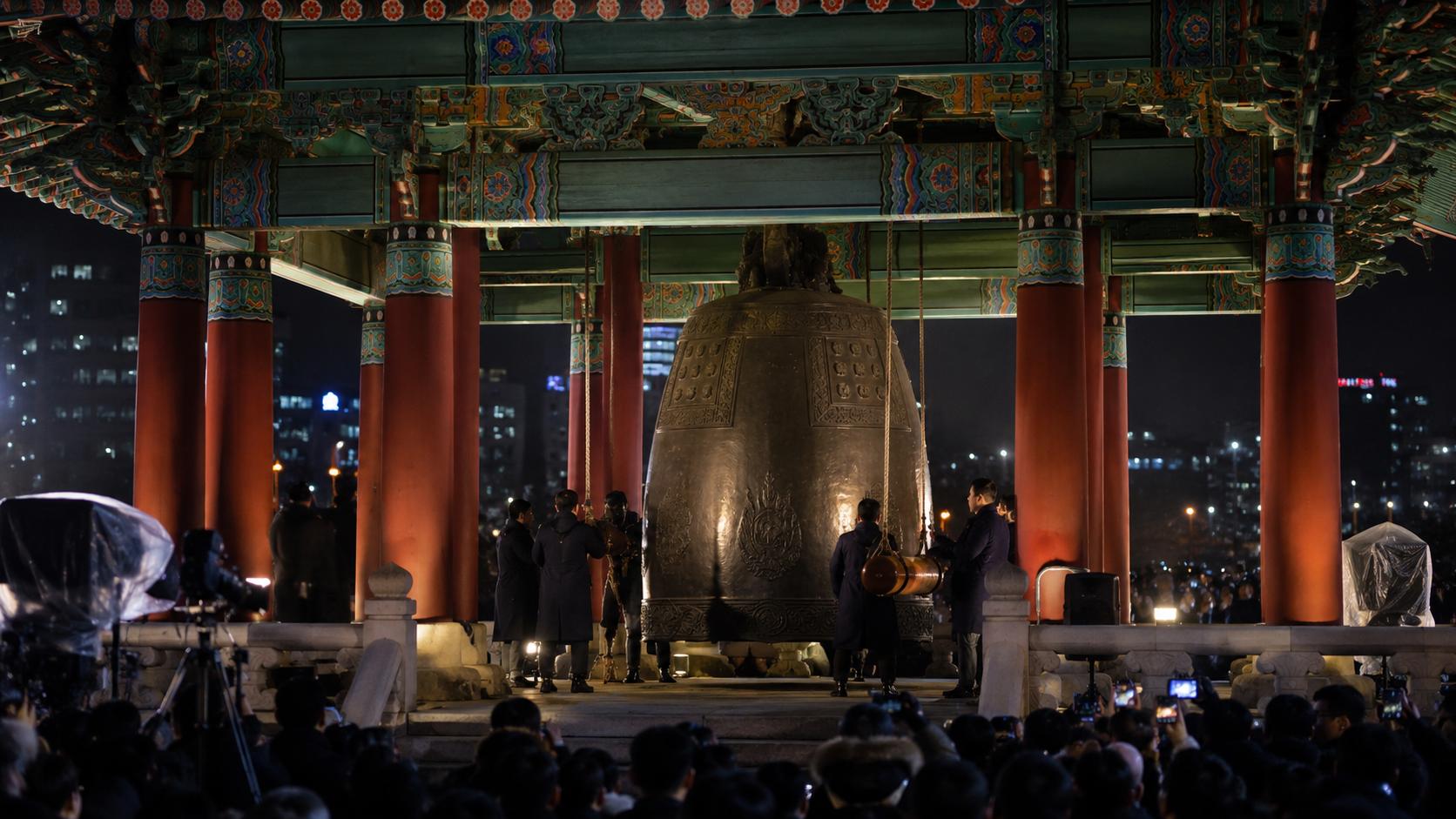
Every year, as midnight approaches on December 31, thousands of people gather in central Seoul to witness one of Korea’s most symbolic New Year traditions. In the historic district of Jongno stands Bosingak, a bell pavilion that has marked important moments in Korean history for centuries. While many countries celebrate the new year with fireworks or countdown parties, South Korea welcomes the year by striking a massive bronze bell exactly 33 times — a ceremony deeply connected to both history and tradition.
In This Article
What Is Bosingak?
Bosingak is a historic bell pavilion located in Jongno, one of Seoul’s oldest districts. Originally built during the Joseon Dynasty more than 600 years ago, the pavilion once stood at the center of old Seoul, then known as Hanyang. Today, it remains one of the city’s most recognizable historical landmarks and serves as the location for Korea’s most famous New Year ceremony.
The Original Purpose of the Bell
Long before it became associated with New Year celebrations, the bell at Bosingak had a very practical purpose. During the Joseon Dynasty, Seoul was surrounded by large city gates that controlled movement in and out of the capital. The bell rang every morning around dawn to signal the gates opening, and again at night to announce the closing of the city. In many ways, the bell functioned as the city’s public clock before modern technology existed.
Why The Bell Rings 33 Times
One of the most distinctive parts of the ceremony is that the bell is always struck exactly 33 times. This tradition is commonly linked to Buddhist beliefs, particularly the concept of the thirty-three heavenly realms. Over time, the number came to symbolize peace, renewal, and the hope of leaving behind the hardships of the previous year while welcoming a fresh beginning.
How Korea Celebrates New Year Here
Every year on the night of December 31, large crowds gather around Bosingak as midnight approaches. As the final seconds of the year count down, invited participants begin striking the bell exactly at midnight. The ceremony is broadcast nationwide and has become one of South Korea’s most recognizable annual traditions. For many Koreans, it marks the official beginning of the new year more symbolically than fireworks or parties.
Why The Tradition Still Matters Today
Despite Seoul becoming one of the world’s most technologically advanced cities, the Bosingak ceremony remains remarkably unchanged. Each year, people continue gathering around a tradition that dates back hundreds of years, proving how historical customs still play an important role in modern Korean society. The ceremony serves as a reminder that progress and tradition can coexist within the same city.
A Symbol That Connects Old and New Korea
Few traditions illustrate Korea’s relationship with history as clearly as the Bosingak bell ringing ceremony. In the middle of a city filled with skyscrapers, digital billboards, and modern infrastructure, a centuries-old bell continues welcoming each new year exactly as it has for generations. For visitors trying to understand Korean culture beyond pop culture and tourism, Bosingak offers a powerful example of how deeply history remains woven into everyday national identity.