


Why This Korean Temple Was Built Facing the Sea
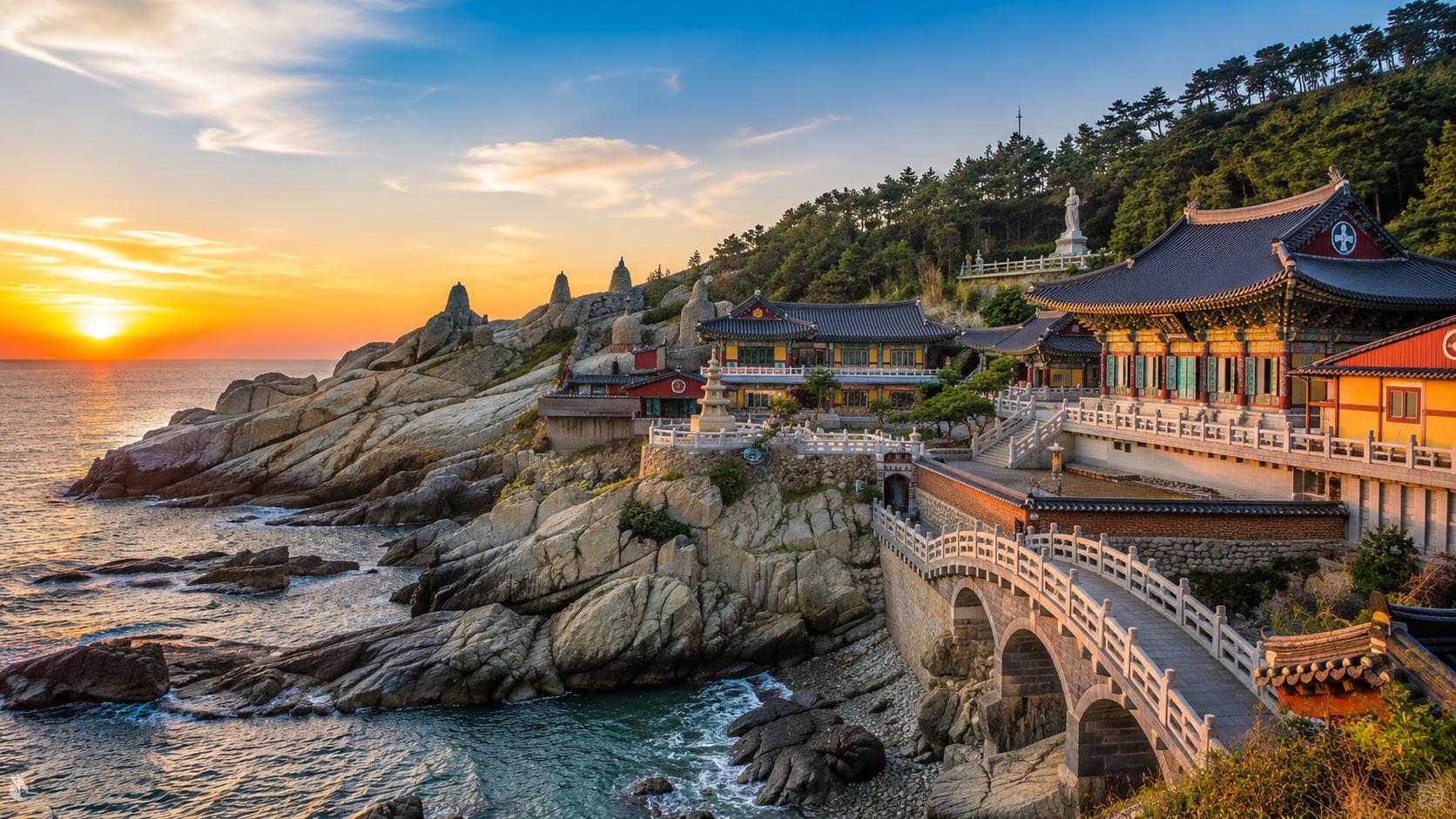
Most Buddhist temples in Korea are hidden deep in the mountains, surrounded by forests and quiet valleys. But in Busan, one temple stands in a place few would expect. Perched dramatically on rocky cliffs overlooking the East Sea, Haedong Yonggungsa offers one of the most unusual temple settings in the country. Combining centuries of Buddhist tradition with breathtaking coastal scenery, it has become one of Busan’s most iconic landmarks and a rare example of Korean spiritual architecture built directly beside the ocean.
In This Article
What Is Haedong Yonggungsa?
Haedong Yonggungsa is a Buddhist temple located on the northeastern coastline of Busan, South Korea’s second-largest city. Unlike most Korean temples, which are traditionally built in remote mountain areas, this temple sits directly above rocky seaside cliffs facing the East Sea. The combination of religious significance and dramatic natural scenery has made it one of Busan’s most visited cultural landmarks.
The Temple’s Long History
The temple was originally built in 1376 during the Goryeo Dynasty by the Buddhist teacher Naong, one of Korea’s most respected monks of the period. According to historical records, Naong believed building a temple dedicated to the sea dragon deity would help protect the nation during difficult times. Although the original structures suffered destruction during later wars, the temple was gradually restored over the centuries and remains an active place of worship today.
Why It Was Built Beside The Sea
Most Korean Buddhist temples follow a long-standing tradition of being built in mountains, where quiet natural surroundings support meditation and spiritual practice. Haedong Yonggungsa breaks this pattern completely. Local tradition says the temple was intentionally placed near the ocean because Naong believed divine energy connected strongly with the sea. The location makes it one of the few major Buddhist temples in Korea directly facing open water.
A Different Kind of Korean Temple
The temple’s layout immediately feels different from more famous Korean temples such as mountain monasteries found across the country. Visitors descend a long staircase before reaching the main prayer halls, passing numerous stone lanterns, statues, and coastal viewpoints along the way. The dramatic combination of traditional Korean Buddhist architecture against crashing ocean waves creates scenery rarely seen anywhere else in Korea.
Why Visitors Love This Place
Haedong Yonggungsa has become one of Busan’s most popular destinations for both domestic and international travelers. Visitors come not only for its religious significance but also for sunrise views, panoramic ocean photography, and the peaceful atmosphere created by the temple’s unusual location. During special Buddhist holidays, the temple becomes especially vibrant as colorful lantern displays fill the entire complex.
A Unique Symbol of Busan
Few places represent Busan as clearly as Haedong Yonggungsa. The city is deeply connected to the ocean through its history as Korea’s largest port, and this temple reflects that identity in a way few cultural landmarks can. While much of Korea’s traditional architecture developed inland, Haedong Yonggungsa stands as a rare example of how Korean spiritual traditions adapted to Busan’s unique coastal environment, making it one of the country’s most unforgettable temples.