


Sharing the Orange Glow: The Sweet Winter Tradition of Jeju Hospitality
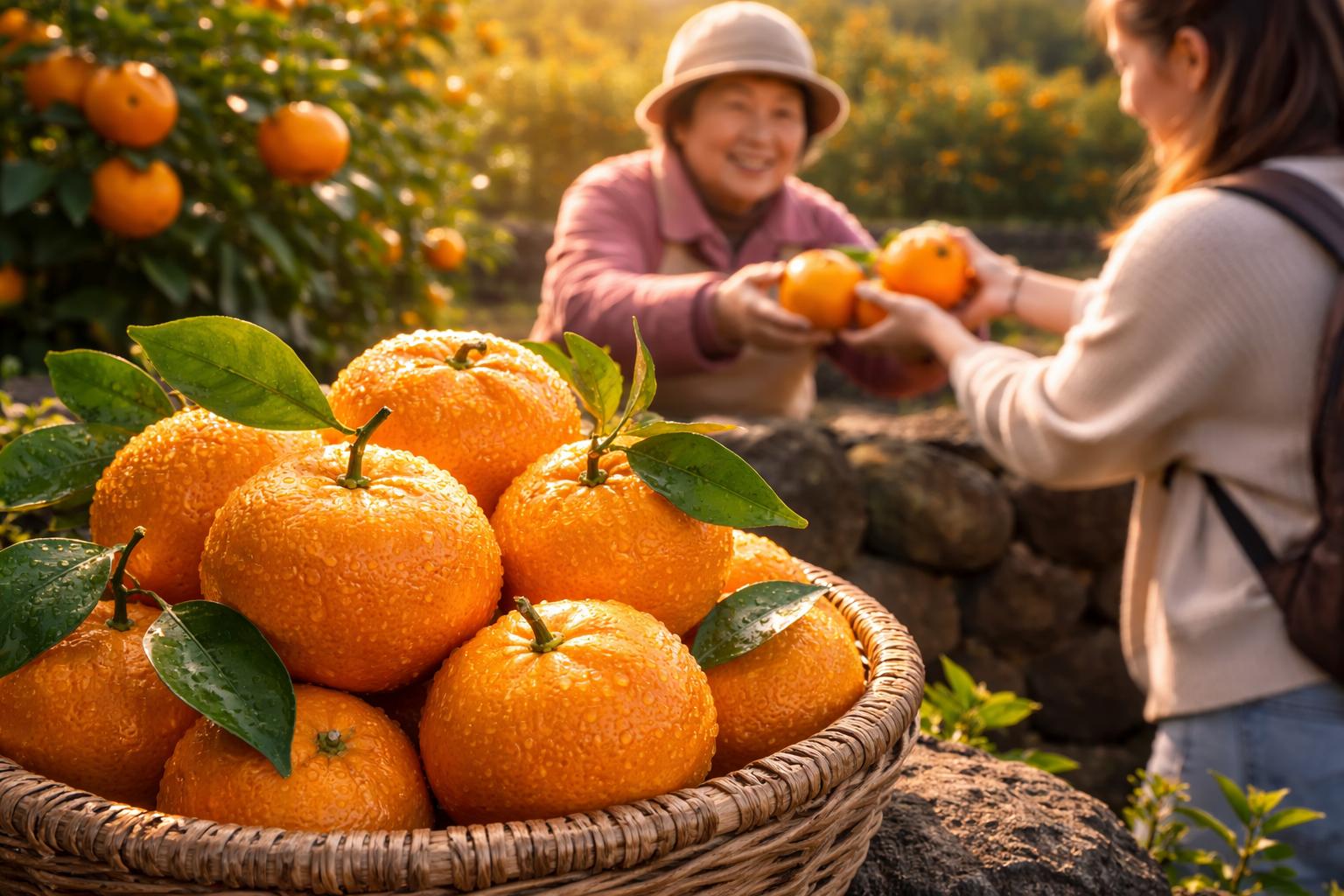
Winter in Jeju is painted in vibrant orange. Beyond the scenic views, a heartwarming local tradition of sharing tangerines is redefining the island's tourism.
In This Article
More Than Just Fruit: How Jeju’s Winter Tangerines Deliver the Warmth of 'Jeong'
When winter arrives on Jeju Island, the landscape transforms. The dark, porous volcanic stone walls that crisscross the island are suddenly contrasted by heavy, vibrant clusters of bright orange tangerines (known locally as *gyul*).
However, for global travelers exploring South Korea’s favorite island getaway, the true surprise isn’t the abundance of the fruit—it’s how easily it is given away. Visitors often find themselves being handed handfuls of sweet citrus by restaurant owners, taxi drivers, or elderly neighbors passing by on the street.
In Korea, this spontaneous acts of kindness are driven by a deep-rooted cultural concept known as *Jeong* (정)—a feeling of affection, bonding, and communal warmth. On Jeju Island, this abstract emotion is best expressed through a tangible, delicious gift: the humble tangerine.
The Golden Harvest: A Fruit That Defines an Island’s Identity
Tangerines have a long, storied history in Jeju. During the Joseon Dynasty, these fruits were so rare and precious that they were treated as royal treasures, sent directly to the king as a tribute. Today, thanks to decades of specialized cultivation, Jeju tangerines are remarkably sweet, seedless, and easy to peel, making them a staple of Korean winter life.
But the fruit is far more than just an agricultural product; it is a visual and sensory design device that shapes the atmosphere of the entire island. When you walk through a Jeju village, the vibrant orange pops against the grey volcanic basalt, creating a warm, cozy contrast to the chilly sea breeze.
When a local hands a visitor a tangerine, the tactile experience begins instantly. The fragrant citrus scent fills the air, breaking the ice before a single word of English or Korean is spoken.
The Magic of ‘Gwa-se-gi’: The Art of the Unconditional Tangerine Gift
Jeju locals have a unique dialect word related to their harvest: *Gwa-se-gi* (과세기). While it historically refers to the peak harvesting season, it has evolved culturally into a period of radical hospitality. Because almost every household on the island either owns a small orchard or has a relative who does, there is an unspoken rule during winter: tangerines are meant to be shared, never hoarded.
This shared abundance creates a beautiful phenomenon for foreign travelers:
* A box of free tangerines sitting on the counter of a local café for anyone to grab
* A grandma (*halmeoni*) stuffing a handful of fruit into a hiker's backpack on the Olle Trail
* A warm greeting accompanied by a piece of fruit at a guesthouse check-in
These gifts carry no expectation of payment. In a fast-paced world, this gentle, organic exchange offers foreign visitors a direct, heartwarming connection to the authentic community spirit of the island.
Experiencing ‘Jeong’: A Sweet Lesson for Global Travelers
Modern travel is often transactional—buying tickets, paying for tours, and renting cars. However, the true magic of Jeju Island lies in the things that cannot be bought.
Receiving a tangerine from a stranger is an initiation into the island's culture of care. It tells the traveler, "Welcome to our home, stay warm, and enjoy your journey."
For those looking to truly understand South Korea beyond the neon lights of Seoul, a winter trip to Jeju offers a lesson in *Jeong*. It is a reminder that sometimes, the most profound cultural exchange comes wrapped in a bright orange peel.