


The Soul of Korean Pottery: The Art of Traditional Wood-Fired Kilns
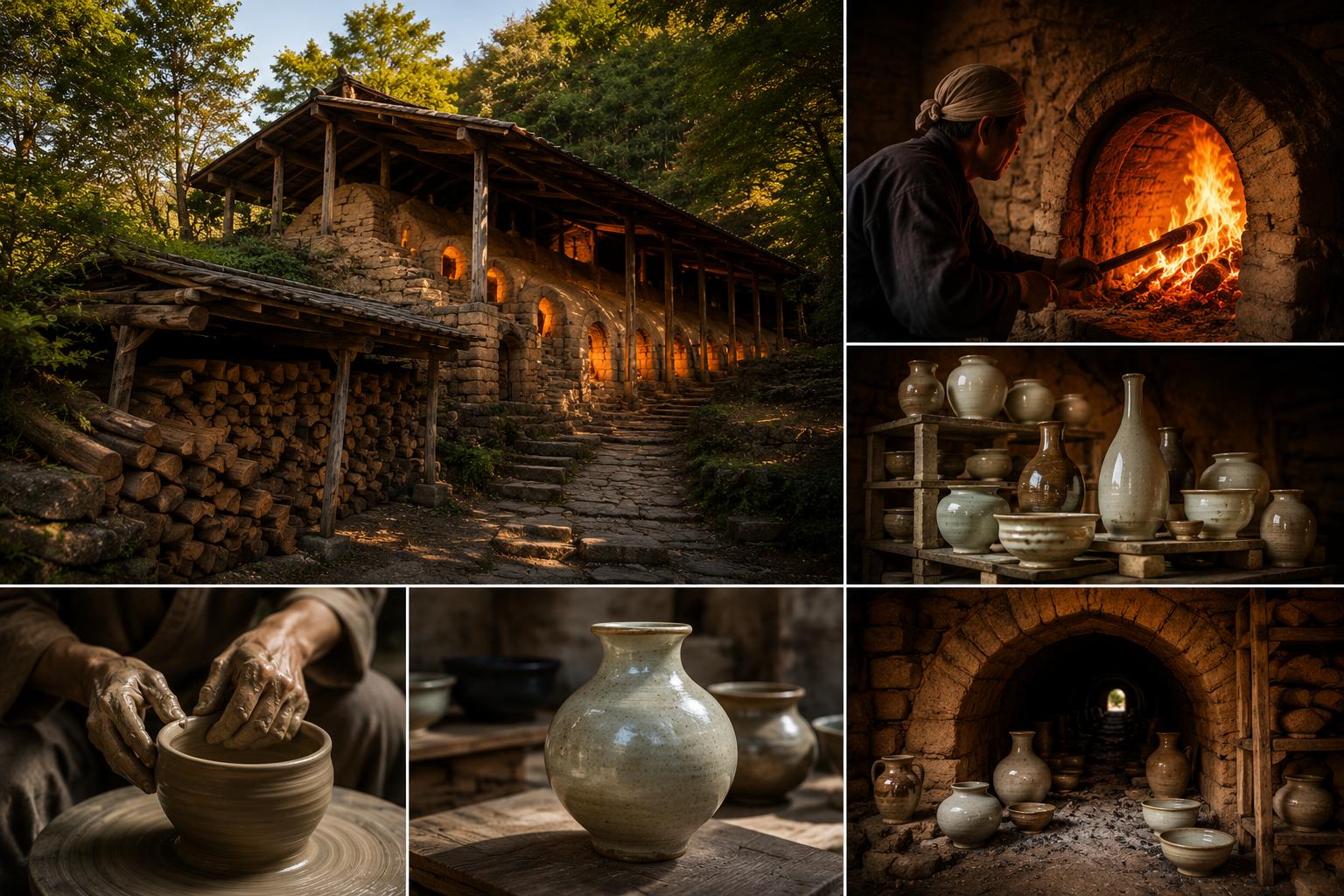
The product of patience, born from earth, fire, and time. We analyze the technical background of traditional Korean kilns, the philosophy of the artisans, and the enduring value of traditional firing.
In This Article
The History of Korean Ceramics and Kilns
The history of Korean ceramics moves in tandem with the history of its kilns. From the subtle jade hue of Goryeo celadon to the pure beauty of Joseon white porcelain, every masterpiece was born from the hands of an artisan and the breath of a kiln. Traditional Korean kilns are more than just production tools; they are sophisticated artistic devices that embody the principles of nature.
Technology and Wisdom: The Climbing Kiln
One of the most representative forms of traditional Korean kilns, the "Climbing Kiln" (Deungyo), became widely used after the late Goryeo period and saw dramatic development during the Joseon Dynasty. This kiln structure connects multiple firing chambers in a stepped formation along the slope of a mountain. Heat originating from the lower furnace travels through each chamber, maintaining high temperatures as it moves upward. It is a technical crystallization of our ancestors' wisdom, enabling mass firing through efficient heat utilization.
The Sugwang-ri Climbing Kiln in Icheon, Gyeonggi-do, built in 1949, is a National Registered Cultural Heritage. It continues to be used today for traditional firing demonstrations and educational programs, serving as a vital site for experiencing traditional Korean ceramic techniques.
The Art of Fire and Natural Harmony
Unlike modern gas or electric kilns, working with traditional wood-fired kilns offers the unique challenge of imperfect control over the final product. A temperature gradient exists within the kiln, and the texture and color of the ceramics vary subtly depending on the type of wood, the flow of the flames, and the direction of the ash. For days, the artisan monitors the color of the flame, the smoke, and the airflow from the firebox, delicately adjusting the fire. This inherent uncertainty and naturalism grant these pieces a profound depth incomparable to machine-made ceramics.
Why Adhere to Wood-Fired Kilns?
Despite the convenience of modern electric or gas kilns, many ceramic artists continue to insist on wood-fired kilns. Because pieces are fired under different conditions every time, it is impossible to produce identical results. The natural changes created by fire, ash, earth, and time possess an artistic value that modern industrial firing methods cannot replicate. Many artists describe this process not merely as production, but as a discipline akin to a meditative practice, pouring their full effort into the work.
Evolution of Aesthetics and Ceramic Culture
The flow of ceramics from Goryeo celadon to Joseon buncheong and white porcelain reflects not only the development of kiln technology but also the complex intersection of contemporary aesthetic tastes and Confucian values. The journey from the splendor of celadon to the spontaneity of buncheong and the restrained aesthetics of white porcelain clearly illustrates the spiritual values pursued by Korean ceramic culture.
- Diverse Kiln Forms: Depending on the era and region, various forms such as pit kilns, semi-underground kilns, and 'mangdaengi' kilns have existed, evolving to match local terrain and ceramic characteristics.
- Unique Value: Ceramics fired in traditional wood kilns are one-of-a-kind due to the microscopic differences in the production process. This uniqueness is the greatest charm of traditional Korean ceramics.
- Living Heritage: Sites like the Sugwang-ri Climbing Kiln play a crucial role in passing on the value of traditional firing methods to the present day and continuing the lineage of Korean traditional pottery.