


The Mountain Fortress Korea Built to Protect an Entire Kingdom
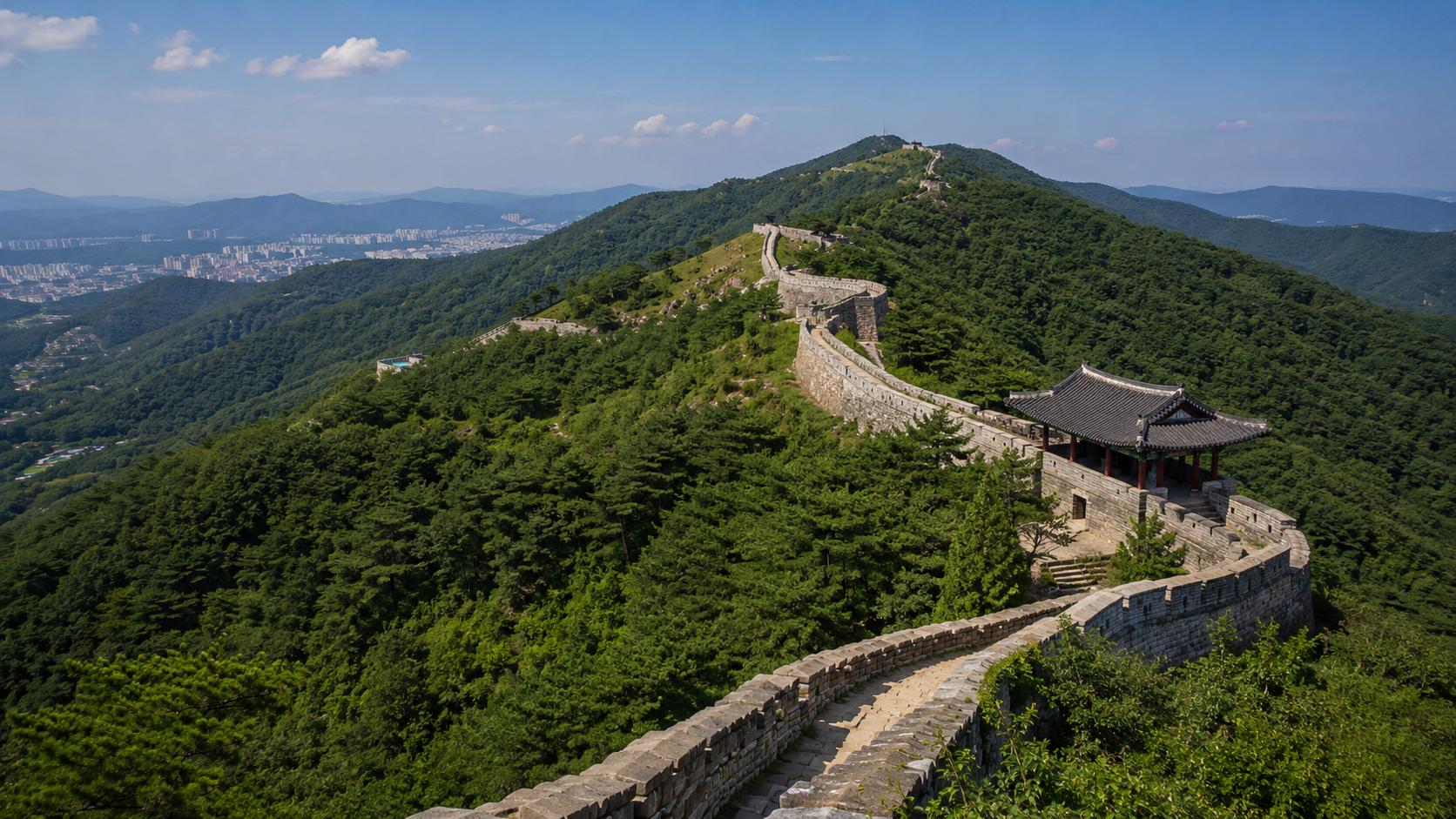
High above the mountains southeast of Seoul stands one of Korea’s most remarkable cultural heritage sites, a fortress built not simply as a wall of defense but as an entire emergency capital prepared to protect a kingdom in times of war. Namhansanseong represents centuries of Korean military engineering and remains one of the country’s most historically significant UNESCO World Heritage sites.
In This Article
What Is Namhansanseong?
Namhansanseong is a massive mountain fortress located just southeast of Seoul. Unlike ordinary defensive walls built around cities, this fortress was designed as an entire protected settlement capable of functioning independently during times of national crisis. Today, it remains one of Korea’s most important historical landmarks and a powerful example of traditional Korean military architecture.
Built to Protect the Joseon Kingdom
Construction of Namhansanseong began in the early seventeenth century during the Joseon Dynasty. The fortress was specifically designed as an emergency capital where the king, royal court, military forces, and citizens could relocate during invasion. At a time when foreign invasions threatened the kingdom, Joseon needed a secure place capable of protecting the entire government structure itself. :contentReference[oaicite:1]{index=1}
A Fortress Spread Across an Entire Mountain
What makes Namhansanseong unique is its enormous scale and unusual design. Rather than protecting a single palace or city center, its walls stretch across rugged mountain terrain and enclose an entire mountaintop settlement. The fortress includes gates, command centers, temples, administrative buildings, and even temporary royal residences, creating a self-sustaining defensive city unlike most fortifications found elsewhere in Asia.
The War That Changed Its History
Namhansanseong is most closely associated with the Qing invasion of Joseon in 1636, known historically as the Byeongja Horan. During this conflict, King Injo retreated to the fortress with his court and attempted to resist invading forces for weeks while surrounded. The event became one of the most significant military crises in Korean history and permanently shaped how the fortress would be remembered for centuries afterward.
Recognized as UNESCO Cultural Heritage
In 2014, Namhansanseong was officially recognized as a UNESCO World Heritage Site for its exceptional historical and architectural value. Experts noted that the fortress demonstrates a rare combination of East Asian military engineering traditions influenced by Korean, Chinese, Japanese, and even early Western defensive technologies introduced during the age of gunpowder warfare. :contentReference[oaicite:2]{index=2}
One of Korea’s Greatest Defensive Structures
Today, visitors walking along Namhansanseong’s ancient stone walls experience far more than scenic mountain views. The fortress represents a moment when Korea engineered an entire city designed for survival during national crisis. More than four centuries later, it remains one of the country’s clearest reminders that cultural heritage is not only about preserving beauty, but also preserving the ingenuity that once protected an entire kingdom.