


The Seasonal Soundtracks of Korea: How K-Pop Defines the Passing of Time
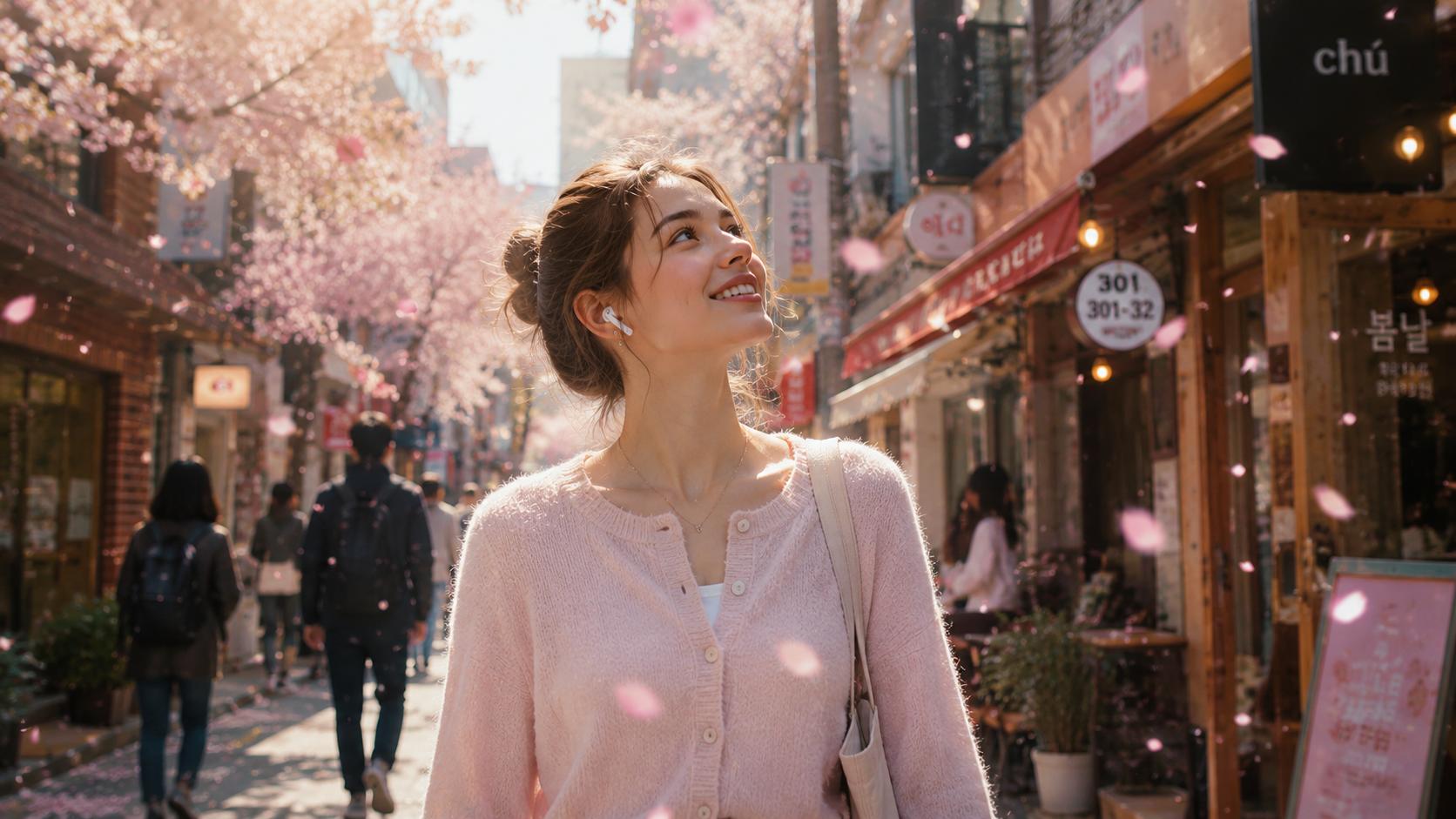
The K-pop travel trend is shifting. Beyond concert tours, experiencing South Korea’s unique seasonal soundtracks has become a deeply immersive way for global travelers to connect with local culture.
In This Article
The Seasonal Soundtracks of Korea: How K-Pop Defines the Passing of Time
When international travelers plan a trip to South Korea, they often map out their itineraries based on visual landscapes—the pink cherry blossoms of April, the lush green valleys of July, or the crisp orange foliage of October.
However, to truly experience Korea like a local, one must navigate the country through its ears. In South Korea, the transition between the four distinct seasons is not merely marked by weather charts, but by an undeniable cultural phenomenon: seasonal chart-reversals.
There is a unique set of timeless melodies that, without fail, return to the top of national music charts the exact moment the air begins to shift. These songs act as shared emotional triggers for millions of locals, encapsulating the precise mood, memory, and aesthetic of each period.
For global K-pop enthusiasts, understanding this localized soundtrack offers a deeper look into the daily life and cultural rhythm of Seoul beyond the high-energy idol comebacks on television.
Spring: Busker Busker’s ‘Cherry Blossom Ending’ — The Ultimate Anthem of Rebirth
As the freezing winter winds fade, Korea undergoes a dramatic floral transformation. And there is one acoustic track that has soundtracked this awakening every single year since its release in 2012: "Cherry Blossom Ending" by the indie-pop trio Busker Busker.
Locals jokingly refer to this song as the "Spring Carol" or "Cherry Blossom Pension," because its annual resurgence on the music charts provides the band's frontman with steady royalty income every April. The track features a breezy acoustic guitar rhythm, a sweet harmonica melody, and a nostalgic vocal tone that perfectly mimics the romance of walking under falling pink petals.
When you walk down the streets of Hongdae or stroll along the Yeouido Spring Flower Festival, this song plays continuously from cafes and shops.
It is a cultural design device that signals to the entire nation that the long winter is finally over, inviting people to step outside, explore the riversides, and fall in love again.
Summer & Autumn: From f(x)’s Electronic Heat to IU’s Nostalgic Mornings
When July arrives, the atmosphere changes into a vibrant, high-energy festival of urban heat and coastal escapes. To survive the humid Korean summer, the nation turns to the iconic 2011 electronic dance track "Hot Summer" by the avant-garde girl group f(x).
With its pounding synth beats and catchy lyrics, the song embraces the intense, sweltering reality of the city rather than avoiding it. The unforgettable refrain becomes an ironic mantra shouted by locals while navigating the crowded streets of Seoul or cooling off at the Han River swimming pools.
But as the intense humidity cools down into crisp breezes, Korea’s musical taste shifts into deep contemplation. This is the era of IU's "Autumn Morning" (*Gaeul Achim*).
* Acapella intro: The song begins with IU's pure, unaccompanied vocals, mimicking a quiet morning.
* Acoustic warmth: Minimalist guitar arrangements evoke the feeling of soft sunlight piercing through falling autumn leaves.
* Everyday poetry: The lyrics celebrate simple daily routines—the smell of freshly cooked rice, distant trains, and clear blue skies.
* Emotional comfort: It provides a soothing, warm space for listeners during the melancholic transition into the colder months.
Originally a remake of a 1991 folk classic by Yang Hee-eun, IU’s version bridges generational gaps, making it the definitive background track for anyone sipping a warm latte while watching the autumn leaves fall in Samcheong-dong.
Winter: SG Wannabe & Brown Eyed Girls’ ‘Must Have Love’ — A Cozy Festive Tradition
Winter in Korea is notoriously cold, but it is also a season celebrated through shared warmth, street foods like hot *bungeoppang* (fish-shaped pastry), and festive lights. While global holiday pop hits dominate worldwide, Korea has its own unique winter staple: "Must Have Love," a legendary 2006 collaboration between vocal powerhouse group SG Wannabe and K-pop icons Brown Eyed Girls.
Unlike standard melancholic winter ballads, this track is filled with bright, upbeat orchestration, jingle bells, and heartwarming harmonies. It captures the cozy excitement of preparing for the holidays, walking through a snowy Myeongdong district, and sharing small gifts with loved ones.
Without saying a word, hearing the opening bells of "Must Have Love" echo through the city tells you that the winter festivals have begun. For global travelers visiting Seoul during the snowy season, adding these four seasonal pillars to your playlist will immediately unlock the authentic emotional landscape of local life.