


Exploring the Gochang Dolmen Sites: Korea's Prehistoric Megaliths
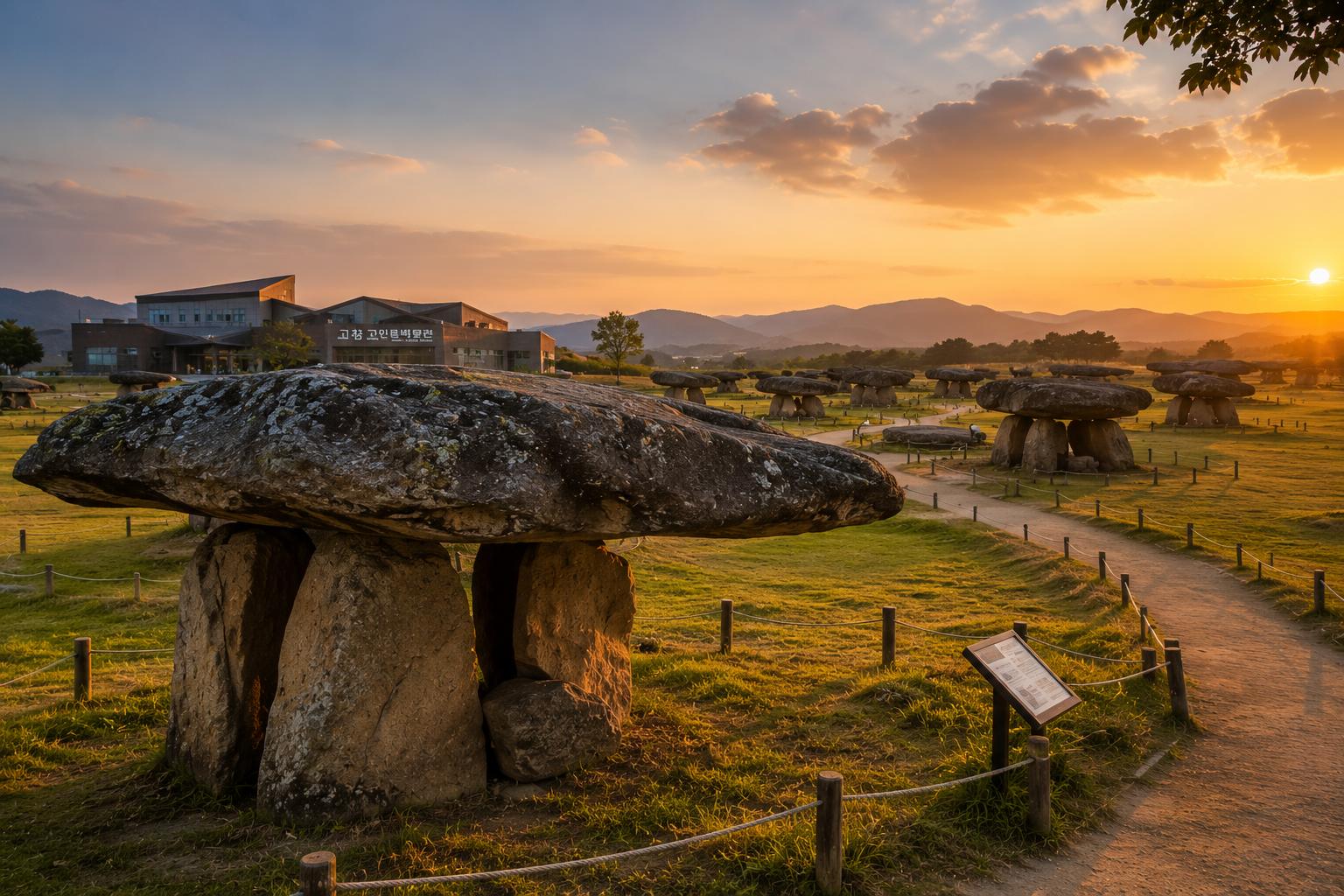
Gochang, Jeonbuk, is a core site of the "Goindol Sites in Gochang, Hwasun, and Ganghwa," collectively inscribed as a UNESCO World Heritage site in 2000. Experience the monumental heritage of prehistoric humanity at one of the world's largest clusters of dolmens, reflecting the social structures and beliefs of the Bronze Age.
In This Article
Standing Before the Ancient World
Standing on the plains of Gochang, Jeonbuk, brings you face-to-face with a serene yet overwhelming ancient world. In 2000, the dolmen sites in Gochang, Hwasun, and Ganghwa were collectively inscribed as a UNESCO World Heritage site, recognized for preserving the early megalithic culture of human history. The Gochang area, in particular, is one of the world’s most significant prehistoric megalithic sites, where over 440 dolmens have been identified.
The Monumental Memory of Prehistory
While many view dolmens simply as rocks, they are, in fact, "megalithic tombs" symbolizing the social classes and beliefs of the Bronze Age. These monumental tombs, constructed for the ruling class, serve as proof of a complex social hierarchy and collective cooperation. As a site where humanity first used stone to monumentally reconstruct nature, it offers a profound look at the prehistoric human desire to connect with the afterlife.
The site features various styles, from the table-type (northern style) to the go-board-type (southern style). How these massive capstones, weighing dozens of tons, were moved and erected using Bronze Age technology remains a subject of active research among archaeologists today.
A Practical Guide for Explorers
Getting There: While local buses operate from Gochang Bus Terminal to the site, renting a car is recommended for a more flexible exploration, as the sites are widely distributed.
Planning Your Visit: We highly recommend starting at the Gochang Dolmen Museum. Viewing the exhibitions on prehistoric life inside the museum before heading to the outdoor trails significantly enhances your historical understanding. Plan for at least 2–3 hours to explore the entire site thoroughly.
Local Flavors: Be sure to try the local specialty, grilled eel. Freshly caught from the tidal flats and seas of Gochang, this dish is an excellent restorative meal after your journey. Pairing it with local Bokbunja-ju (black raspberry wine) offers a deep taste of Korean tradition.
Traveler’s Insight:
- Optimal Time: There is little shade on the fields. We recommend visiting at sunset when the light is soft, bringing out the texture of the dolmens—this is also the perfect "golden hour" for photography.
- Essentials: As you will be walking across open fields, comfortable walking shoes, a hat, and sunscreen are essential.
- Seasonal Charm: Wildflowers in the spring and golden fields in the autumn create a spectacular, once-in-a-lifetime backdrop that harmonizes with the prehistoric atmosphere.