


Tongdosa Temple: Korea’s Living Buddhist Sanctuary
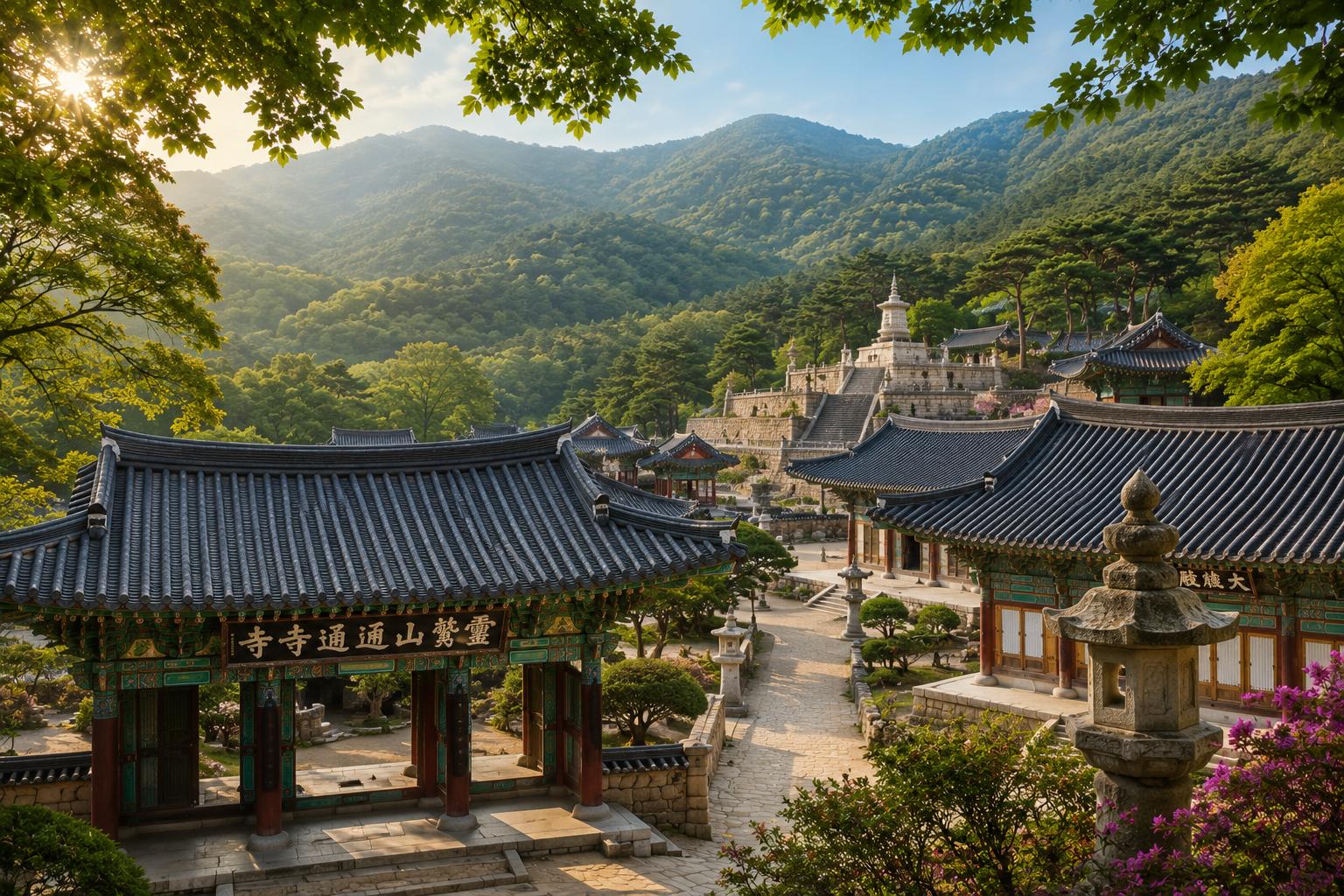
Nestled at the foot of Yeongchuksan Mountain in Yangsan, Gyeongnam, Tongdosa Temple was inscribed as a UNESCO World Heritage site in 2018 as part of "Sansa, Buddhist Mountain Monasteries in Korea." As one of Korea's "Three Jewel Temples," it symbolizes the Buddha and is Korea's largest monastic complex, home to the Geumgang Gyedan, which houses the true relics of the Buddha.
In This Article
A Sacred Site of Korean Buddhism
Tongdosa Temple, located on Yeongchuksan Mountain in Yangsan, Gyeongnam, is one of the most significant sacred sites symbolizing the history and faith of Korean Buddhism. Founded by Monk Jajang in 646, this temple holds a firm position as one of Korea's "Three Jewel Temples," specifically the "Buddha Jewel Temple" (Bulbo), which represents the Buddha. (The other two are Haeinsa, the Dharma Jewel Temple, and Songgwangsa, the Sangha Jewel Temple.)
The Significance of Tongdosa
The reason Tongdosa is one of the most revered temples in Korea is clear: there is no Buddha statue inside the main hall (Daeungjeon). Instead, the true relics of Shakyamuni Buddha are enshrined in the Geumgang Gyedan (the sacred ordination platform) located behind the main hall. Worship here is directed not toward a sculpted image, but toward the true relics of the Buddha.
Stretching along the valley of Yeongchuksan Mountain, Tongdosa is one of the largest and most historically significant temple complexes in Korea. The layout of the temple does not enforce artificial symmetry but follows the mountain's topography, illustrating the core principle of traditional Korean Buddhist architecture that values harmony with nature.
A Practical Guide for Pilgrims
Accessibility: From KTX Ulsan (Tongdosa) Station, you can reach the temple in about 20–30 minutes by bus or taxi.
The Museum: The Tongdosa Museum holds numerous national treasures and artifacts that attest to the temple's long history, making it a must-visit.
Local Flavors: Near the temple, there are several restaurants specializing in "sanchae jeongsik" (a traditional meal of wild mountain herbs and seasonal ingredients).
Temple Stay: If you wish to fully enjoy the tranquility of the mountain temple, we recommend a Temple Stay. Reservations fill up quickly on weekends or during the autumn foliage season, so it is best to book in advance.
Traveler’s Insight:
- Visit Etiquette: Tongdosa is a living sacred site where monks are still practicing. Please maintain silence within the temple grounds. Outdoor photography is generally permitted, but it may be restricted inside certain halls or during religious ceremonies.
- Seasonal Charm: Bright flowers in spring and the crimson autumn foliage that paints Yeongchuksan Mountain create breathtaking scenery. We recommend taking a contemplative stroll along the valley path during the quiet hours of weekday mornings.