


Bijarim Forest: Walking Through Jeju's Ancient Nutmeg Yew Woods
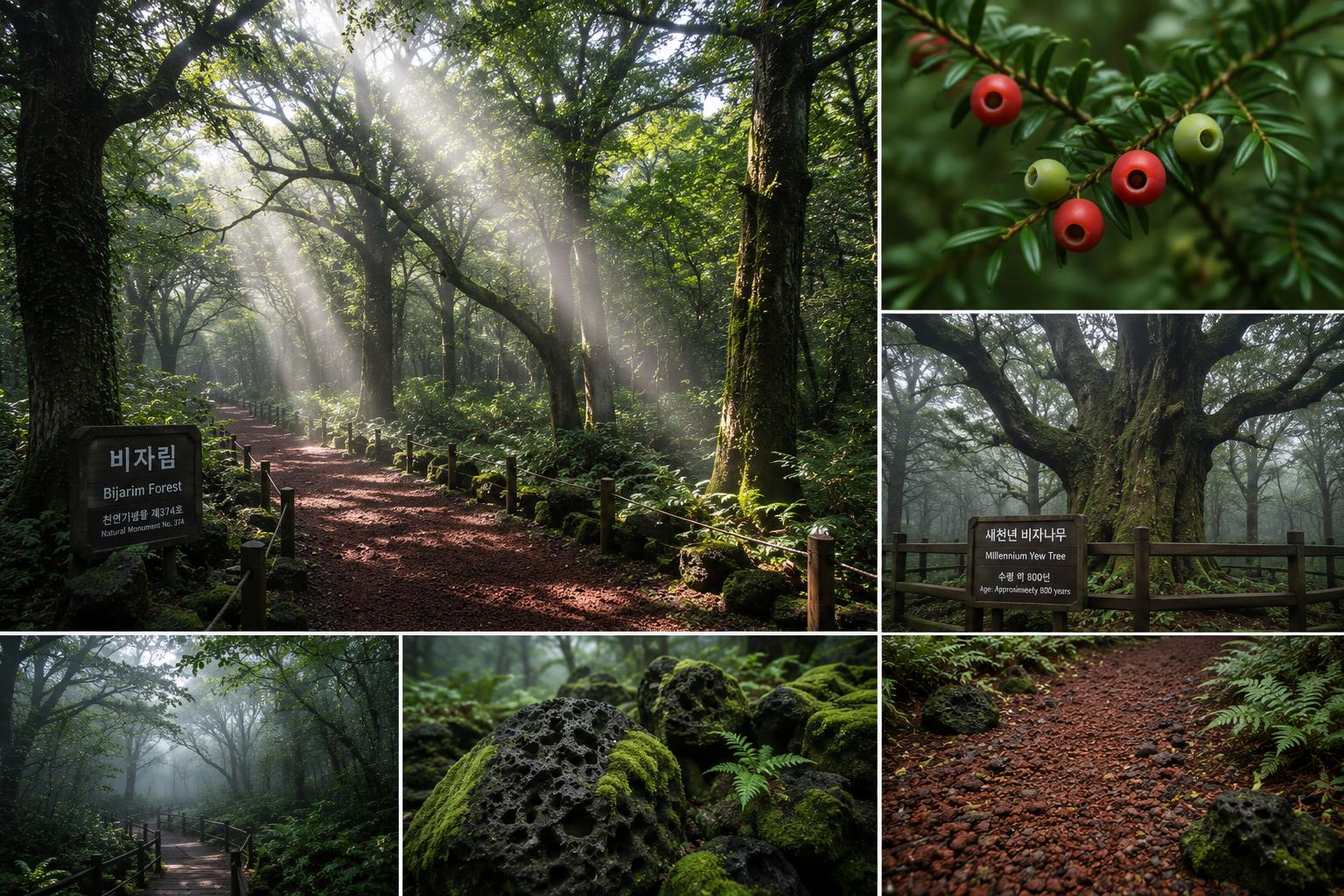
On Jeju Island's red volcanic scoria paths, a massive forest of ancient Torreya trees has thrived for centuries. Known as the Bijarim Forest, this living natural heritage offers a mystical experience formed upon Jeju’s unique volcanic terrain.
In This Article
What Is the Bijarim Forest?
Located in the eastern part of Jeju Island, the Bijarim Forest is designated as Natural Monument No. 374 and stands as a significant ecological treasure of Korea. Spanning approximately 440,000 square meters, it is home to over 2,800 Torreya (nutmeg yew) trees, estimated to be between 500 and 800 years old, preserving the raw and untouched state of nature from the past.
Geology and Ecology
The unique environment of Bijarim originated from the porous basalt terrain created by Jeju's volcanic activity. The Torreya trees that settled on this lava landscape serve as a protective canopy, fostering a microclimate with high humidity. Consequently, the forest has become a thriving ecosystem where ferns, mosses, and lichens coexist alongside the Torreya trees. The red volcanic scoria covering the pathways provides excellent drainage, creating a comfortable walking environment for visitors.
Highlights of the Forest
Deep within the forest stands the "New Millennium Torreya Tree," estimated to be around 800 years old. This tree serves as the symbol of Bijarim, embodying the passage of time and offering a sense of profound serenity.
- Visual Experience: Sunbeams filtering through the dense canopy offer perfect moments for photography, while the thick mist that settles on the forest in the early morning creates the most atmospheric and dreamlike scenery.
- Healing Sounds: The dense trees effectively block out external noise, allowing visitors to fully immerse themselves in the sounds of rustling leaves and birdsong.
Visitor Guide
Exploration Time: A leisurely walk along the main trail takes about 1 to 1.5 hours.
Tips: Torreya seeds have historically been valued for their use in food, medicine, and oil production. Take time to observe the unique forms of the tree trunks and leaves while walking.
Weather Response: While the forest is beautiful on clear days, visiting on a humid or misty morning allows you to experience the deeper, richer fragrance of the forest.
Bijarim is more than just a walking path; it is a space where one can directly feel the ecological depth of Jeju, a UNESCO World Geopark. We hope you take your time to linger and respect the slow rhythm of nature.